







 View All Products
Description
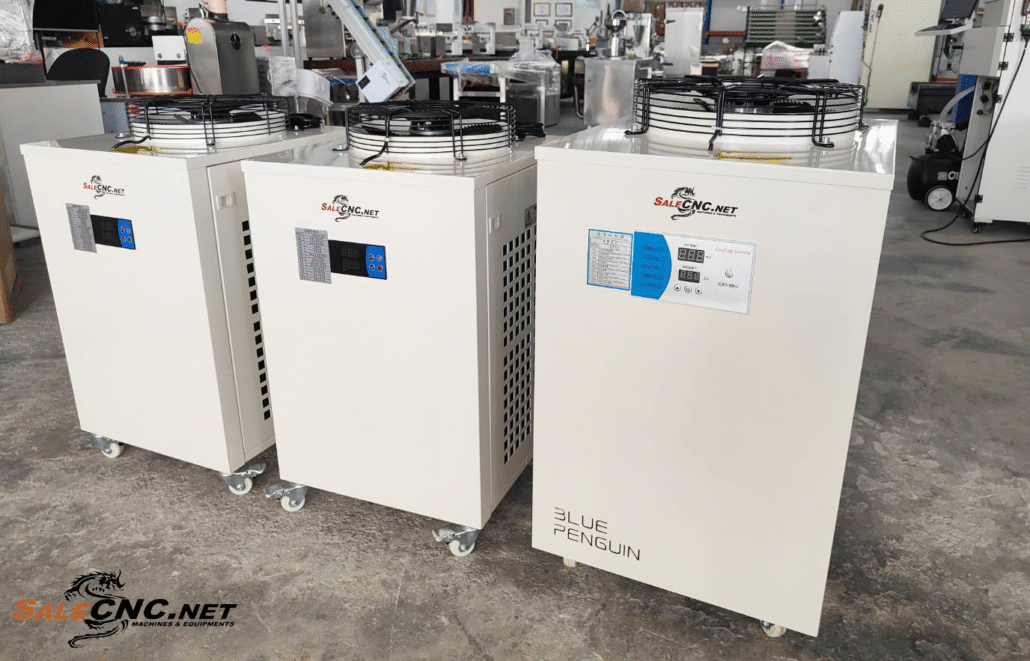
Chiller Water Cooling Systems
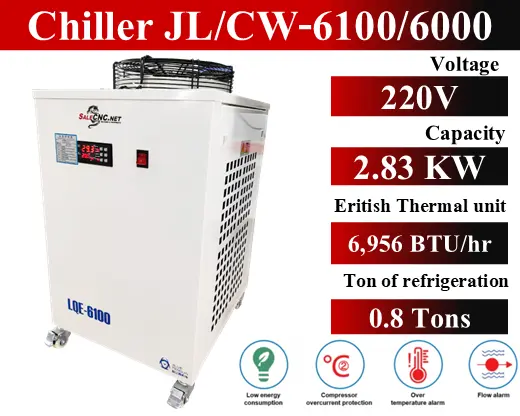
Models JL-6100, CW-6100, LQE-6100
Chiller Water Cooling Systems
Industrial Cooling System for Factories
Precise Temperature Control Industrial Cooling System
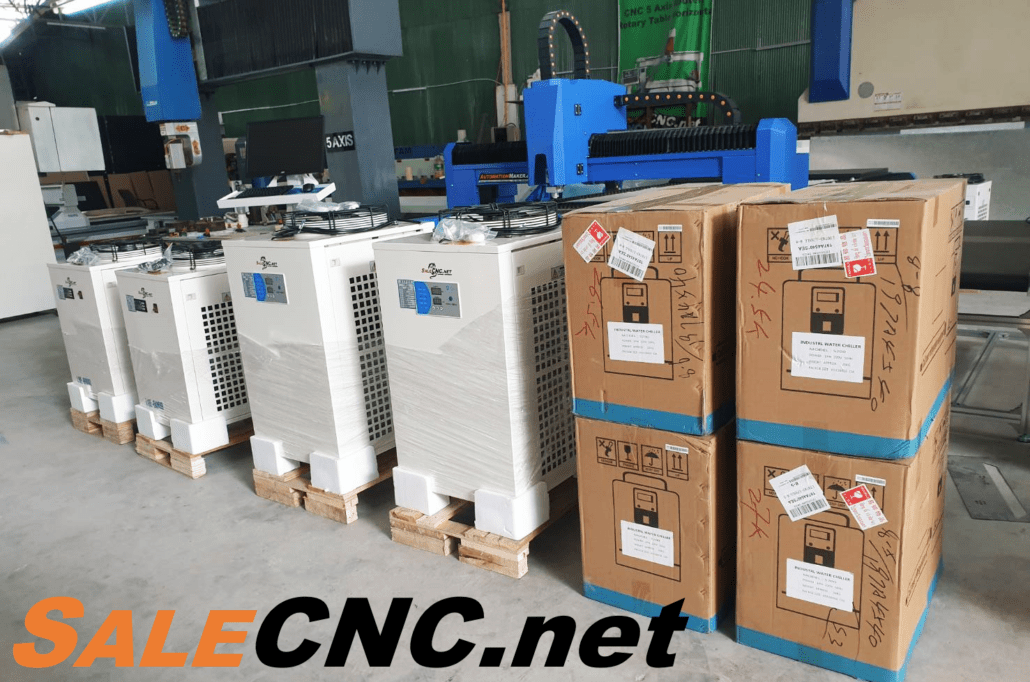
- Thailand is located in the tropical zone, experiencing high temperatures throughout the year. In industrial settings, machinery, electronic devices, and other equipment can overheat due to ambient temperatures. This overheating can lead to equipment malfunction, reduced operational efficiency, and in severe cases, fire hazards. Similar to how elevated body temperature affects human health and performance, excessive heat in machinery compromises its functionality. Chillers are essential for maintaining optimal machine temperatures, ensuring longevity, and preventing operational issues.
- Thailand is located in the tropical zone. It is hot all year round. In machine operation Electronic device and other industrial equipment when there is an increase in temperature causing the inside of the machine to overheat resulting in malfunctioning equipment not working efficiently and find more and more heat equations there may be a fire. Machine heat Is like the heat of a person’s body, when the body temperature increases beyond normal we will get sick and unable to do things at their full potential Therefore, we consider the maintenance of the machine. And can solve problems with high temperature machines with Chiller to help.
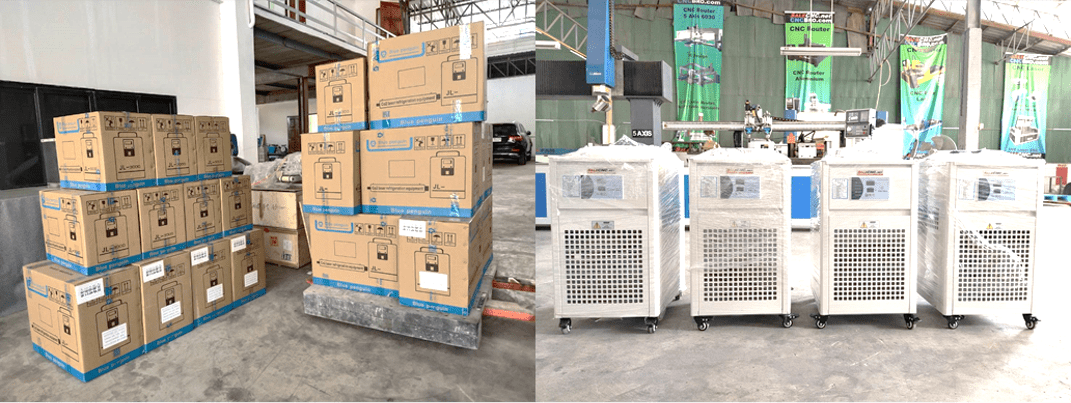
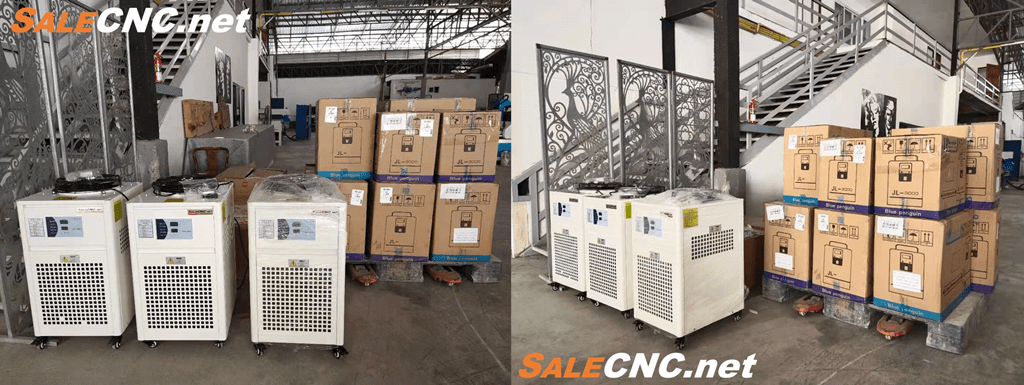
- Chillers are refrigeration units designed to produce cooling, reduce temperature, and dissipate heat. They utilize water as the primary medium for heat exchange and transfer. In modern industrial applications, chillers are employed to manage heat generated by machinery, thereby extending equipment lifespan and maintaining operational efficiency.
- Chiller is a refrigeration. Water cooler There are both large and small. It is the main function of cold production reduce the temperature and cooling.

- Utilize water for heat exchange and cooling.
- Chillers are widely adopted in industrial facilities to regulate machine temperatures, ensure longevity, and maintain optimal performance.
- Applications include: Closed-loop cooling systems, hydraulic injection molding machines, and CNC machinery.
- For example : Closed system pond, Hydraulic injection molding machine, CNC Engraving Cutting CO2, CNC Laser Engraving UV, CNC Router Milling, CNC Fiber Laser and other.
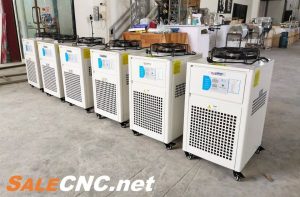
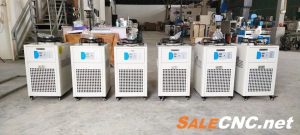
Chiller Model JL-6100 for Sale
Used for cooling CNC machines and fiber laser machines, ensuring optimal performance by preventing overheating during operation.
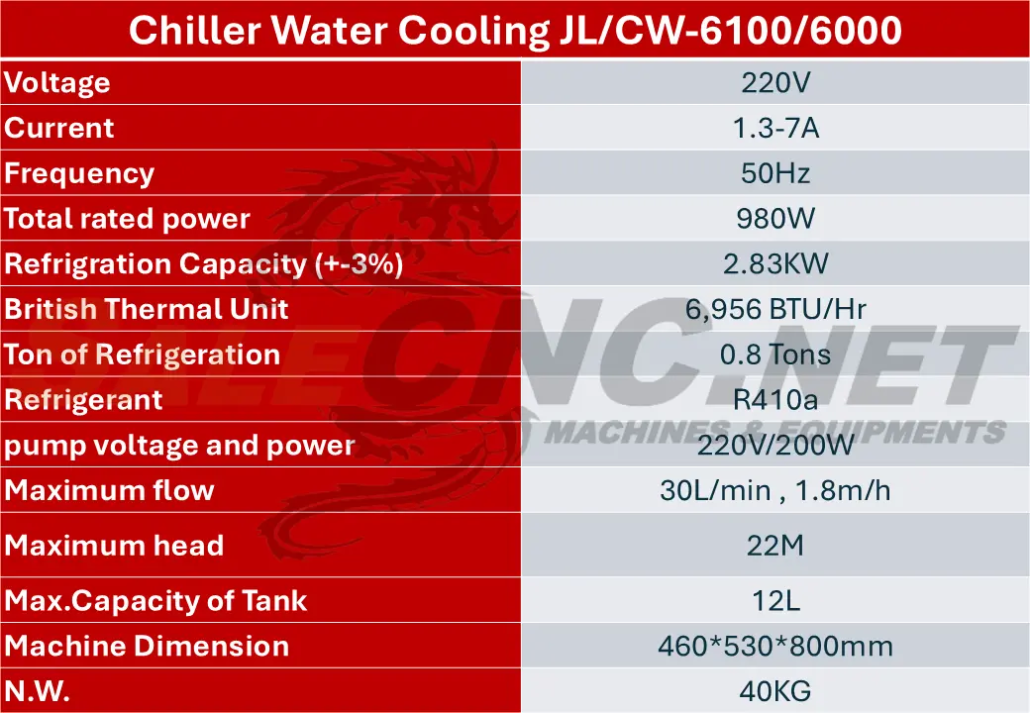
Features :
- Dual digital displays for simultaneous monitoring of setpoint and real-time temperatures.
- Full-capacity refrigeration with micro-cooling and heating control options (optional configuration) suitable for diverse operating conditions.
- Intelligent and stable operating mode adaptable to various ambient temperatures.
- High-precision temperature control with fluctuations maintained within ±0.5 °C.
- Integrated over-temperature alarm and sensor fault self-diagnostic functions.
- Compressor overload protection and water flow alarm functionality.
- Anti-freeze function designed to protect internal water circuit components in low-temperature environments.
Machine Dimensions
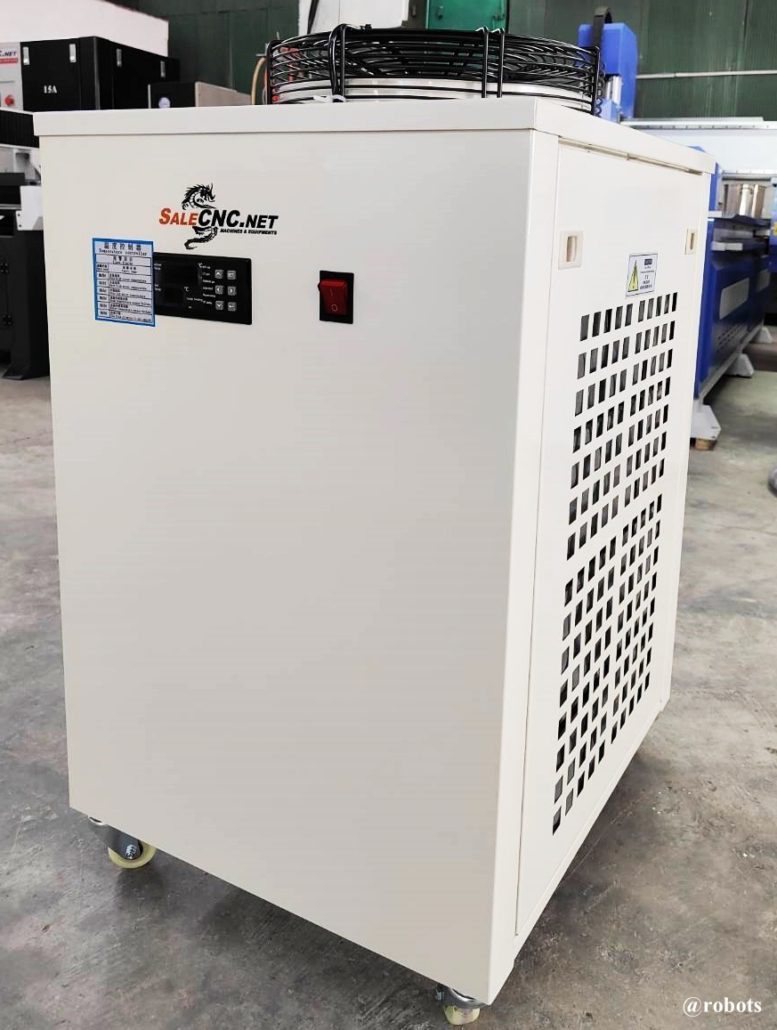
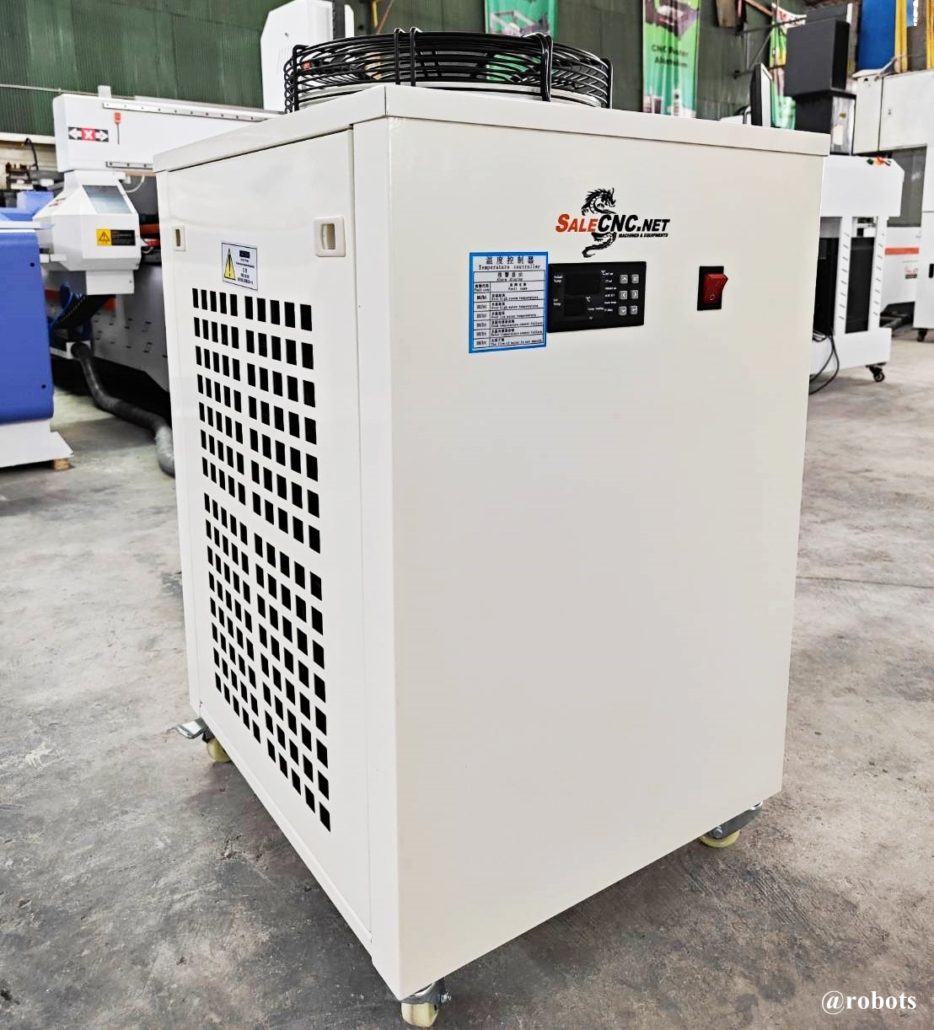
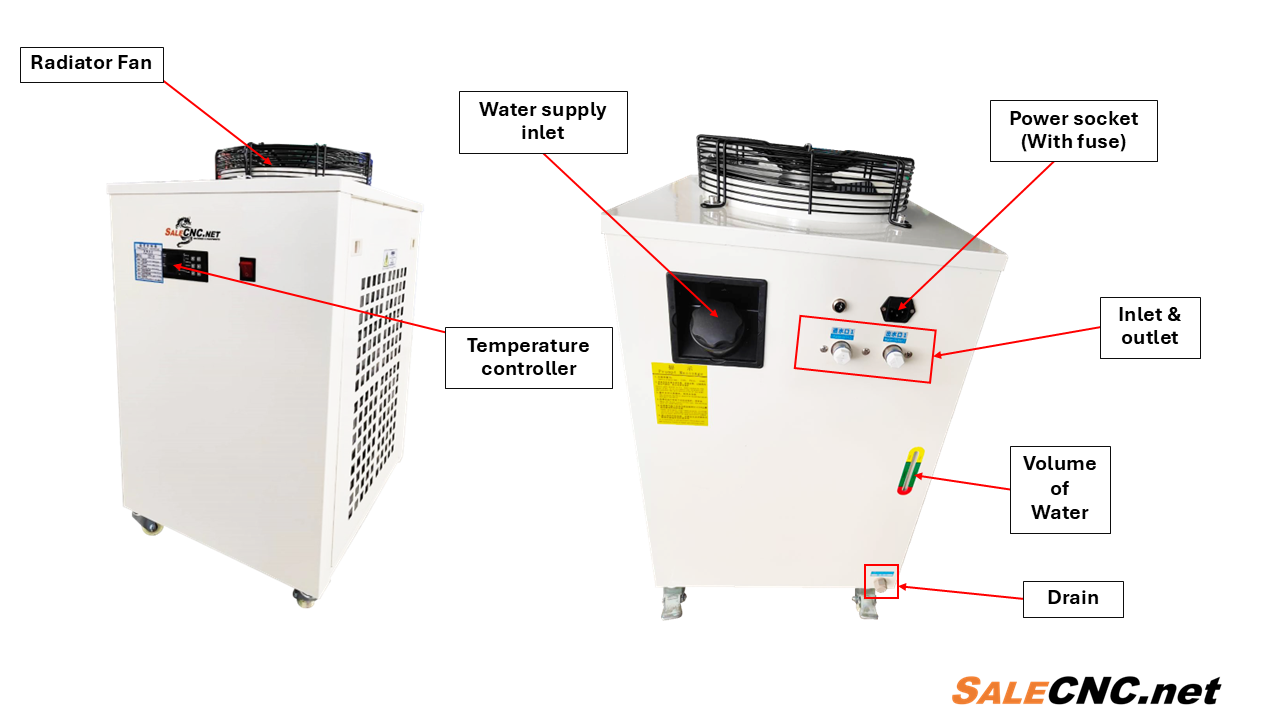
Front View
Rear View
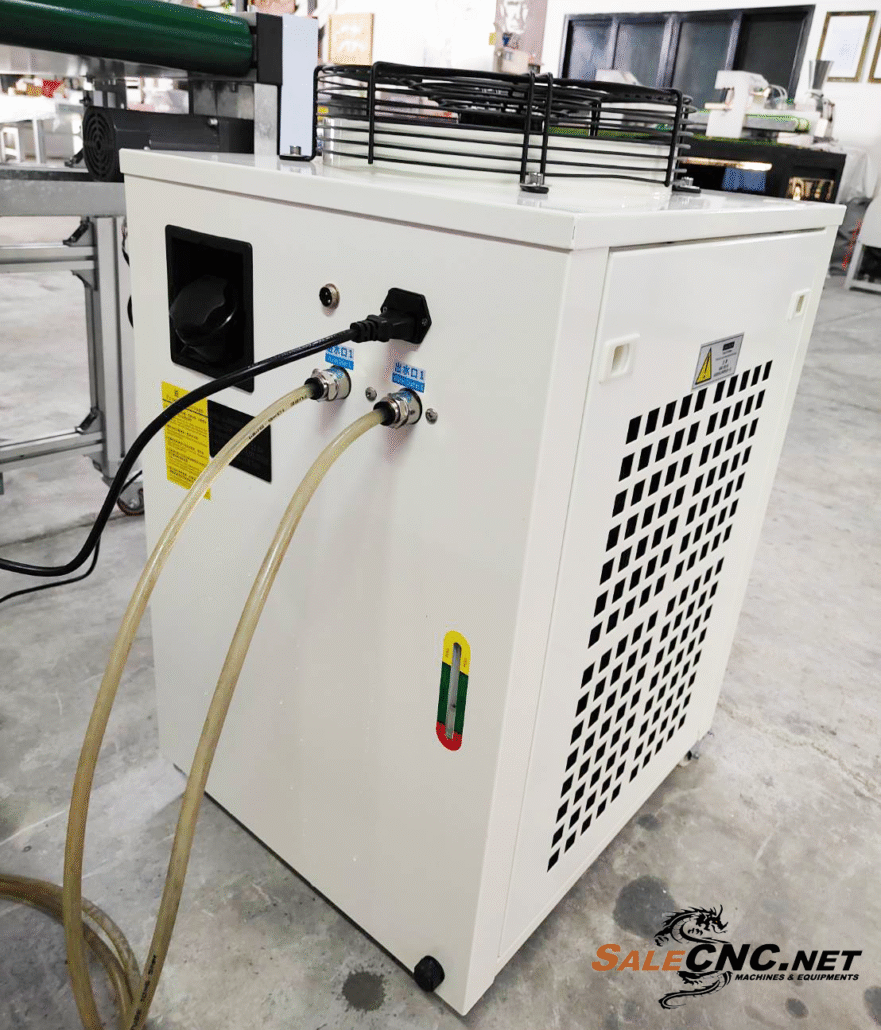
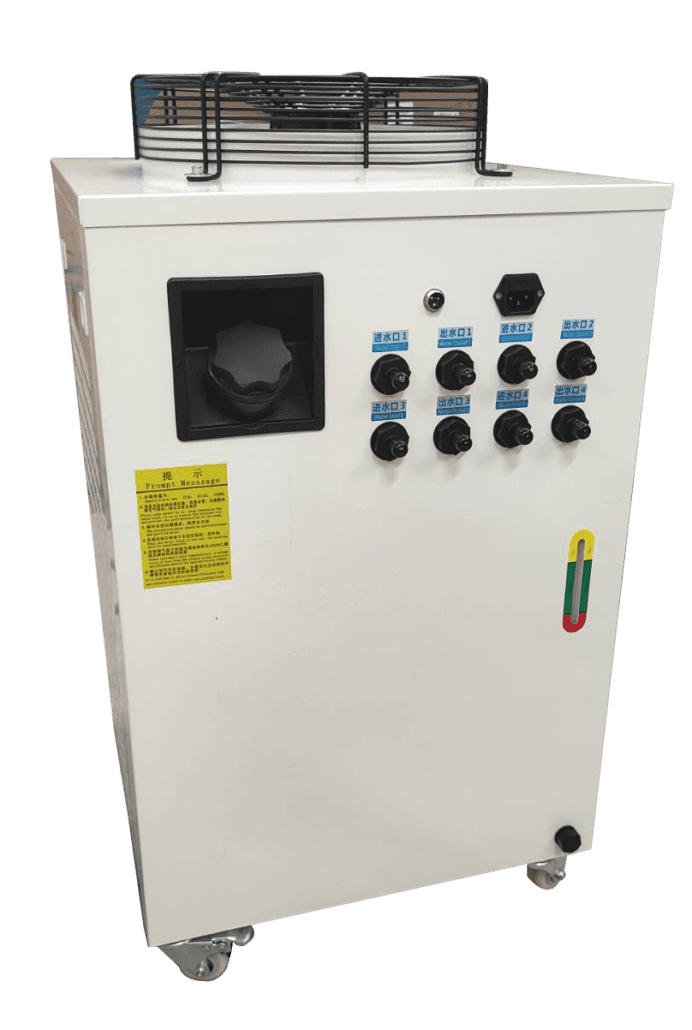
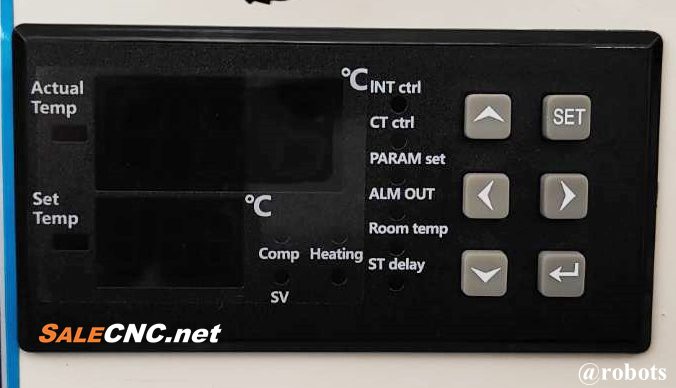
Control Panel
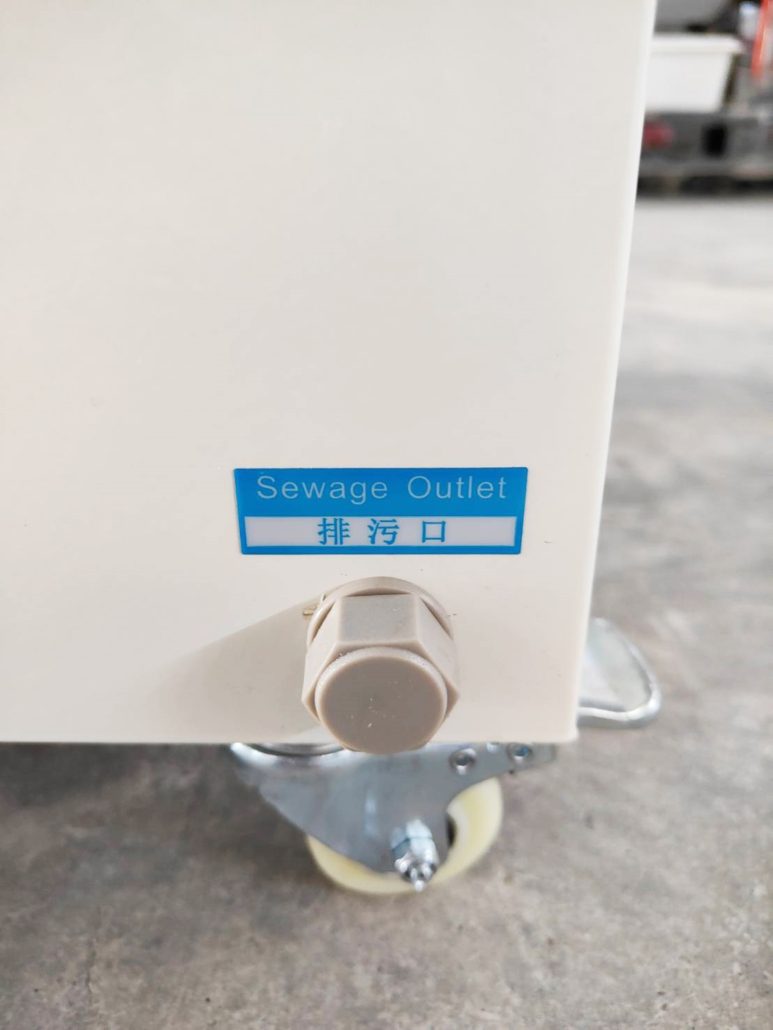
Inlet and Outlet Ports | Drain Port
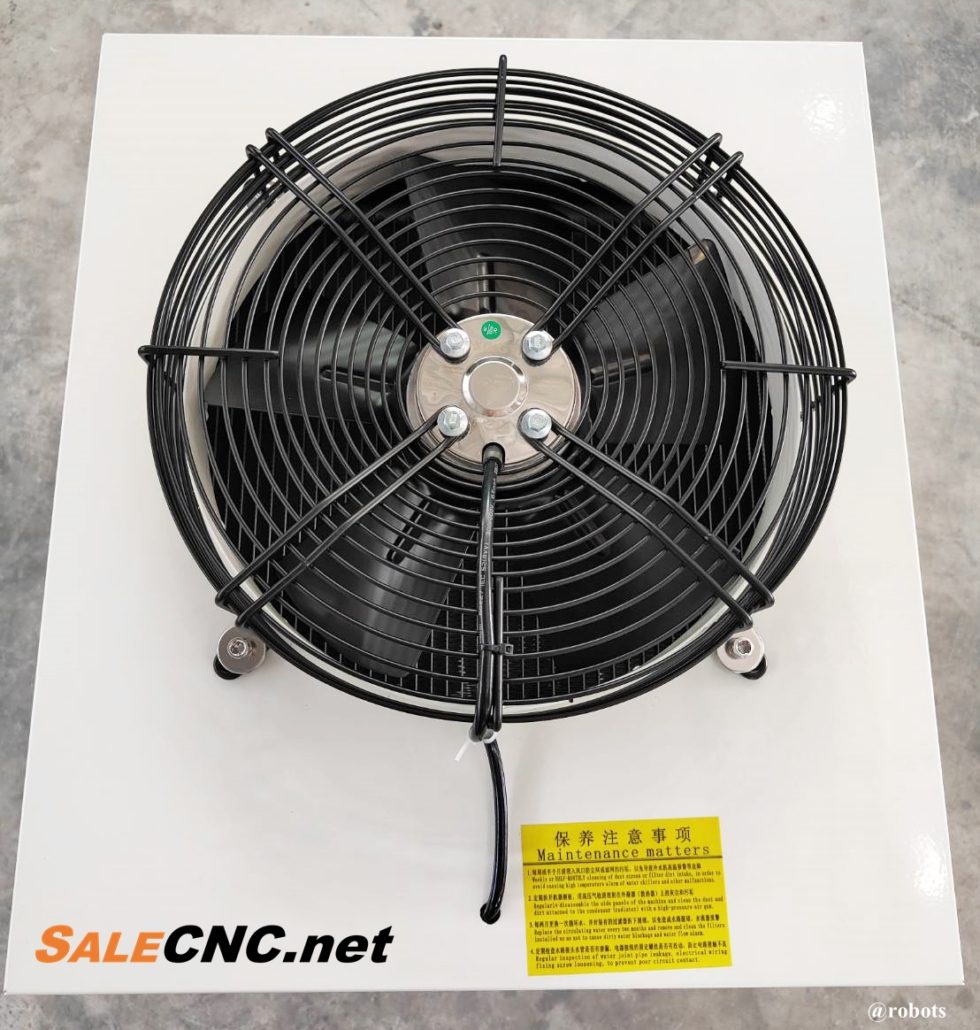
Ventilation Fan
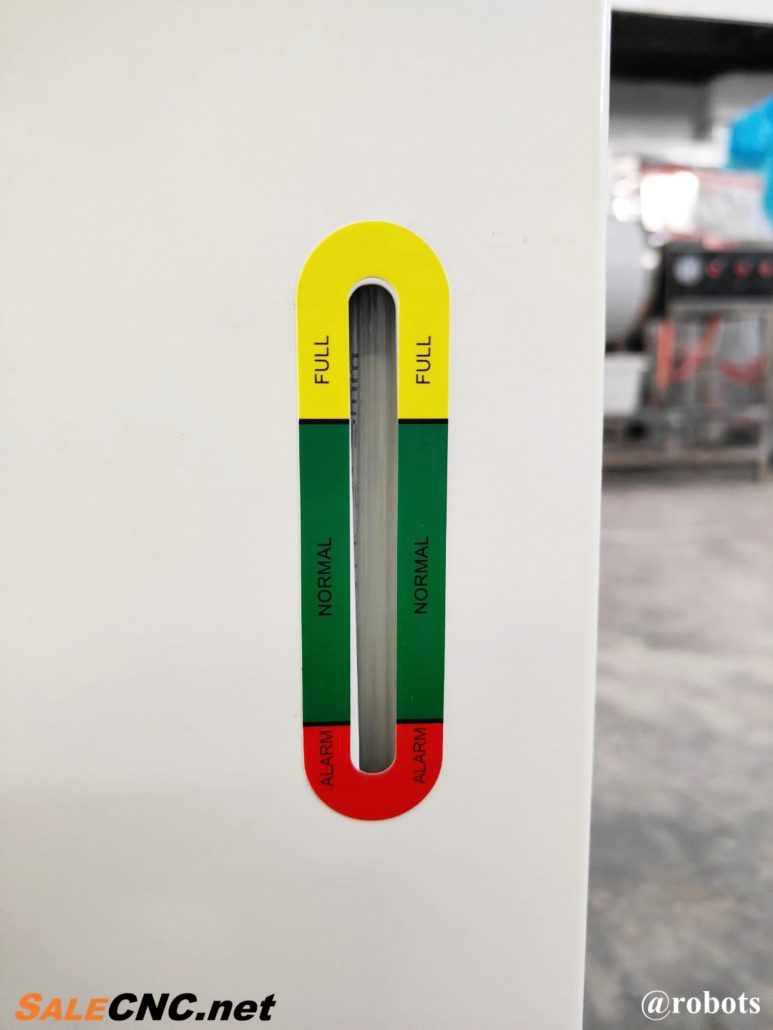
Water Level Indicator
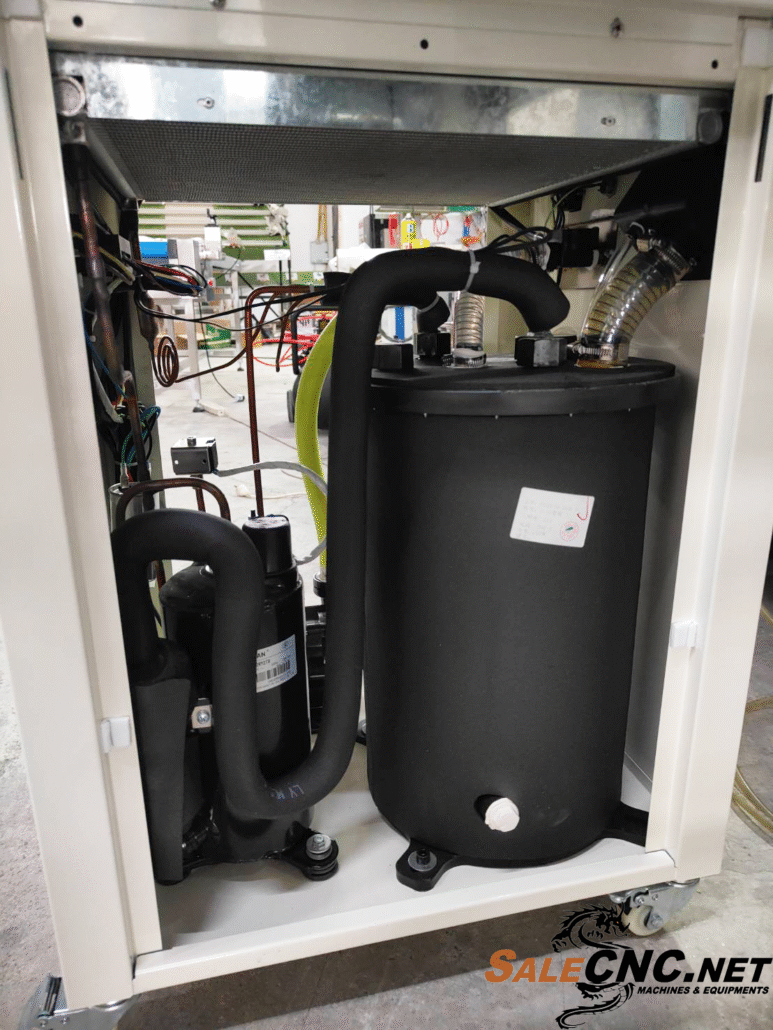
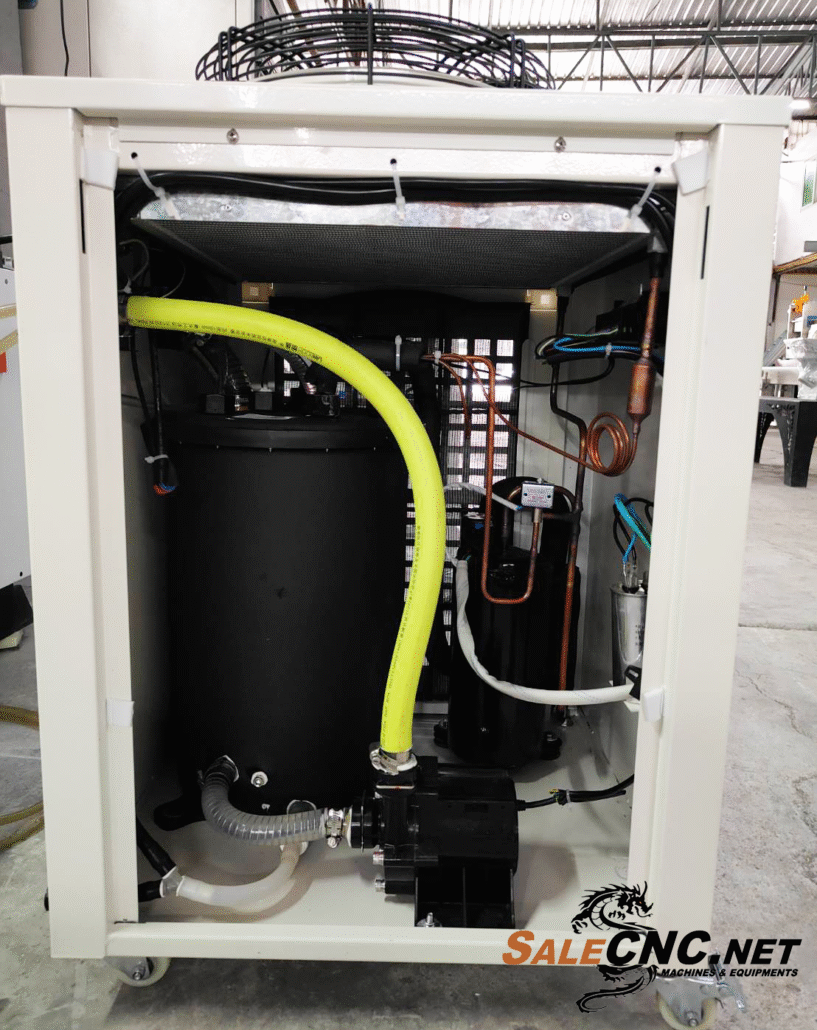
Machine Components
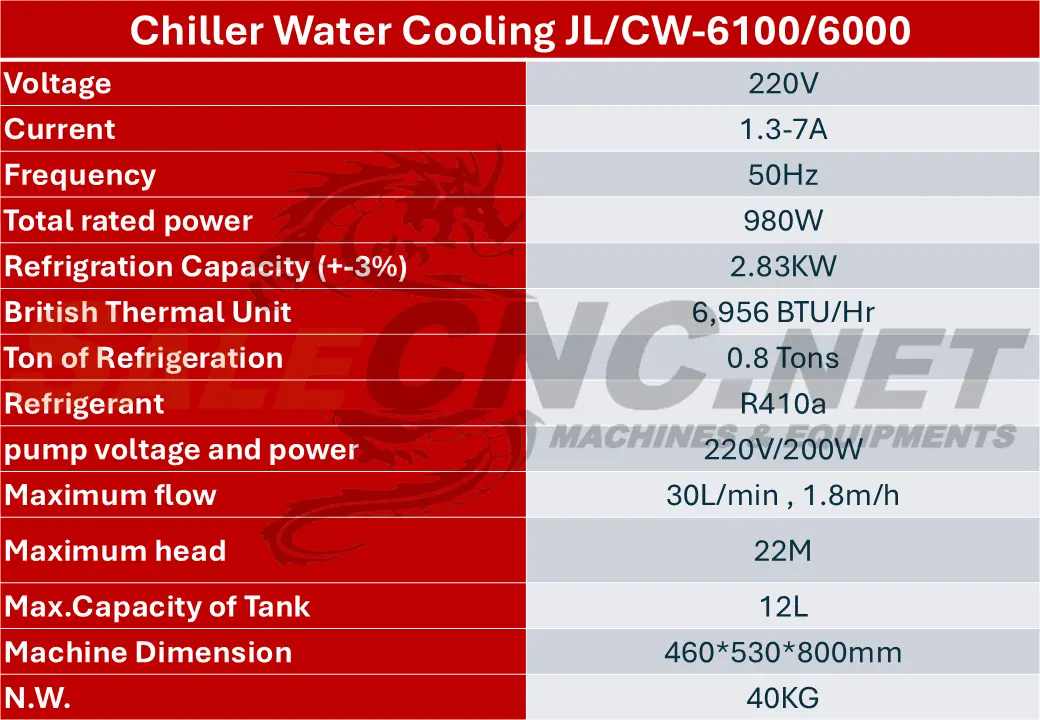
Technical Parameters
Download Chiller JL-6100 User Manual Click Here
Temperature Adjustment Procedure for Chiller Models CW/JL6100
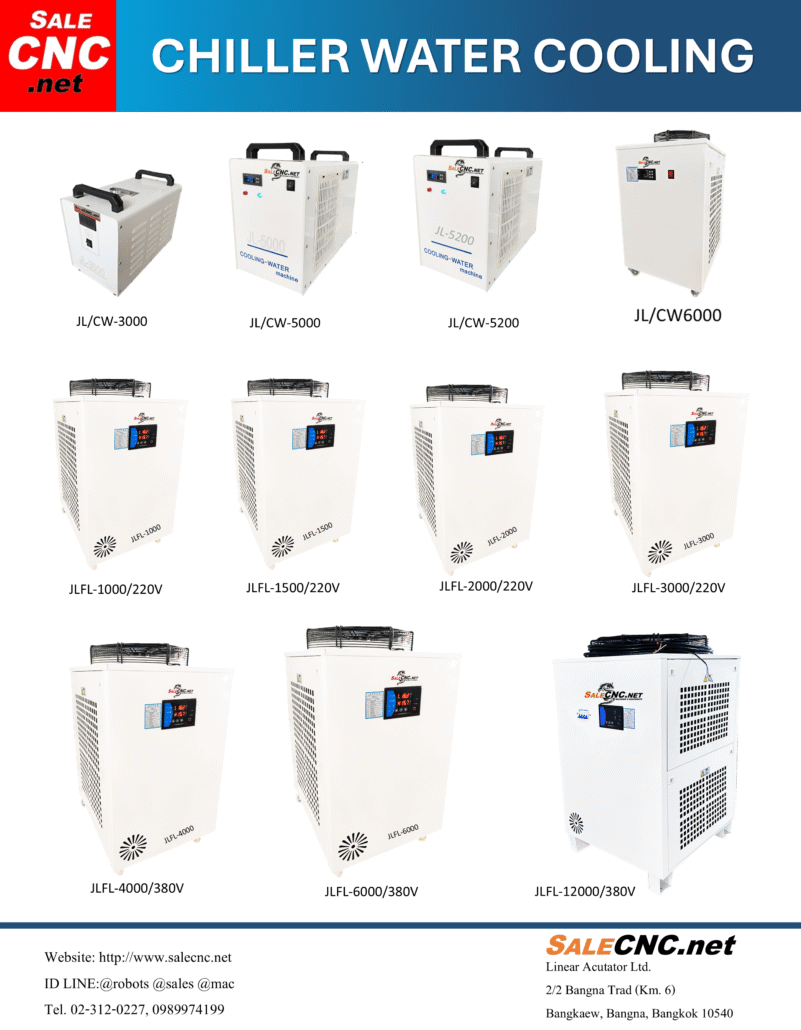
Comparison of All Water Chiller Models
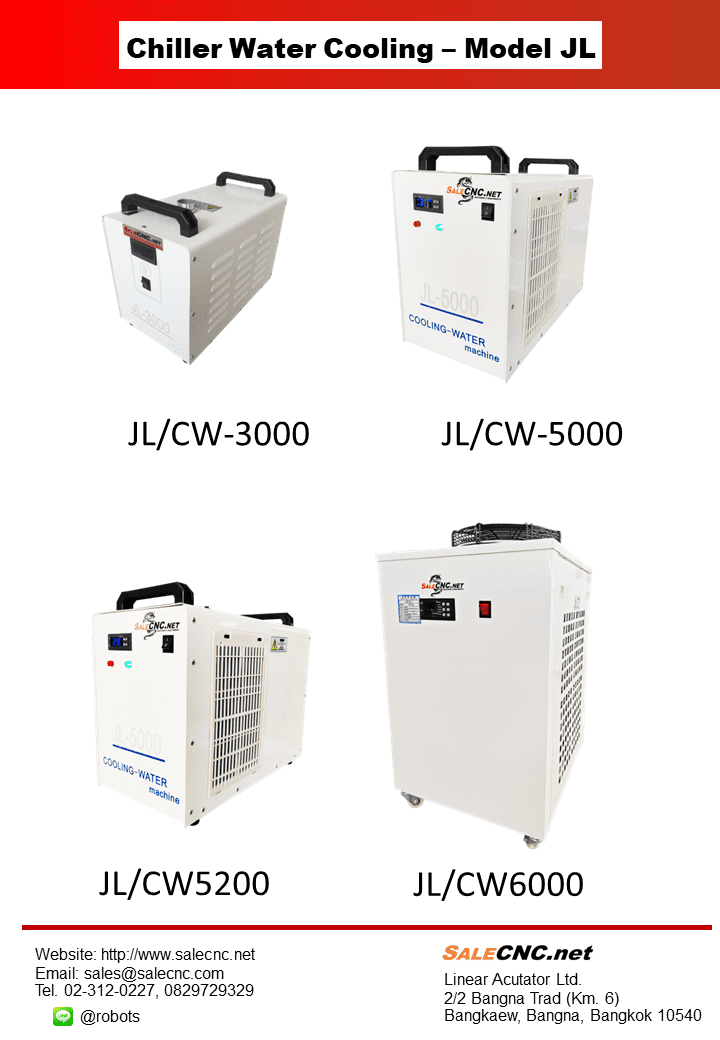
Chiller Water Cooling Model JL Series
Understanding BTU Measurement
BTU, or British Thermal Unit, is a unit of measurement quantifying the heat energy required to raise the temperature of one pound of water by one degree Fahrenheit at constant pressure. It is widely used in the United States and other regions to assess heating and cooling capacities.
The process of measuring BTUs involves several key steps:
- System Definition: Identify the system for which the BTU measurement is relevant. This could range from heating and cooling systems to appliances like furnaces or water heaters.
2. Substance Identification: Determine the substance undergoing heat energy measurement. While water is commonly used, the substance may vary based on the specific application.
3. Temperature Change Measurement: Record the initial and final temperatures of the substance. For example, when evaluating BTUs generated by fuel combustion in a furnace, measure the water temperature before and after the heat exchange process.
4. Heat Energy Calculation: Employ the following formula to calculate heat energy in BTUs:
Heat energy (BTU) = mass (lb) × specific heat (BTU/lb°F) × temperature change (°F)
In this formula, “mass” represents the substance’s mass in pounds, “specific heat” denotes the substance’s specific heat capacity in BTU per pound per degree Fahrenheit (BTU/lb°F), and “temperature change” indicates the temperature variation in degrees Fahrenheit.
5. Efficiency Consideration: In certain scenarios, the efficiency of the system or device being measured may need to be factored in to determine the actual BTU output or input.
Overall, BTU measurement offers a standardized method for quantifying thermal energy, crucial for various applications including HVAC (heating, ventilation, and air conditioning), cooking, and industrial processes.
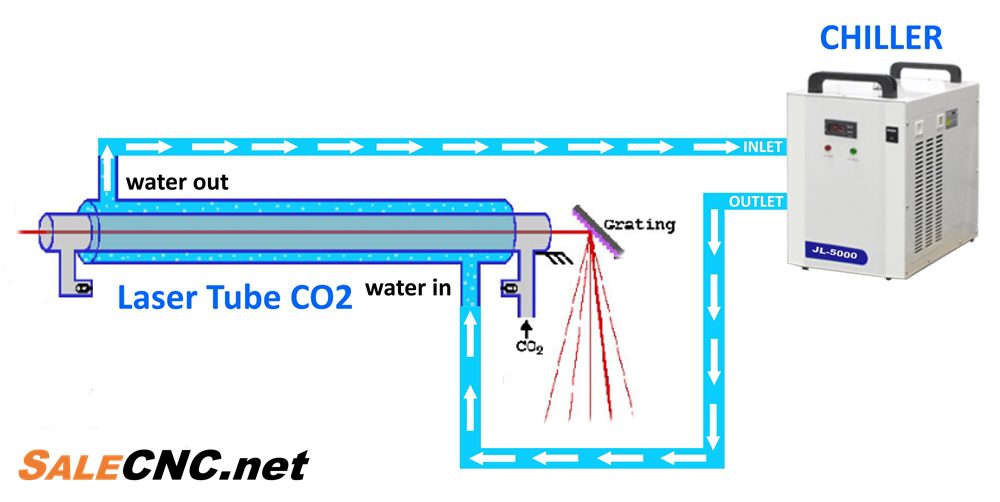
Operational Principles of CO2 Laser Tubes with Chillers
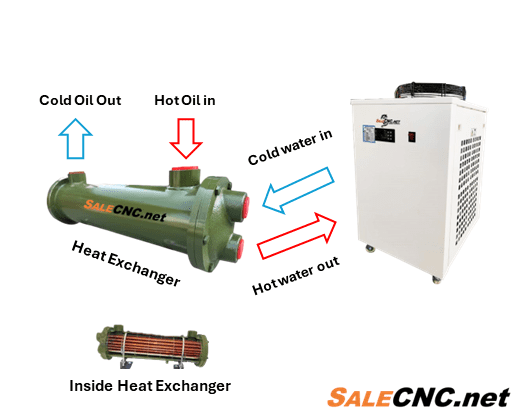
Optional Accessory: Heat Exchanger

The Heat Exchanger, when connected to the chiller and submerged in water, provides enhanced water cooling capabilities.
Available for only 3,600 THB!
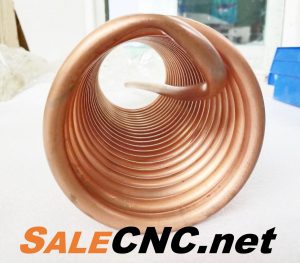
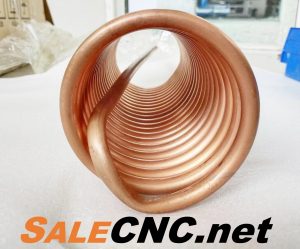



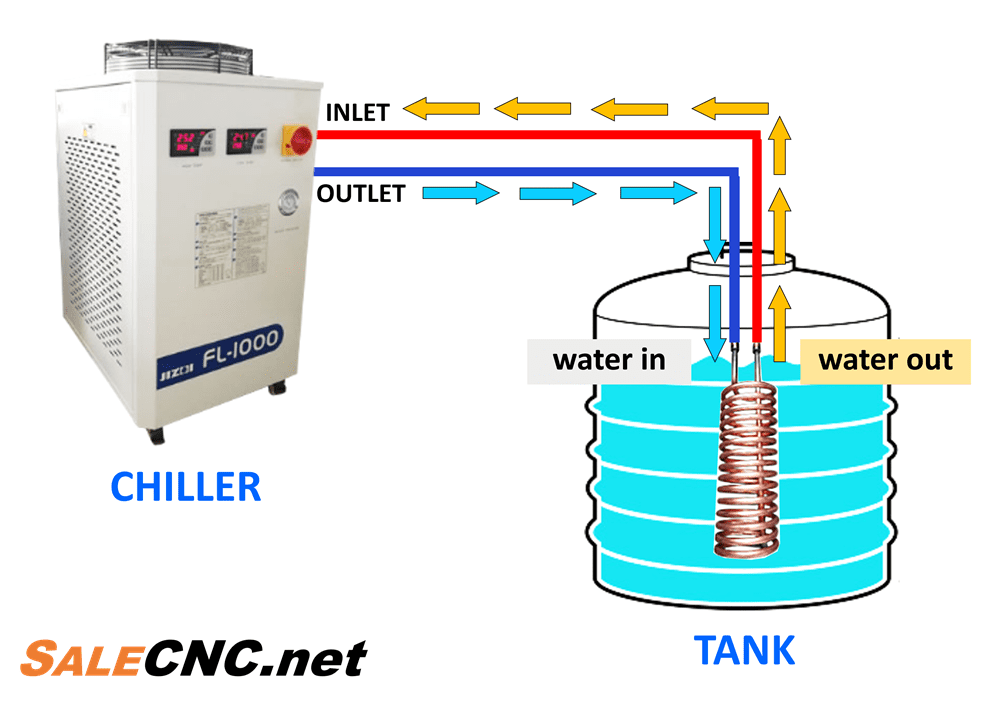
Heat Exchanger Installation with Chiller Systems

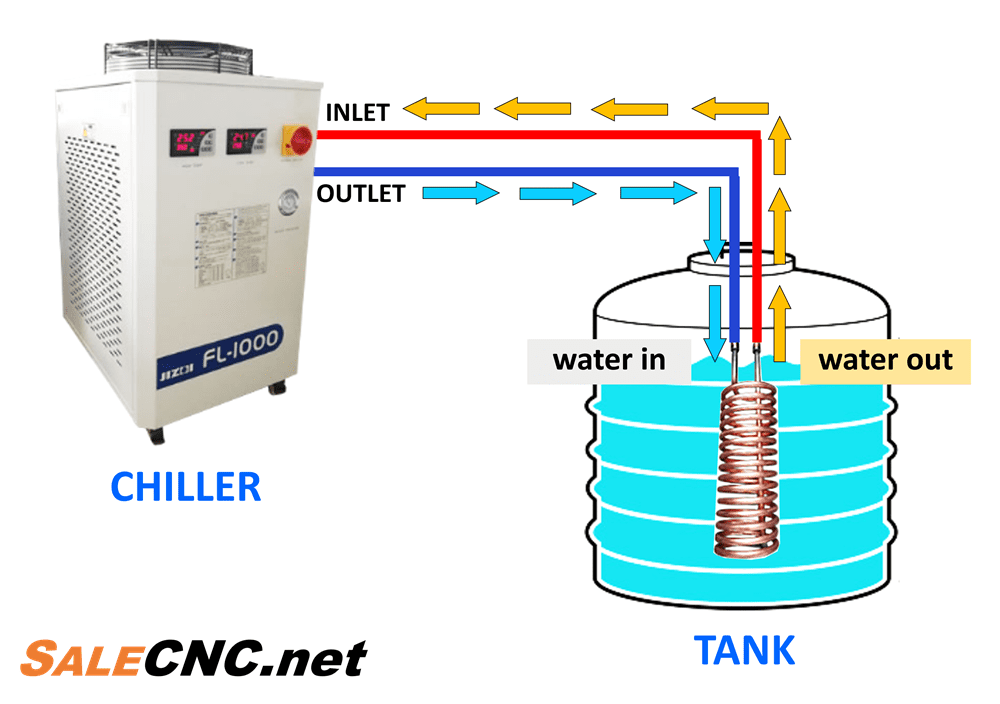
Heat Exchanger: An Optional Accessory for Chillers to Further Reduce Water Temperature | SALECNC.net
Chiller Water Cooling vs. Cooling Tower
Cooling Towers are primarily used in industries such as plastic injection molding. However, they present significant drawbacks: they are large, operate as open systems making maintenance difficult, and are susceptible to dust and sediment ingress, negatively impacting performance and reducing lifespan.
Consequently, industrial facilities are increasingly adopting Chiller Water Cooling systems. These units are compact, space-efficient, operate as closed systems to effectively prevent contamination, and offer extended operational longevity.
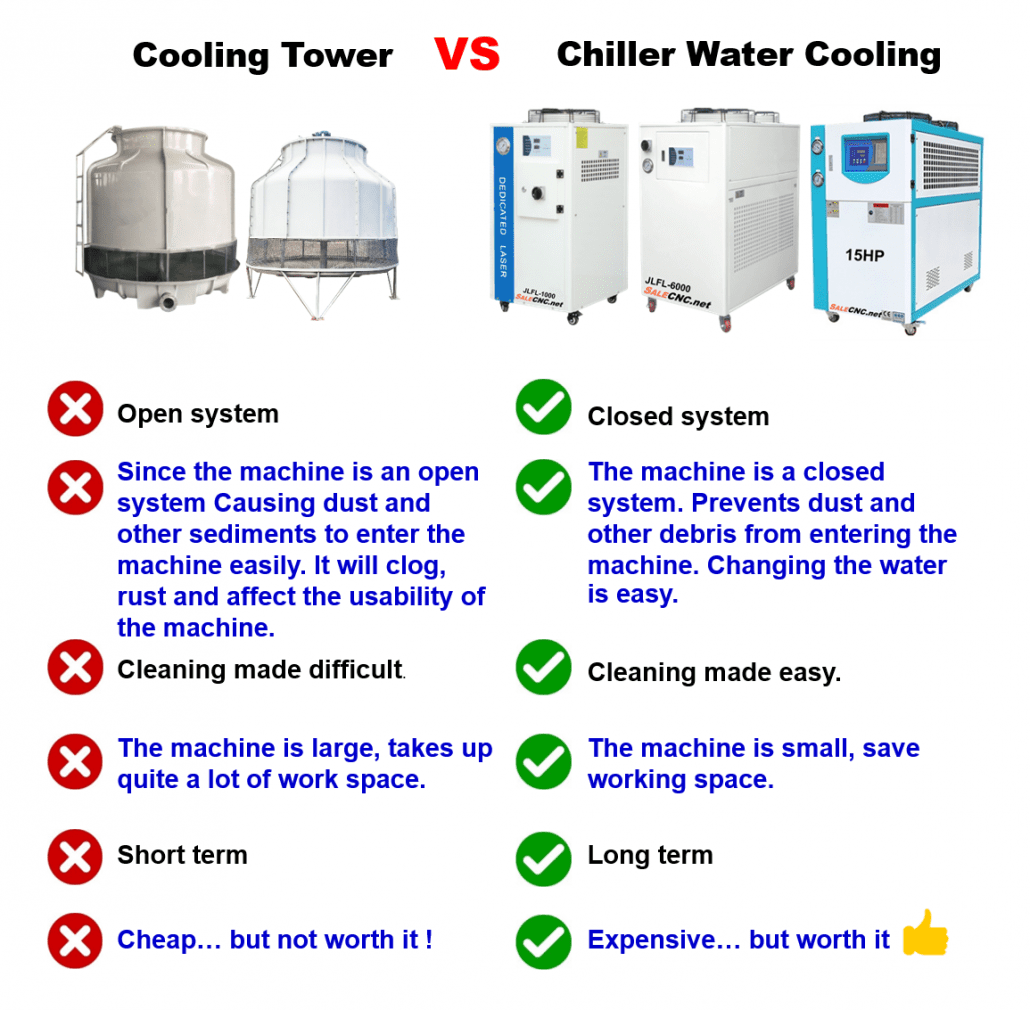
| Cooling Tower | Chiller Water Cooling |
|---|---|
| ❌ Open system | ✅ Closed system |
| ❌ Susceptible to dust and sediment ingress, leading to clogging, corrosion, and impaired functionality. | ✅ Effectively prevents dust and sediment ingress. Facilitates convenient water changes. |
| ❌ Difficult maintenance and cleaning. | ✅ Easy maintenance and cleaning. |
| ❌ Large footprint requires significant operational space. | ✅ Compact design saves operational space. |
| ❌ Shorter operational lifespan. | ✅ Extended operational lifespan. |
| ❌ Lower initial cost, but higher long-term costs due to maintenance, repairs, and frequent replacement. | ✅ Higher initial cost, but offers superior long-term value through reduced maintenance, simpler upkeep, and cost savings. |
 Add Line: @123wotsb Fern (sales engineer)
  Add Line: @sales Chompoo (sales engineer)