












 Back to เครื่องทำซาลาเปา & ขนมจีบ / เกี๊ยว
Description
Automatic Dough Encapsulating Machine for Various Pastries
(Custom Mold Design)
This machine is an advanced iteration of our standard dough encapsulating machine. It is designed for the production of various pastries such as Salapao, Kuih, Mooncakes, and other similar items. A key feature is the ability for users to design custom molds to achieve unique pastry designs.

Mooncake Machine: Enhanced Functionality from Salapao Piston Machine
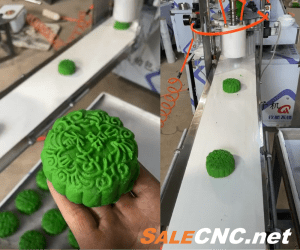
Mooncake Machine: Design Your Preferred Pastry Surface Molds
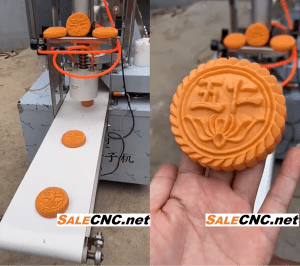
Chinese Pastry & Mooncake Machine (Including Lava and Salted Egg Yolk Fillings)
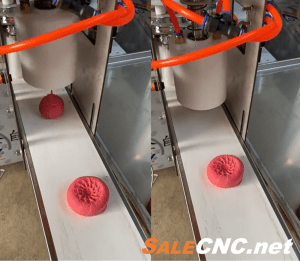
Automatic Salapao (Steamed Bun) Forming Machine
Automatic Salapao Machine
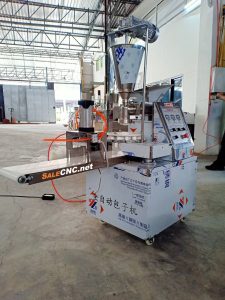
The Automatic Salapao Forming Machine is engineered for the production of various steamed bun styles, including round, pleated, and non-pleated variants. Widely adopted in industrial settings, cafeterias, culinary institutes, bakeries, and pastry businesses, this machine significantly enhances production volume within minimal time. Its high-speed operation contributes to substantial savings in labor and material costs while ensuring consistent product dimensions.

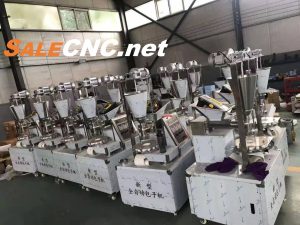
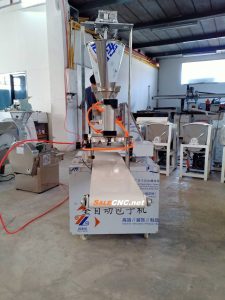
Automatic Salapao Forming Machine: Producing Steamed Buns Automatically
Automatic Salapao Machine: Producing Colored and “Fantasy” Buns with Automatic Filling
Mini Salapao (Small Size Buns): High-Speed Production, Elegant Pleating, High Marketability, and Profitability
Round Salapao Production with Sweet Fillings: Automated Forming with the Automatic Salapao Machine
- The Automatic Salapao Forming Machine, also known as an Automatic Chinese Bread Machine Maker or Bun Maker, is constructed from stainless steel, ensuring durability and food-grade safety.
- This material guarantees the absence of toxic residues, providing confidence in product safety.
- The machine is capable of producing buns with either 12 pleats or a smooth, unpleated finish.
- Product size and filling quantity are adjustable.
- Capable of producing one large bun every 3 seconds.
- Reduces production time and costs while ensuring standardized bun dimensions.
*Product weight adjustable from 15-200g
Required Installation Space: 153 x 67 x 165 cm
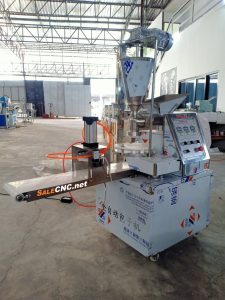
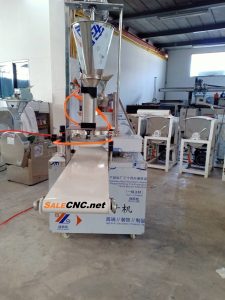
Front View
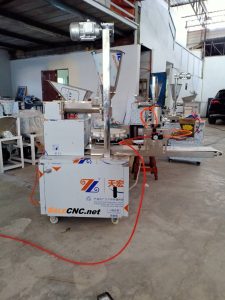
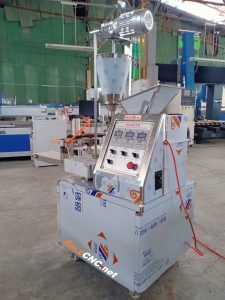
Side View
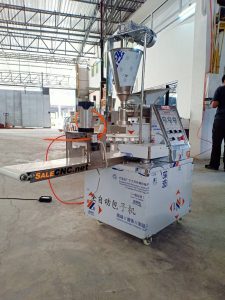
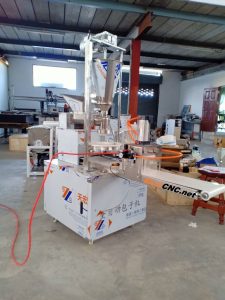
Rear View
Performance and Features
- This automatic dough encapsulating machine employs a spiral kneading action followed by vertical extrusion. Dough is propelled by a screw mechanism, with a vacuum pump facilitating precise filling placement within the dough.
- Dough is kneaded and formed. All machine parameters, including frequency, bun size, and filling amount, are controllable.
- The machine features a compact structural design. Food-contact components and the outer casing are easily detachable for cleaning and maintenance.
- Constructed from Stainless Steel 304, this food-grade material meets national food hygiene standards. It offers an aesthetically pleasing appearance and ensures user safety.
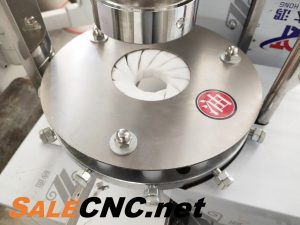
Dough forming section supports both pleated and smooth finishes.


Technical Parameters
- Product Size Adjustment: Standard production rate is 0 – 3,000 pieces per hour.
- Nozzle Variations: Capable of producing buns ranging from 15 to 200 grams per piece.
- Voltage: 220/380 V
- Power Consumption: 2.4 KW
- Machine Dimensions (W x D x H): 1530 x 670 x 1650 mm (includes hopper height and conveyor length).
Bun Conveyor System
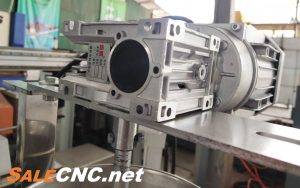
Top motor for controlled filling insertion.

Control panel for comprehensive machine operation.

Operational Principle
- The process begins with the dough being fed through a spiral extrusion and kneading system, forming a vertical shape. It is then compressed into a hollow cylindrical die.
- The filling system precisely cuts and dispenses the filling into the center of the dough without requiring water, preventing viscosity issues. The dough is extruded at an optimal speed through the filling tube and nozzle.
- At the forming point, the dough is shaped into a cylindrical form and subsequently cut into individual buns. The machine can produce either round buns or those with 12 pleats.
- Once formed, the buns are automatically discharged onto a conveyor belt.
✅ Produces buns with 12 pleats.
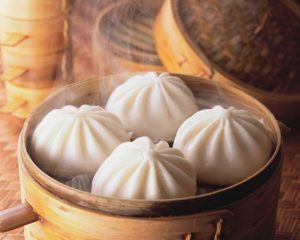

✅ Produces smooth, unpleated buns.

✅ Buns require proofing at temperatures between 35-45°C.

Components
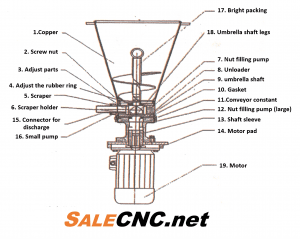
- Hopper
- Screw Nut
- Adjustment Part
- Rubber Ring Adjustment
- Scraper
- Scraper Holder
- Filling Pump Nut
- Unloading Device
- Shaft
- Gasket
- Fixed Conveyor Belt
- Large Filling Pump Nut
- Shaft Sleeve
- Motor Base Plate
- Discharge Connector
- Small Pump
- Filling Port
- Shaft Bracket
- Motor
Safety Precautions
- Ensure the grounding wire is connected before powering on the machine.
- Operate the machine within an ambient temperature range of 5°C to 35°C. Air conditioning is recommended for optimal performance.
- Do not operate the machine barefoot or while wearing open-toed footwear.
- Secure the sealing plate of the forming die and tighten all screws before starting the machine.
- The machine must not operate in reverse. Doing so can damage internal components.
- A dedicated operator (minimum of one) must be present during operation. Never insert hands into the dough kneading or filling areas to prevent accidents.
- Do not insert hands or hard objects into the forming block during startup to avoid injury or damage to the block.
Operating Procedures
- Pay close attention to the installation and removal of machine accessories. Ensure they are securely and correctly locked in place. Verify all connections before operation.
- The automatic bun forming machine must be properly grounded.
- Reverse current is prohibited as it can cause damage to machine components.
- Do not insert hands into active operational areas.
- Avoid placing tools, equipment, or other hard objects on the machine during operation.

Operates on standard household AC 220V power.
Cleaning and Maintenance
- After each use, disassemble the machine for cleaning and then reassemble.
- The forming die and cutter should be cleaned and lightly oiled for preservation and subsequent use.
- For components subject to prolonged use, apply grease for lubrication in the cam grooves of the forming plate.
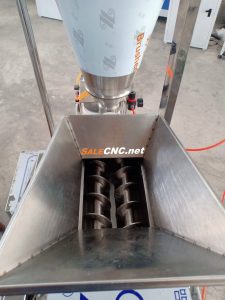
Dough feeding port.
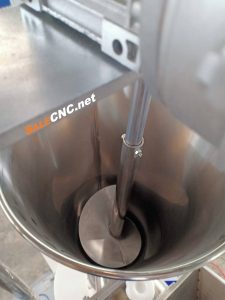
Filling insertion port.

All components are removable for cleaning.
Basic Troubleshooting
| Problem | Cause | Solution |
|---|---|---|
| Thin bun base with filling leakage | Bun thickness is too high and short, leaving insufficient space for filling. | Adjust bun thickness or height to allow adequate space for filling. |
| Excessively thin buns with filling leakage | Premature cutting during dough forming results in filling extrusion. | Tighten the spring and rollers around the forming die. |
| Hollow bun texture or uneven filling distribution | Filling is too viscous and does not flow smoothly into the dough tube. | Adjust filling recipe for improved flowability. Ensure ingredient consistency. |

 salecnc.net
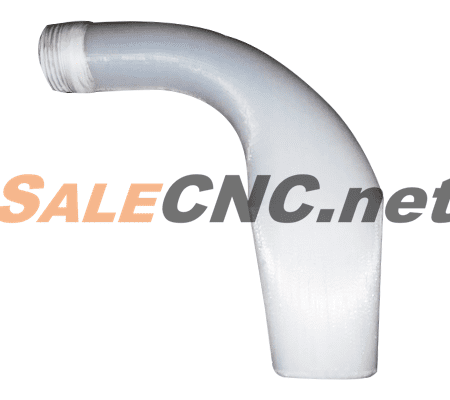
 salecnc.net


