











 Back to M18-เครื่องปิดขอบไม้ (Banding Machines)
Description
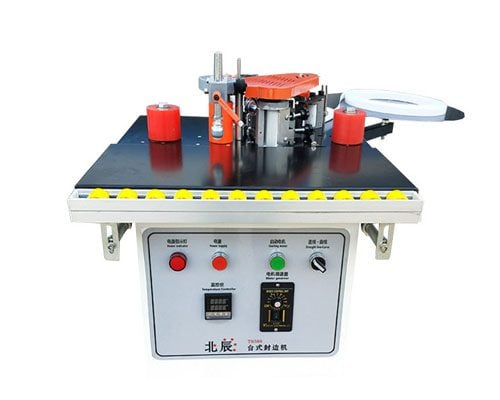
Wood Edge Banding Machine

This edge banding machine is designed for applying edge banding to various panels such as wood, plywood, and window frames. It utilizes an adhesive application method that coats both sides of the edge before pressing and sealing. The machine ensures a smooth and aesthetically pleasing finish, incorporating a polishing function for a refined surface. It operates efficiently, offering a durable and long-lasting service life, making it ideal for medium-sized furniture manufacturers and general furniture production facilities.

Advantages of the Edge Banding Machine
- Easy to operate and quick to heat up.
- Compact size for convenient portability and movement.
- Suitable for general edge banding applications, including tables, cabinets, and shelves.
- Energy-efficient and economical in adhesive consumption.
- More cost-effective than larger automatic machines.

Model : MY07
Heating Speed: 5-8 minutes
Moving Speed: 0-6 cycles/minute
Glue Container Capacity: 1,000 ml
Edge Height: 7-60 mm
Thinnest Material Passable: 0.3 mm
Weight: 32 kg
Dimensions: 50x50x50 cm
Millions of draws
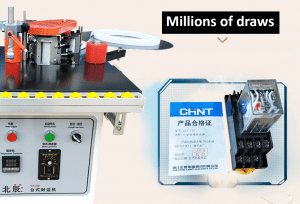
Outlet Limit Rod and Entry Limit Rod

Straight Edge Banding and Curve Edge Banding

Free Gift:

Edge banding adhesive (1 kg, sufficient for 25-50 meters).
Additional adhesive is available for 180 Baht/kg, with a minimum order of 50 kg (Total: 9,000 Baht).
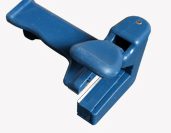
Manual edge trimmer and manual end trimmer.

Side pasting tool.
Using a wood edge banding machine is generally considered superior to manual application for several reasons:
- Precision and Consistency:
- Machine: Edge banding machines provide precise and consistent application, ensuring uniform edges with a professional finish. This level of accuracy is challenging to achieve by hand.
- Hand: Manual application can lead to inconsistencies, uneven adhesion, and potential gaps or overlaps, especially over large projects or when performed by less experienced individuals.
- Speed and Efficiency:
- Machine: Machines can apply edge banding quickly and efficiently, significantly reducing the time required for large-scale projects.
- Hand: Manual application is labor-intensive and time-consuming, making it impractical for high-volume production.
- Quality of Adhesion:
- Machine: Machines use specialized adhesives and precise heat application to ensure strong, durable bonds between the edge banding and the substrate.
- Hand: Achieving the same level of adhesion by hand is more challenging and may not be as reliable, leading to potential peeling or detachment over time.
- Versatility and Capability:
- Machine: Modern edge banding machines can handle various materials (PVC, ABS, wood veneer, etc.), thicknesses, and edge profiles, offering greater versatility.
- Hand: Manual application is more limited in terms of the types of edge banding that can be effectively applied and the complexity of the edge profiles that can be managed.
- Finish Quality:
- Machine: Machines typically provide a cleaner, more professional finish, including trimming and buffing capabilities that enhance the final appearance.
- Hand: Achieving a similar quality of finish by hand requires significant skill and experience and may still not match the machine-applied finish.
- Cost-Effectiveness:
- Machine: While the initial investment in an edge banding machine can be substantial, it yields long-term returns through increased efficiency, reduced labor costs, and improved product quality.
- Hand: Manual application may have lower upfront costs but can become more expensive over time due to higher labor requirements and potential quality issues leading to rework.
In summary, while manual application may be suitable for small, one-off projects or hobbyist endeavors, a wood edge banding machine is the superior choice for professional woodworking, large-scale production, and achieving consistent, high-quality results.
Examples of Machine Output


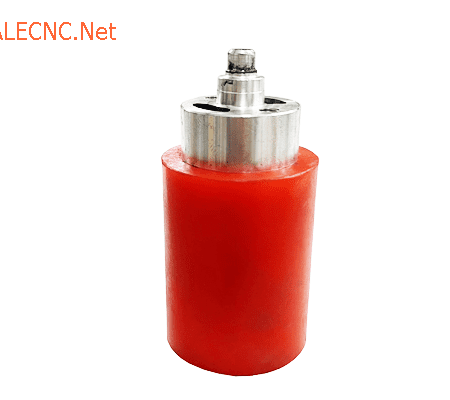
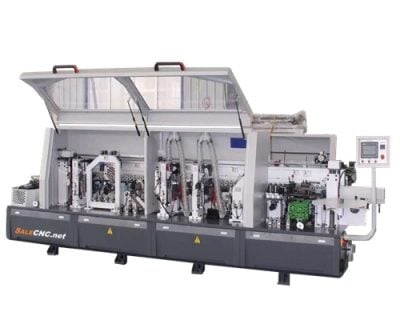 salecnc.net
 salecnc.net


