









 Back to Linear Rail
Description
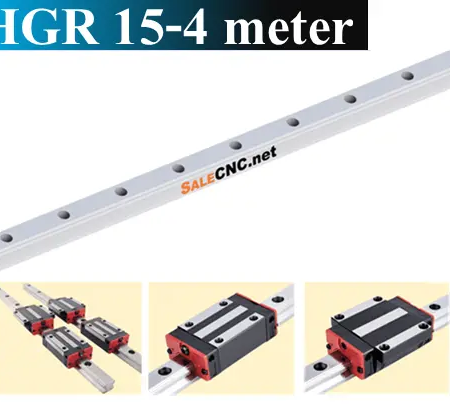
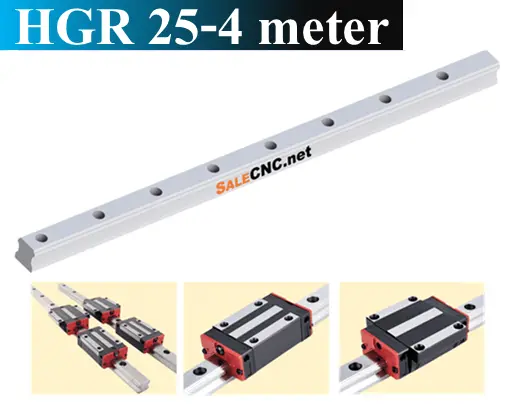
Linear Rail model HG

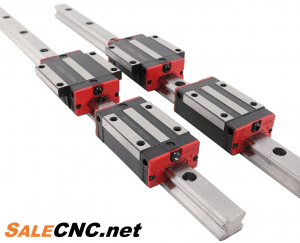
- Linear guide rails are mechanical components that function as long rails.
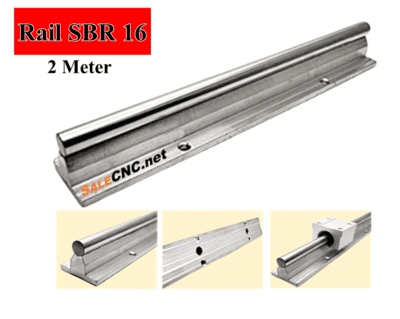
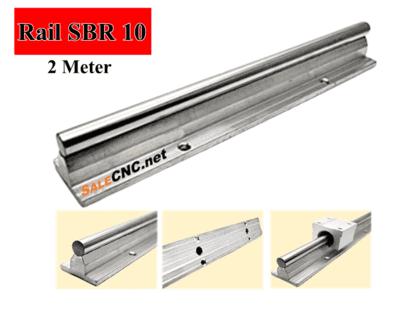
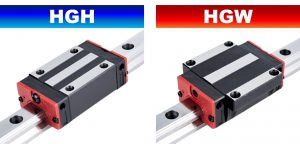
- They feature a rectangular block on top that supports the load, such as HGH, HGW, or SBR types.
- Linear guide rails are available in various sizes and lengths to suit different applications.
- They offer high strength, durability, and ease of installation.
- Linear guide rails can be adapted for diverse applications including photocopiers, CNC machinery, automotive manufacturing, and textile industries.
Specification : Linear Rail HG Data
| Model Size (mm) | HG15 | HG20 | HG25 | HG30 | HG35 | HG45 |
|---|---|---|---|---|---|---|
| Rail Length (mm) | 62 | 78 | 84 | 98 | 113 | 140 |
| Distance from the Edge to the Center of the First Hole (from Left) | 20 | 20 | 20 | 20 | 20 | 22.5 |
| Distance from the Edge | Tolerance of E value for standard rail is ± 0.5mm | |||||
Dimensions
| Model Size (mm) | HG15 | HG20 | HG25 | HG30 | HG35 | HG45 |
|---|---|---|---|---|---|---|
| No. of Holes | 1 | 2 | 2 | 2 | 2 | 2 |
| Head Bolt Hole Diameter (mm) | 7.5 | 9.5 | 11 | 14 | 14 | 20 |
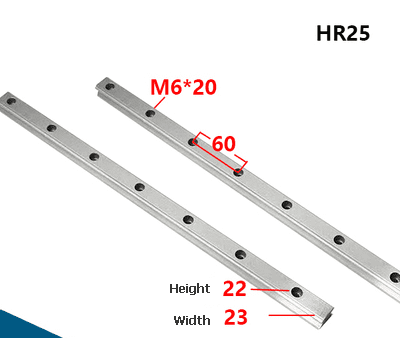
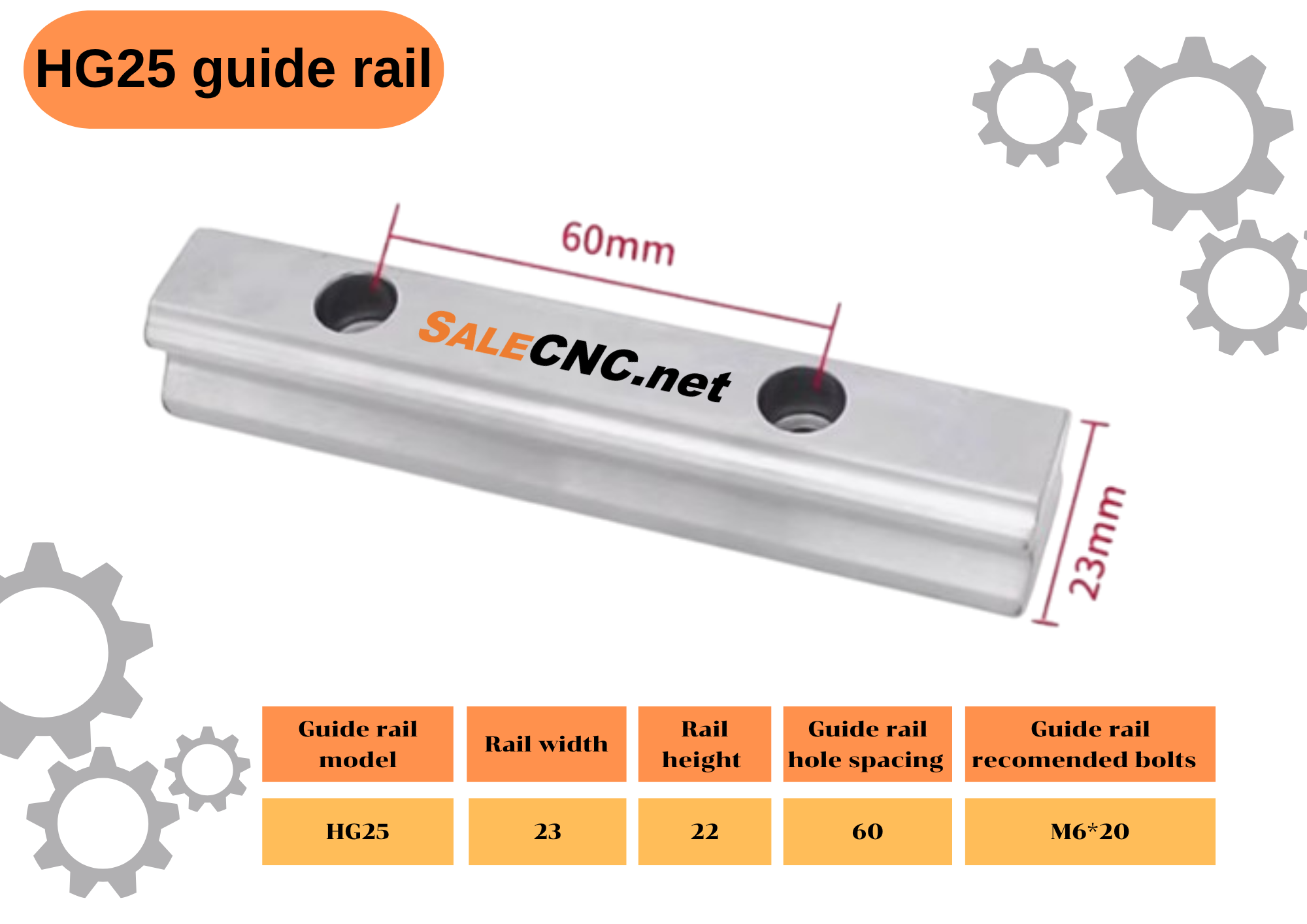
| Bolt Hole Spacing – Length (mm) | 60 | 60 | 60 | 80 | 80 | 105 |
Features : Linear Rail HG Characteristics
1. Easy Lubrication
With traditional sliding systems, insufficient lubrication leads to wear on contact surfaces. Furthermore, supplying adequate lubrication to these surfaces can be challenging due to difficulties in locating appropriate lubrication points. Linear motion guideways facilitate easy grease supply through the grease nipple on the linear guideway block. Centralized oil lubrication systems can also be employed by routing lubrication oil to the piping joint.
2. Easy Installation
The installation of linear guideways is straightforward. High-accuracy linear motion can be achieved by grinding or milling the machine surface according to recommended installation procedures and tightening bolts to their specified torque.
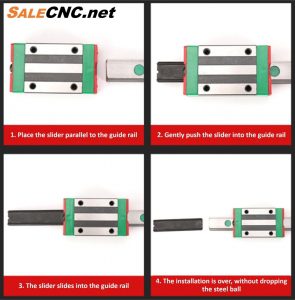
1. Place the slider parallel to the guide rail
2. Gently push the slider into the guide rail
3. The slider slides into the guide rail
4. The installation is complete, without dropping the steel ball.
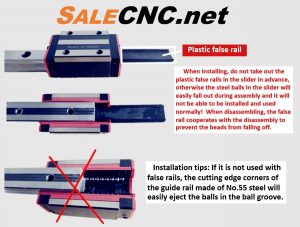
During installation, do not remove the plastic dummy rails within the slider prematurely, as this can cause the steel balls inside the slider to dislodge during assembly, preventing normal installation and operation. When disassembling, the dummy rail should be used in conjunction with the disassembly process to prevent the balls from falling out.
3. High-Speed Motion Achievable with Low Driving Force
Linear guideways exhibit minimal friction resistance, requiring only a small driving force to move a load. This translates to enhanced power efficiency, particularly in the moving components of a system, and is especially beneficial for reciprocating elements.
4. Extended Service Life with High Motion Accuracy
Traditional slides can experience accuracy errors due to oil film counter-flow. Insufficient lubrication leads to wear between contact surfaces, progressively degrading accuracy. In contrast, rolling contact experiences minimal wear, enabling machines to achieve a long operational life with high motion precision.
5. High Positional Accuracy
When a load is driven by a linear motion guideway, the frictional contact between the load and the worktable is rolling contact. The coefficient of friction is only 1/50th of traditional contact, and the difference between the dynamic and static coefficients of friction is minimal. Consequently, slippage is prevented while the load is in motion.
6. Equal Load Capacity in All Directions
Due to their specialized design, these linear guideways can accommodate loads in both vertical and horizontal directions. Conventional linear slides have limited load-bearing capacity in directions parallel to the contact surface and are more prone to accuracy degradation under load.