Precise Temperature Control Industrial Cooling System
Operating industrial machinery, electronic devices, and other equipment in tropical climates requires robust temperature management. Excessive heat buildup within machinery can lead to component failure, reduced operational efficiency, and potential fire hazards. Similar to how elevated body temperature affects human health and performance, overheating industrial equipment necessitates effective cooling solutions. Chillers are essential for maintaining optimal operating temperatures, ensuring machine longevity, and preserving performance.
A chiller is a refrigeration unit designed for cooling, primarily utilizing water as the medium for heat exchange. Chillers are widely implemented in industrial settings to dissipate heat from machinery, thereby extending equipment lifespan and maintaining operational efficiency. Applications include closed-loop systems, hydraulic injection molding machines, and CNC machinery.
Water serves as the primary medium for heat exchange and dissipation from the cooling unit.
Chillers are integral to industrial operations for managing machine heat, ensuring longevity, and sustaining performance.
Examples include closed-loop systems, hydraulic injection molding machines, and various CNC machines (Engraving, Laser, Router, Fiber Laser).
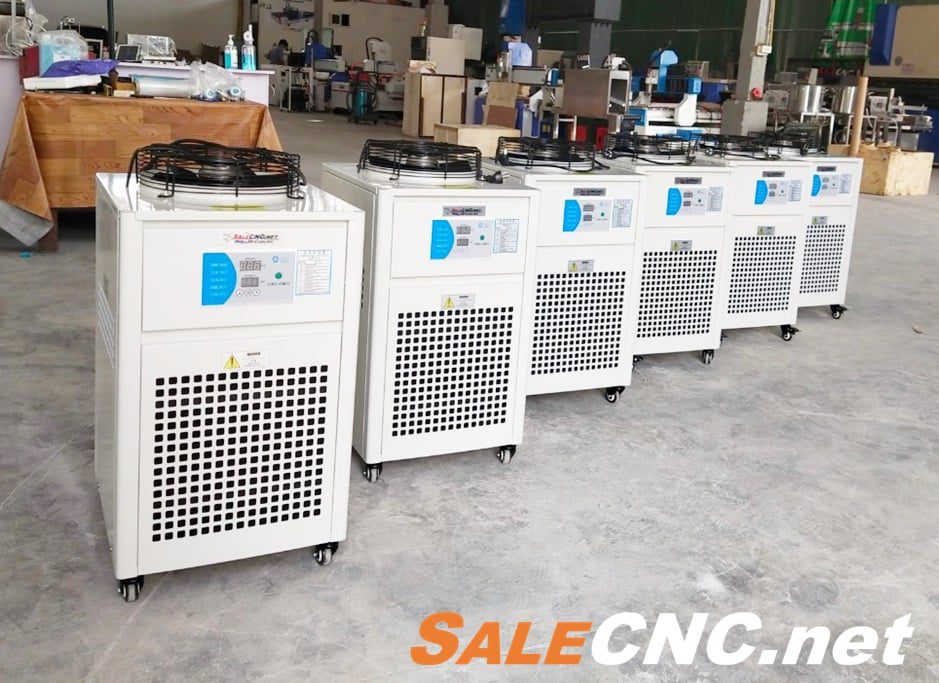
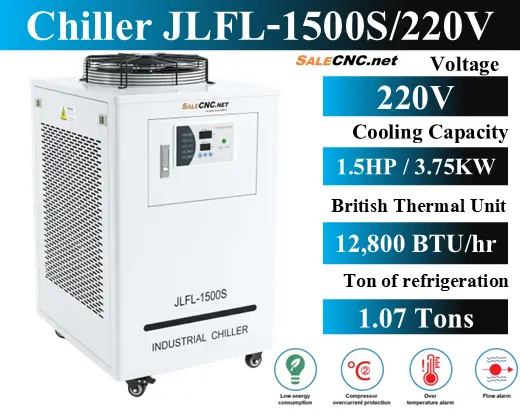
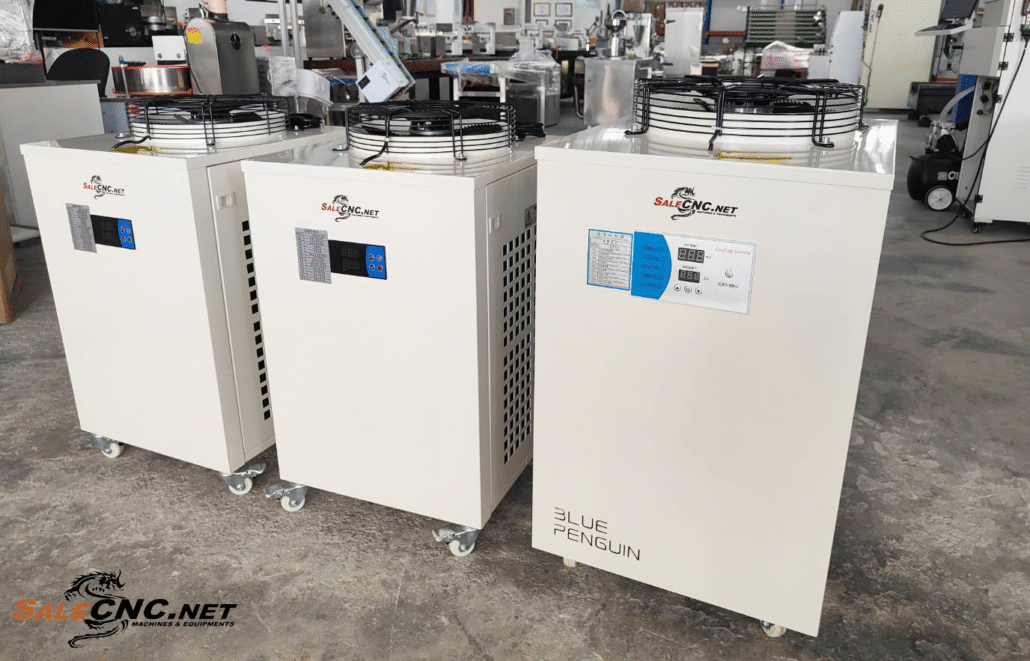
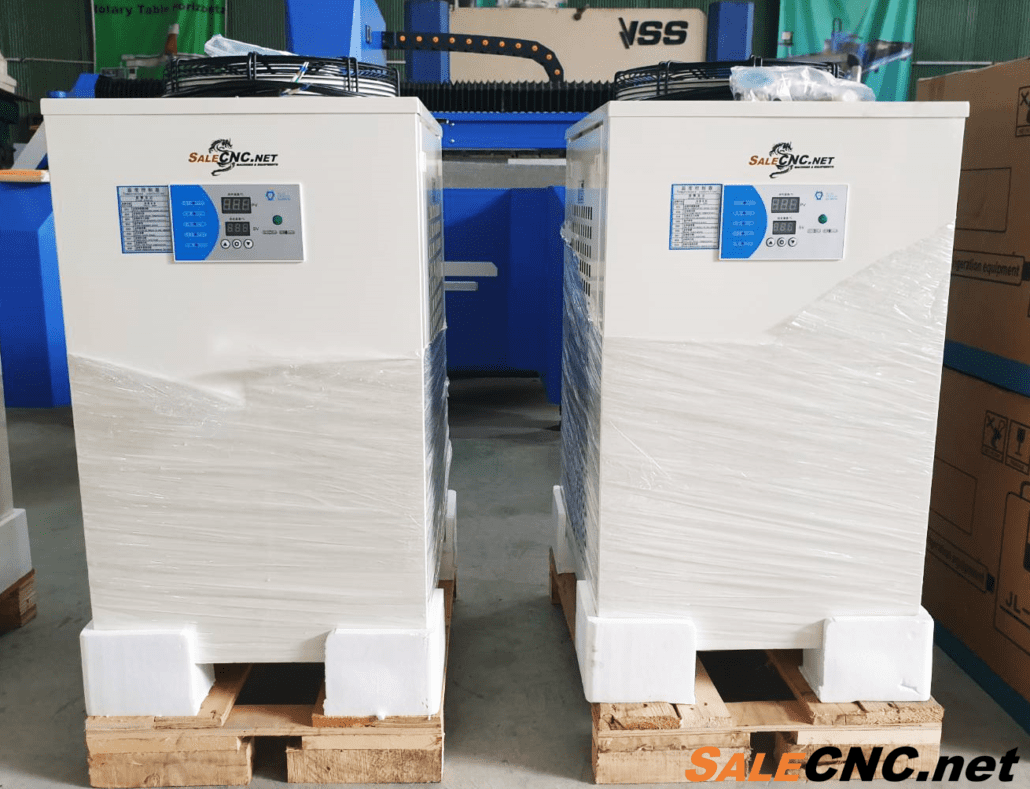
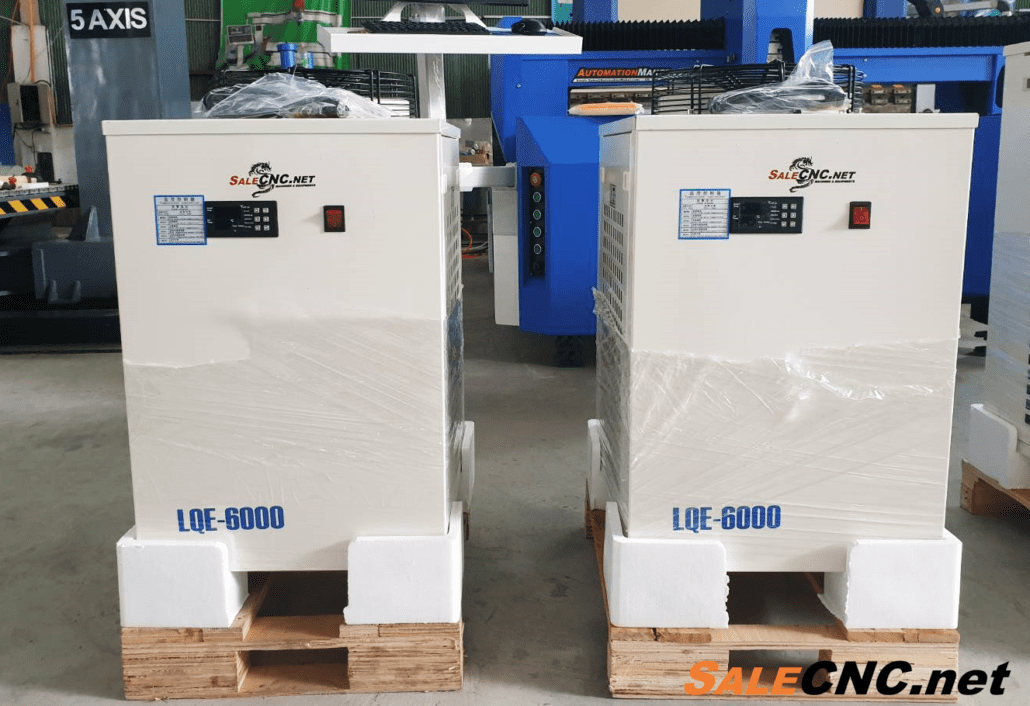
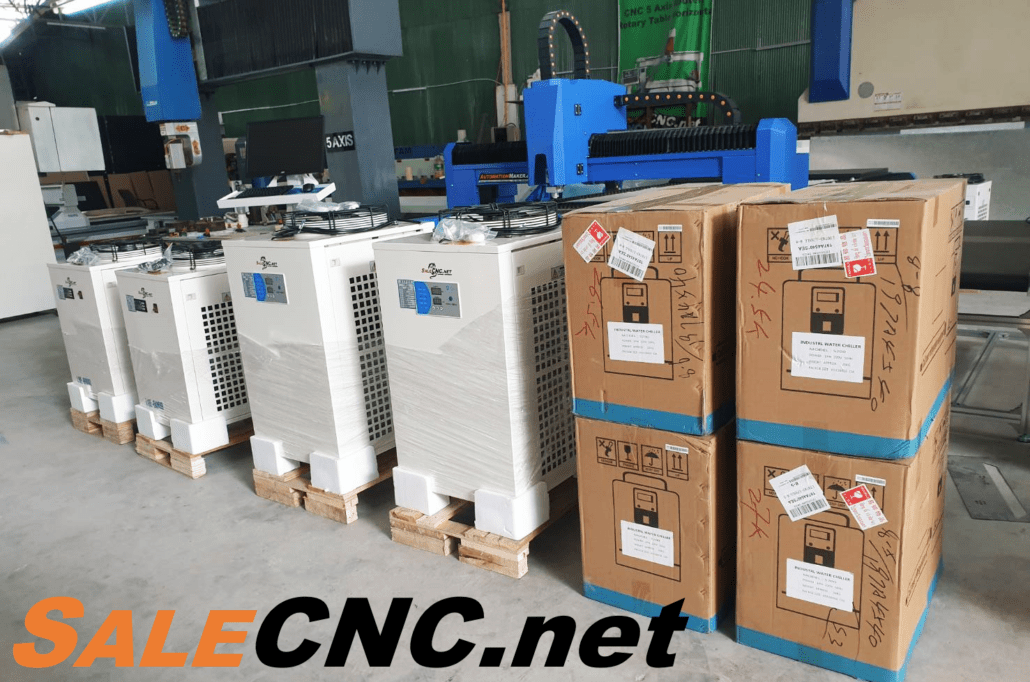
JLFL-1500 Chiller – Ideal for CNC and Fiber Laser Cooling
This unit is designed to efficiently cool CNC and Fiber Laser machinery, preventing overheating during operation.
FEATURES
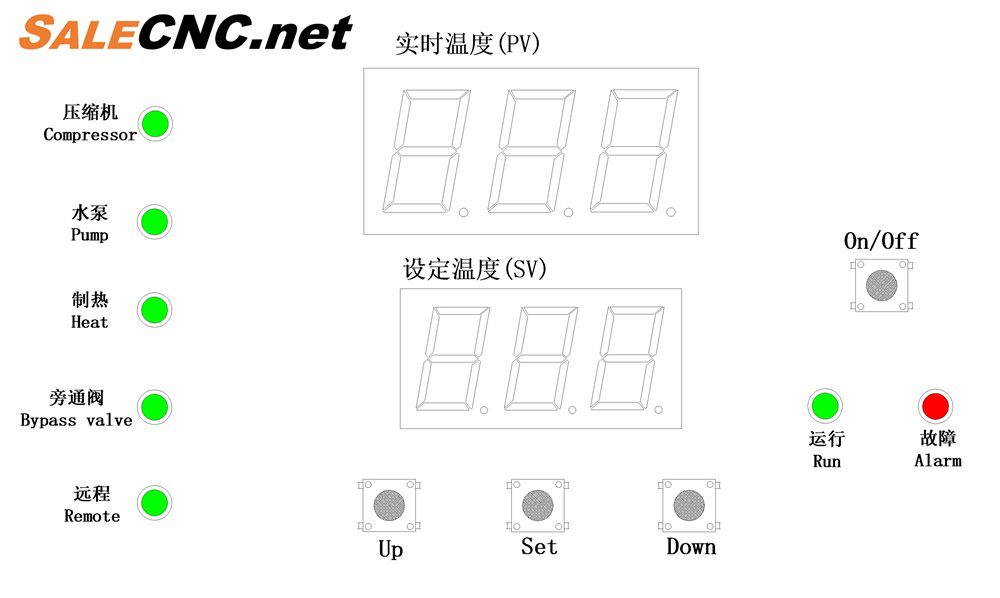
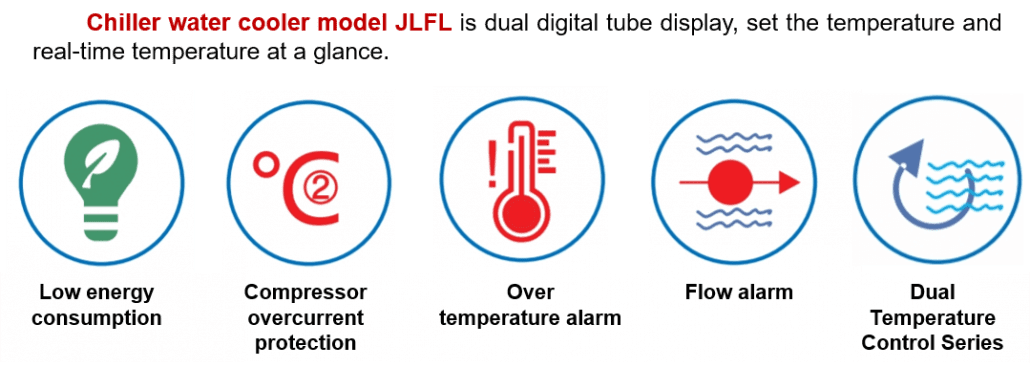
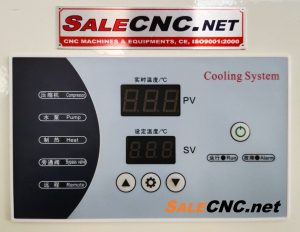
Dual digital displays provide simultaneous readouts for set temperature and real-time temperature.
Full power refrigeration with precise micro-cooling and heating control.
High-precision temperature regulation, maintaining fluctuations within ±0.5℃.
Integrated fault diagnostics for sensor errors and water flow alarms.
Mainboard features a highly integrated chip for robust anti-interference capabilities.
Machine Dimensions
Alarm Indicator
Controller Interface
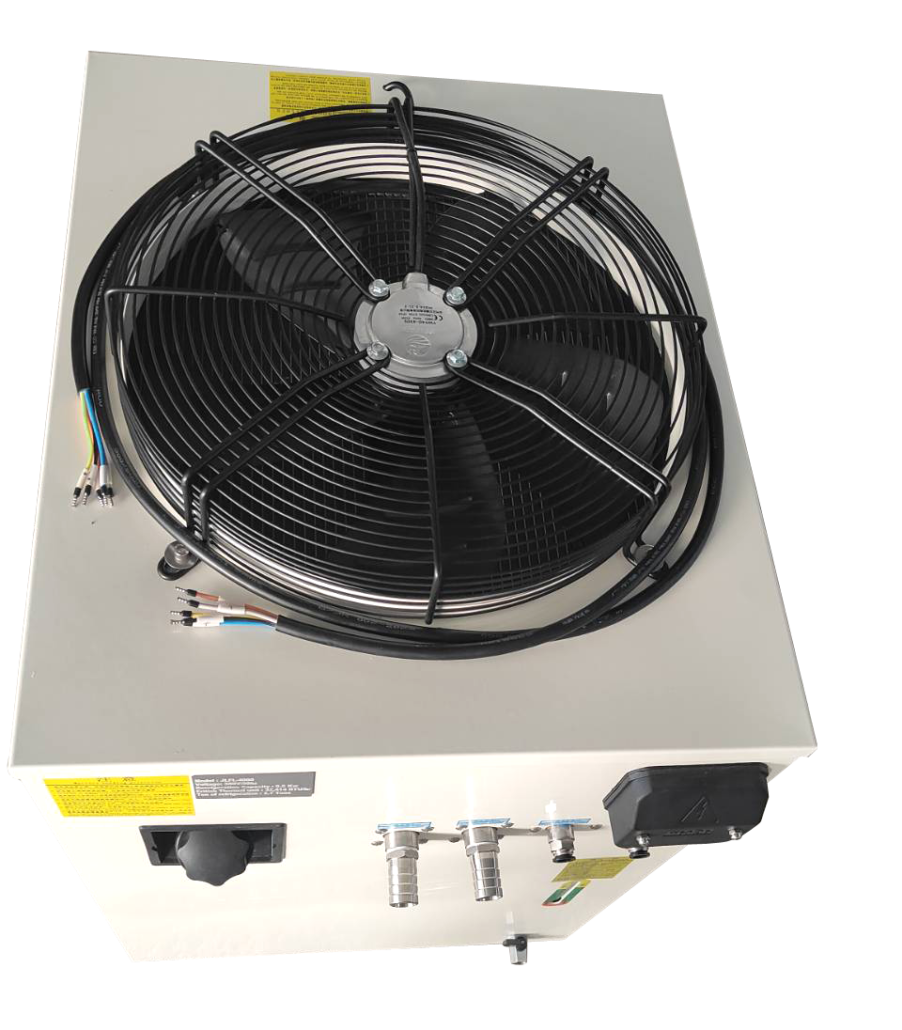
Top View
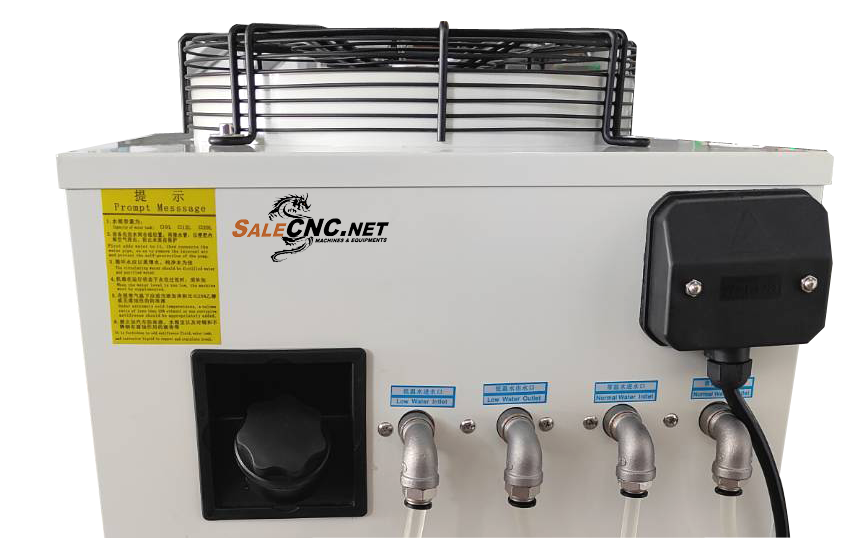
Inlet and Outlet Ports
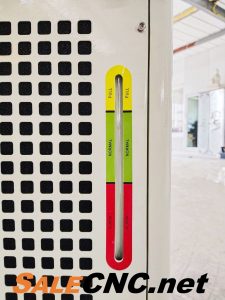
Internal Water Level Indicator
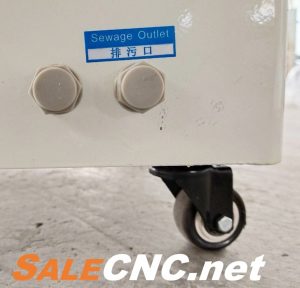
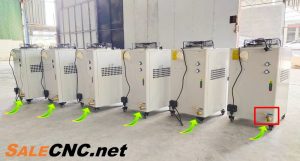
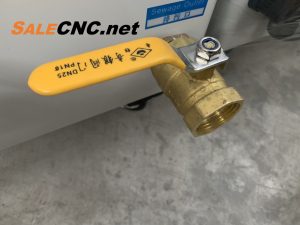
Drain Port
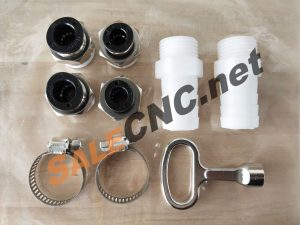
Included Accessories
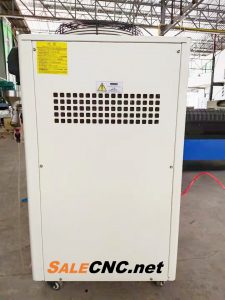
Side View
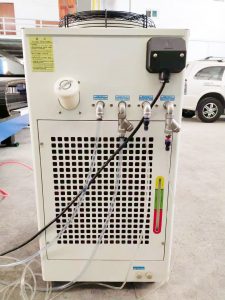
Rear View
Optional drain pipe with internal diameter of 19mm or 32mm available.
Drain pipe with internal diameter 32mm
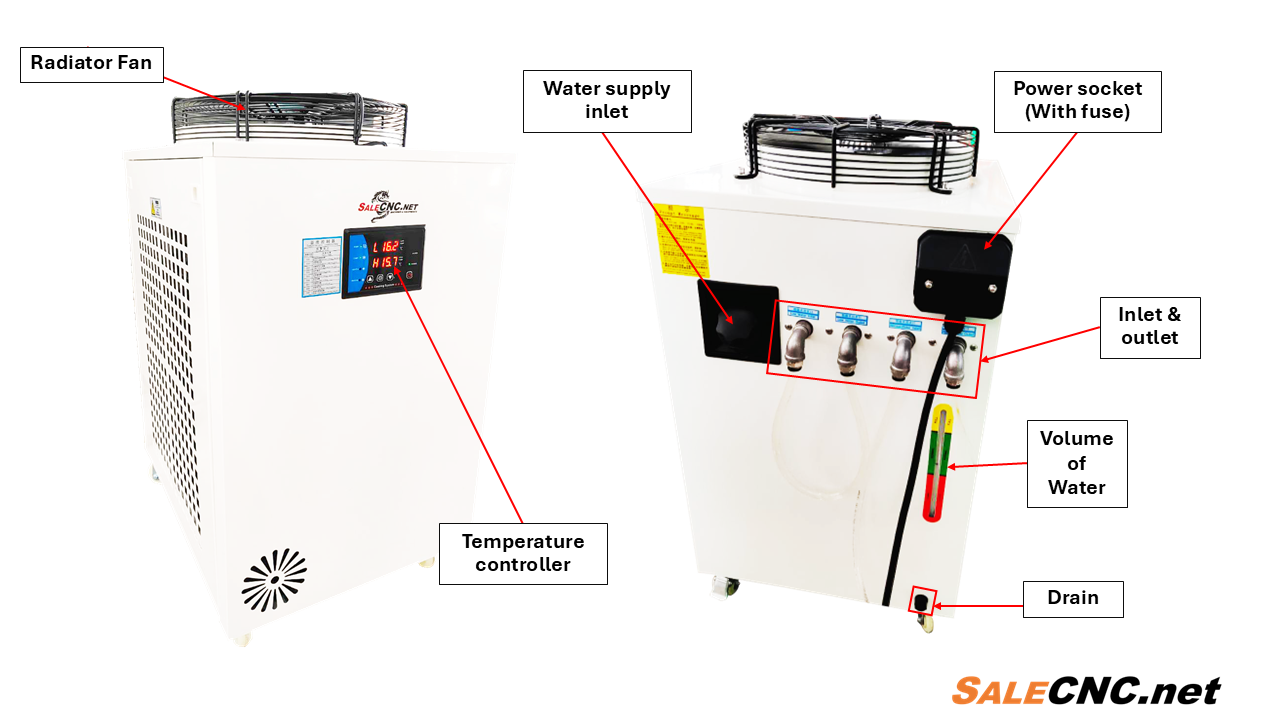
Machine Components
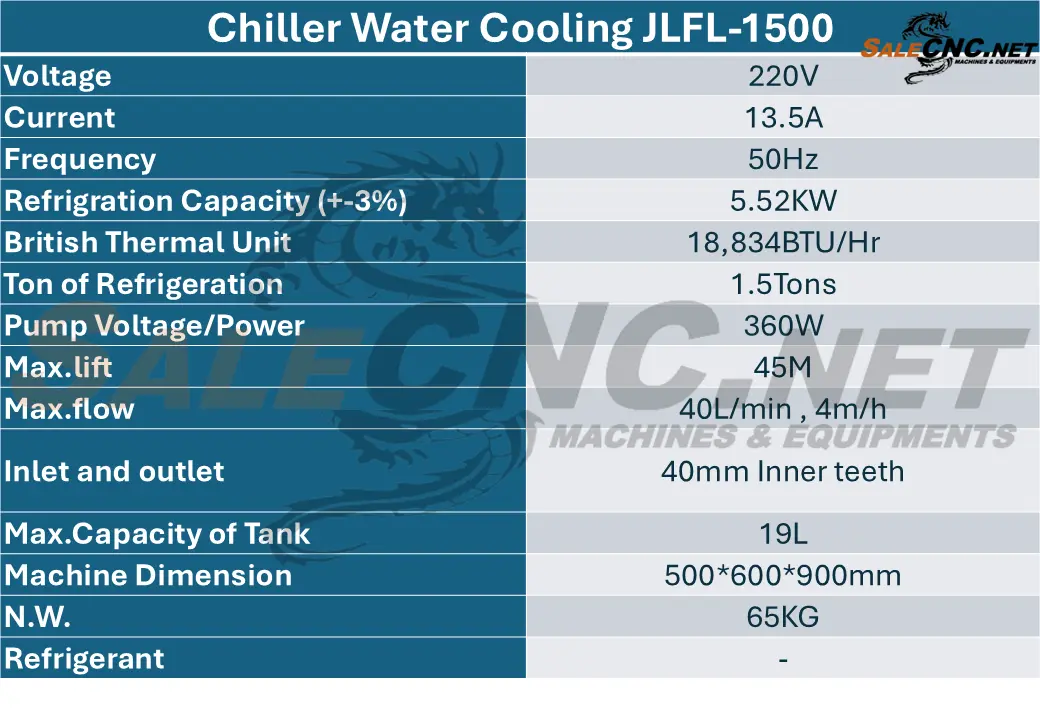
Technical Parameters
Compressor: R32 or 410A
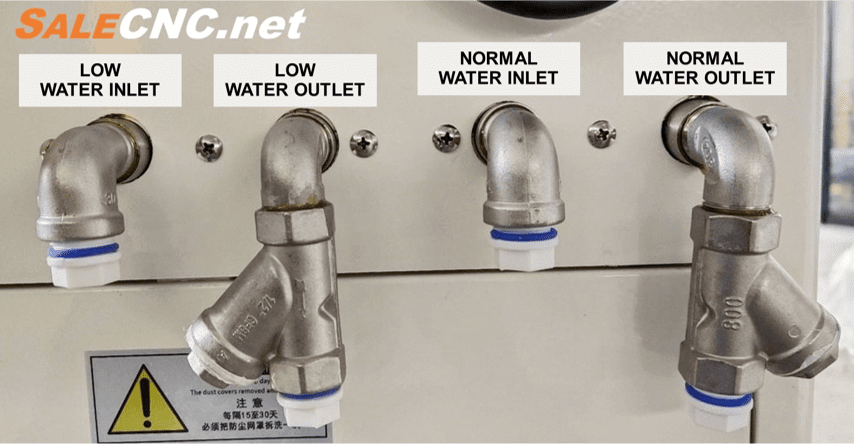
Inlet and Outlet Configuration
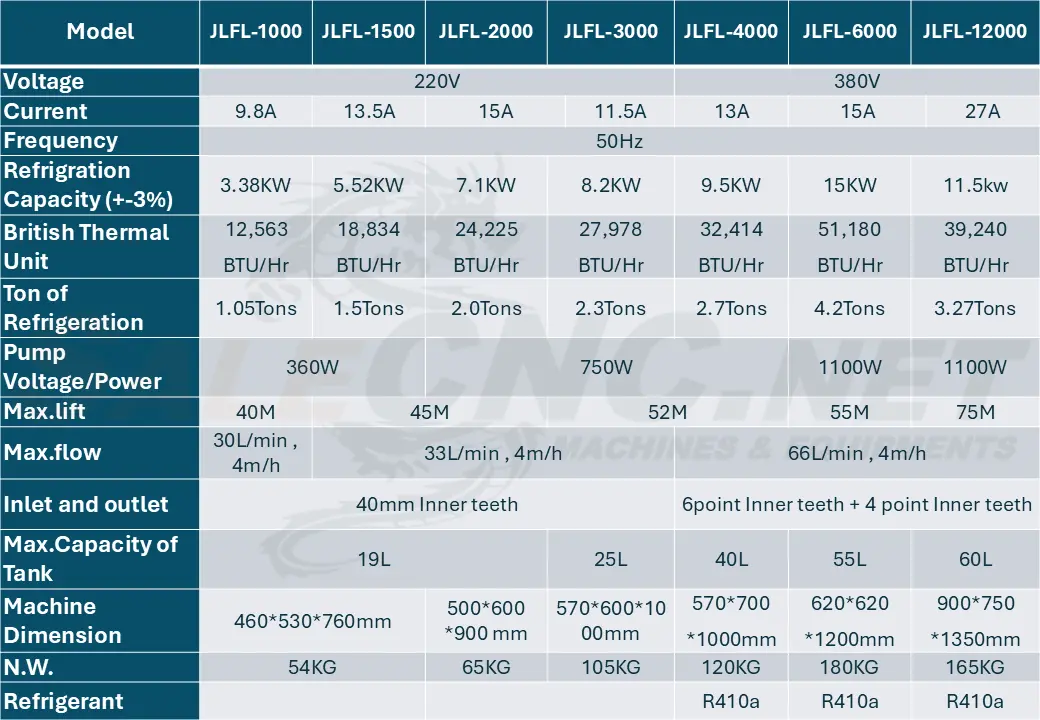
Comparison of All Chiller (Water Chiller) Models
Chiller Water Cooling Model JLFL Series
Understanding BTU Measurement
BTU (British Thermal Unit) is a standard unit for quantifying heat energy, specifically the amount required to raise the temperature of one pound of water by one degree Fahrenheit under constant pressure. It is commonly used in the United States and other regions to define heating and cooling capacities.
The process for measuring BTU involves:
System Definition: Identify the system for which BTU is being measured (e.g., heating, cooling, appliance).
Substance Identification: Determine the substance involved, typically water, but variable based on application.
Temperature Change Measurement: Record the initial and final temperatures of the substance.
Heat Energy Calculation: Apply the formula: Heat energy (BTU) = mass (lb) × specific heat (BTU/lb°F) × temperature change (°F).
Efficiency Consideration: Factor in system or equipment efficiency where relevant to determine actual BTU output or input.
BTU measurement is crucial for various applications, including HVAC, cooking, and industrial processes.
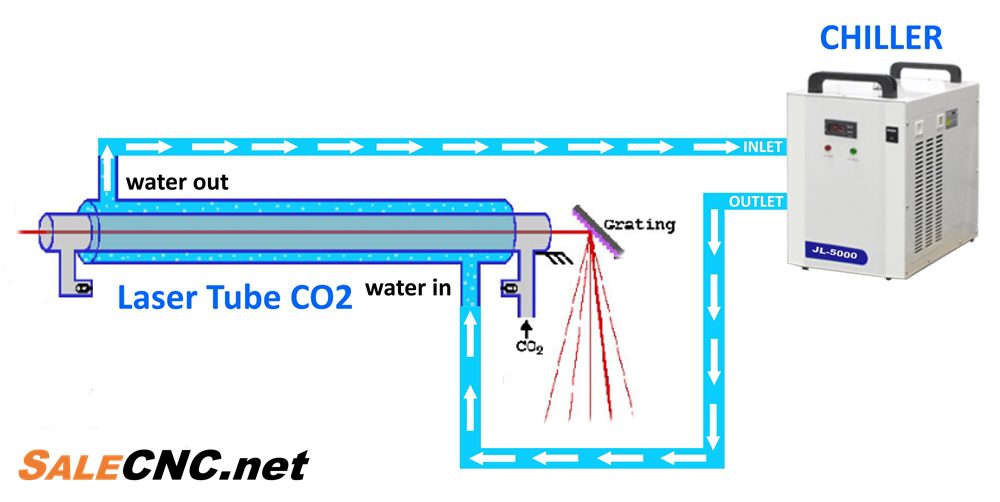
Operational Principle: Laser Tube CO2 and Chiller Interaction
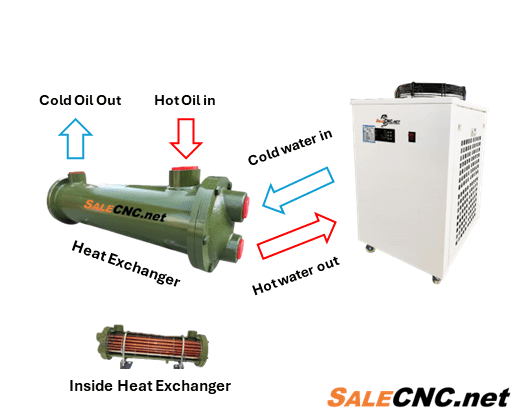
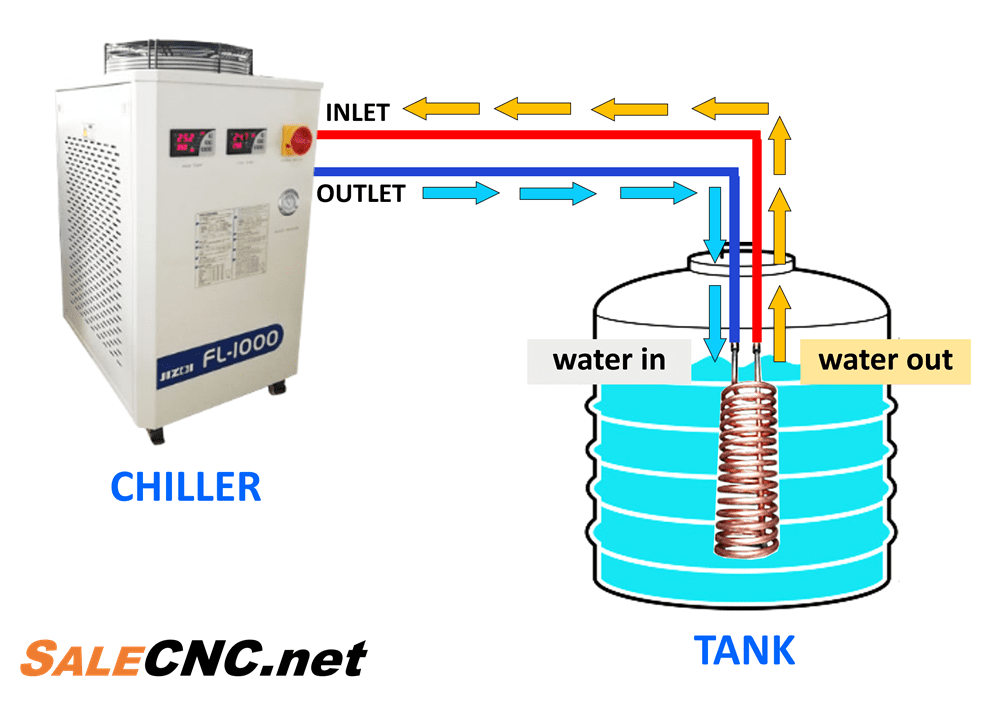
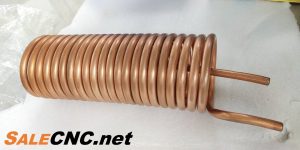
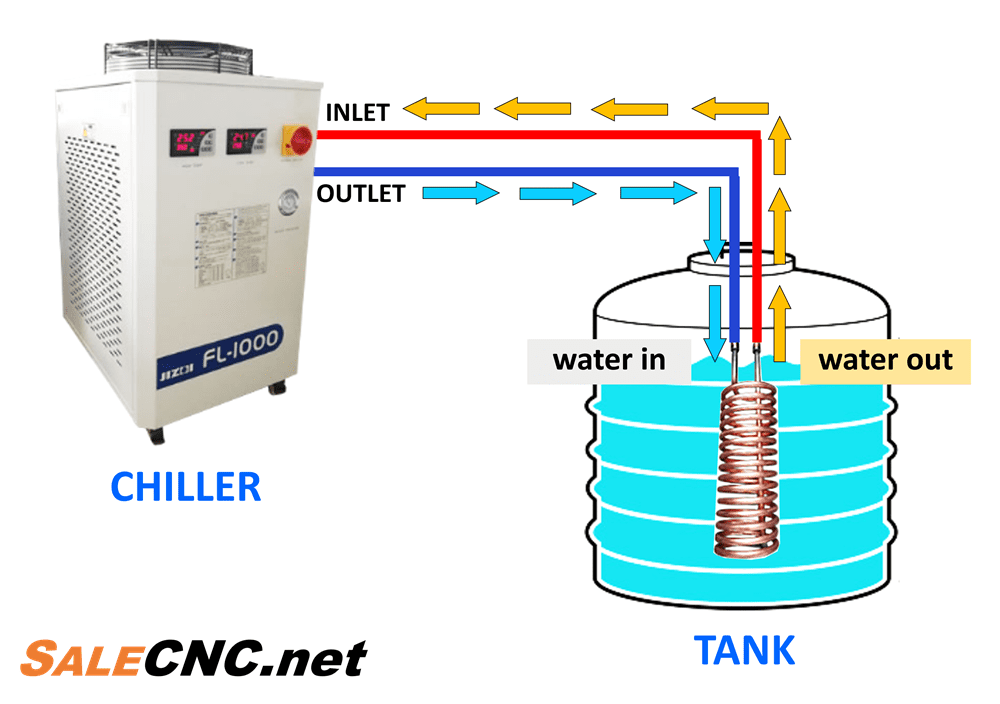
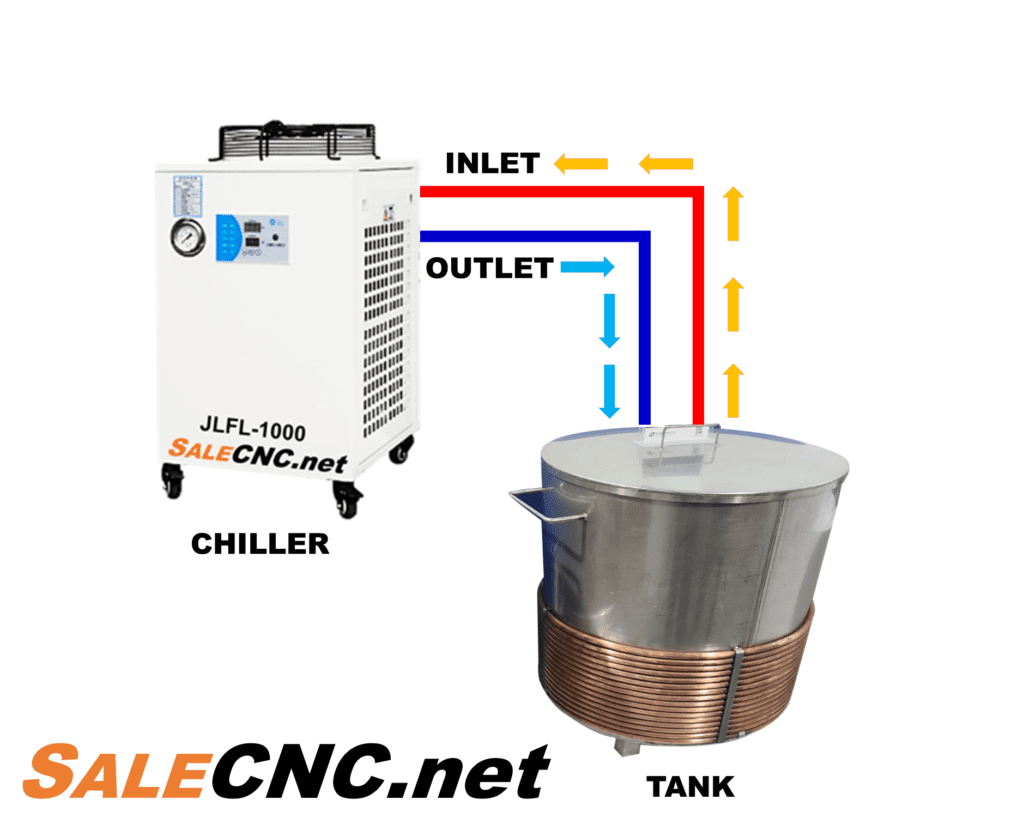
Optional Accessory: Heat Exchanger
The Heat Exchanger connects to the Chiller and can be submerged in water to further reduce its temperature.
Price: 3,000 THB !!
Heat Exchanger Installation with Chiller
Heat Exchanger: An Optional Accessory for Chillers to Achieve Lower Water Temperatures | SALECNC.net
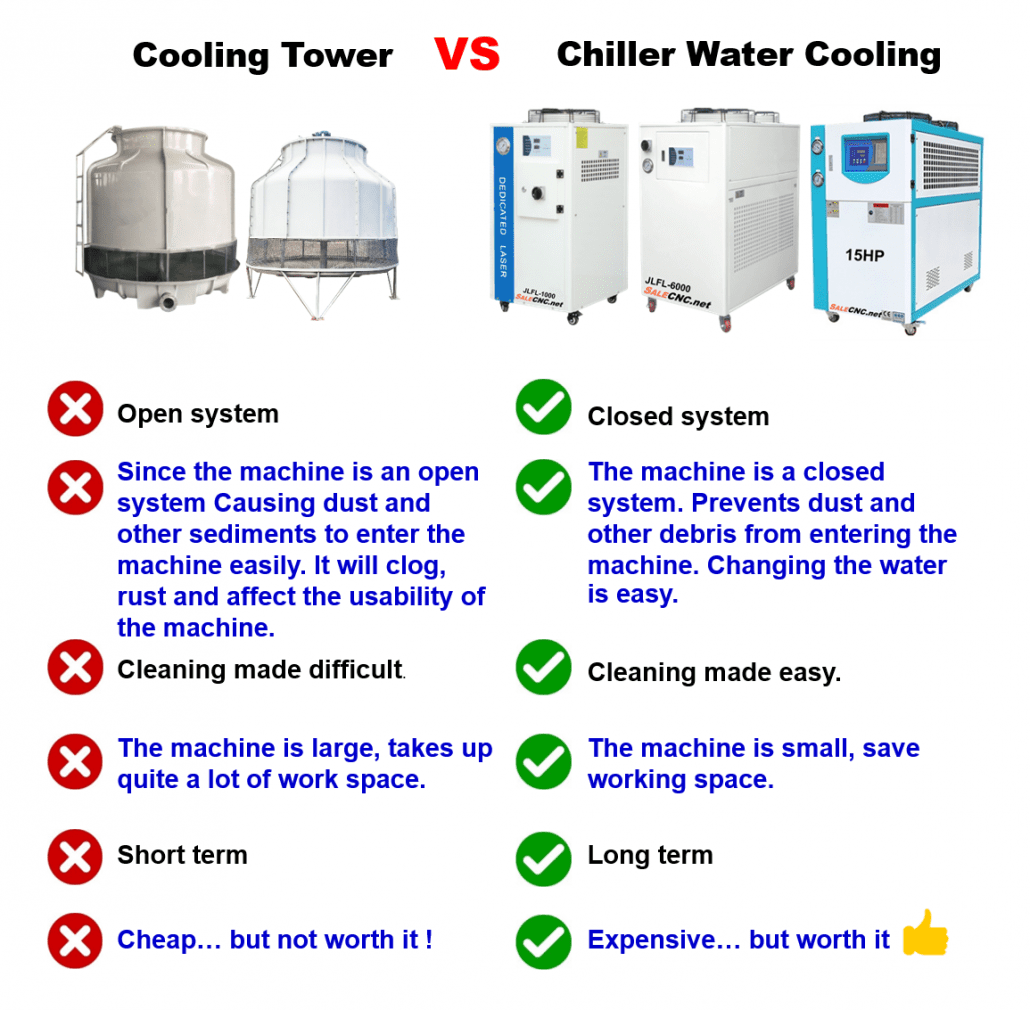
Chiller Water Cooling vs. Cooling Tower
Cooling Towers are traditionally used in industries like plastic injection molding. However, they present several drawbacks: they are large, operate as open systems, are difficult to maintain, and are susceptible to dust and sediment ingress, negatively impacting performance and reducing lifespan.
Consequently, industries increasingly favor Chillers (Chiller Water Cooling). These units are compact, space-efficient, operate as closed systems offering superior protection against contaminants, and provide a longer operational life.
Cooling Tower
Chiller Water Cooling
❌ Open system
✅ Closed system
❌ Susceptible to dust and sediment ingress, leading to clogging, corrosion, and impaired performance.
✅ Prevents dust and sediment ingress. Easy water change procedure.
❌ Difficult to clean.
✅ Easy to clean.
❌ Large footprint, requires significant operational space.
✅ Compact design, space-saving.
❌ Shorter lifespan.
✅ Extended lifespan.
❌ Lower initial cost, but higher long-term costs due to maintenance, repairs, and short lifespan.
✅ Higher initial cost, but cost-effective due to ease of maintenance, reliability, and longevity.
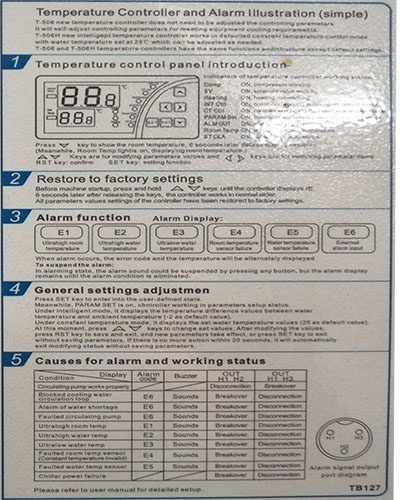
เมื่อเครื่องตรวจพบความผิดปิกติที่ช่อง PV จะแสดงอุณหภูมิ และรหัสข้อผิดพลาดสลับกันไปมา ในกรณีที่ตรวจพบข้อผิดพลาดหลายจุด สามารถกดปุ่ม Up หรือ Down เพื่อดู
Normal temperature water set temperature = [low temperature water set temperature] + [F01 normal temperature water temperature difference] , Not controlled by the upper and lower temperature limits
F01
Automatic working
1
0~1
0: not used / 1: used
F03
Low temperature water set temperature
23.0℃
【F06】~【F05
The function of the parameters is detailed in: 5 Control Logic.
F04
Control temperature difference
1.0℃
0.1~20.0℃
The function of the parameters is detailed in: 5 Control Logic.
F05
Temperature setting upper limit
30.0℃
【F06】~90 ℃
Low temperature water set the settable temperature range.
F06
Temperature setting lower limit
20.0℃
-38~【F05】℃
Low temperature water set the settable temperature range.
F07
Temperature over temperature upper limit
35℃
0~99℃
Alarm when the temperature of low temperature water or normal temperature water is greater than or equal to this value.
F08
Over temperature lower limit
4℃
-38~99℃
When low temperature water or normal temperature water temperature is less than or equal to this value, it will alarm.
F09
–
F10
Off the compressor temperature difference
3.0℃
0.3~15.0℃
–
F11
Heating temperature difference
2.0℃
0.1~20.0℃
When the electric heating is controlled (that is, the [function selection] is set to 2 or 3), this parameter is valid. / The function of the parameters is detailed in: 5 Control Logic.
F12
Low temperature water temperature compensation
0
-9.9~9.9℃
–
F13
Room temperature water temperature compensation
0
-9.9~9.9℃
Add
F14
Compressor anti-frequent start time
2 minutes
1~5 minutes
–
F15
Compressor start delay
30 seconds
0~255 seconds
Press the start button for at least the set time before allowing the compressor to start
F16
High/low temperature alarm delay
10 seconds
0~255 seconds
After the set time is delayed after the power is turned on, the detection of low temperature water and normal temperature water temperature is too high/low faults.
F17
Flow alarm delay
3 seconds
0~255 seconds
After pressing the power button, it will alarm after detecting the flow switch input for this time
F18
Level alarm delay
5 seconds
0~255 seconds
After power-on, it will alarm after detecting the input of the level switch for this time
F19
Pressure detection delay
10 seconds
0~255 seconds
After turning on the compressor and delaying the set time, start to detect pressure failure.
F20
DI4 input selection
0
0~1
0: Normal temperature flow / 1: Phase sequence switch
F21
Pressure Switch
0
0~2
0: Normally open / 1: Normally closed / 2: Disabled
(When set to normally open, the switch is closed and alarms)
F22
Room temperature flow/phase sequence
0
0~2
0: Normally open / 1: Normally closed / 2: Disabled
(When set to normally open, the switch is closed and alarms)
F23
Low temperature flow switch
0
0~2
When set to normally closed, the switch is disconnected and alarms
/ When set to disable, the state of the corresponding switch is not detected.
F24
Level Switch
0
0~2
When set to normally closed, the switch is disconnected and alarms
/ When set to disable, the state of the corresponding switch is not detected.
F25
Compressor overload switch
0
0~2
When set to normally closed, the switch is disconnected and alarms
/ When set to disable, the state of the corresponding switch is not detected.
F26
Alarm relay function
1
0~1
0: Alarm signal, control the relay output according to whether the unit has a fault
(**Relay NC point: disconnect when the unit fails, and close when the unit is in standby or normal operation; )
(**Relay NO point: pulls in when the unit fails, and disconnects when the unit is in standby or normal operation. )
/ 1: Normal operation signal, according to whether the unit is operating normally to control the relay output
(**Relay NC point: disconnect when the unit is operating correctly, and close when the unit is in standby or failure; )
(**Relay NO point: when the unit is operating correctly, it is closed, and when the unit is in standby or faulty, it is disconnected. )














 View All Products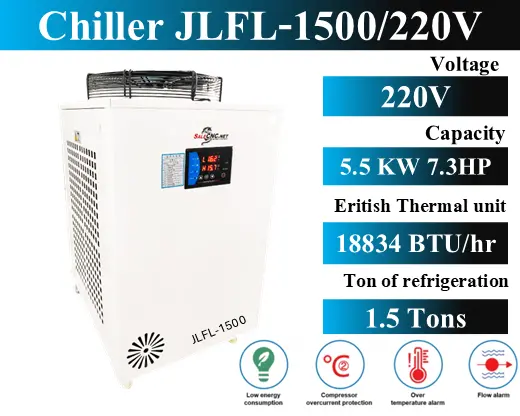





 Add Line: @123wotsb Fern (sales engineer)
  Add Line: @sales Chompoo (sales engineer)