








 Back to Food Processing Machine
Description
Dumpling Machine

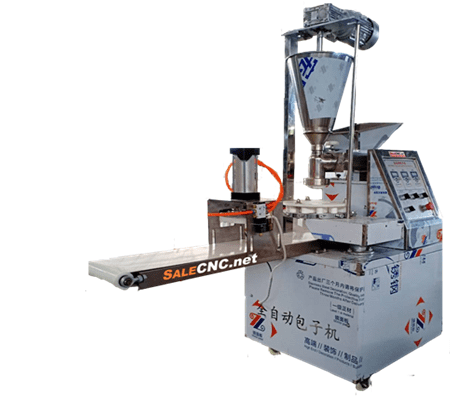
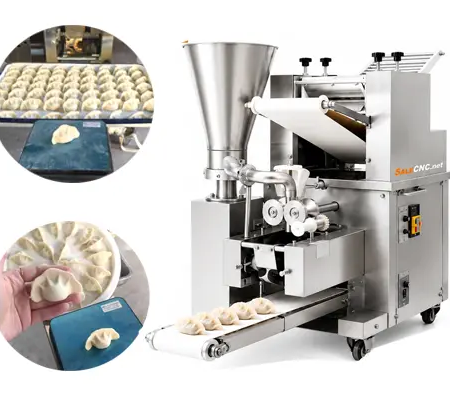
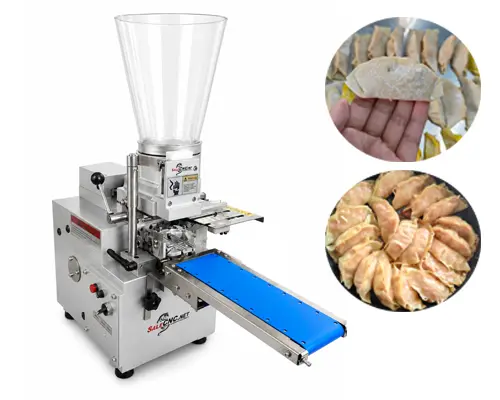
Dumpling Wrapping Machine – Gyoza Maker
An advanced food processing machine designed for efficient and time-saving dumpling production.
This industrial dumpling maker automatically fills and seals gyoza, ensuring consistency and high output.
Experience effortless gyoza production with automated filling and sealing.
Fully automatic dumpling wrapping machine that fills and seals dumplings.
- Gyoza, a popular appetizer originating from China, gained widespread recognition in Japan alongside ramen, becoming a staple dish. This popularity later extended to Thailand, influenced by Japanese cuisine.
- Gyoza are crafted from a dough of wheat flour, eggs, water, salt, and seasoning, encasing various fillings such as pork, shrimp, chicken, or vegetables. They can be prepared through steaming, boiling in broth, or pan-frying/grilling, with the latter being particularly favored.
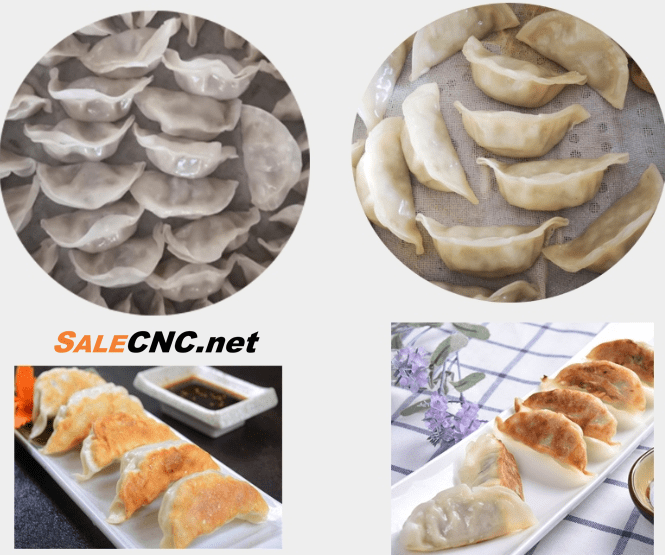
The rapidly expanding gyoza market is well-supported by our dumpling wrapping machine, capable of producing 600-1,000 pieces per hour.

User-friendly, safe, and cost-effective for managing production budgets.
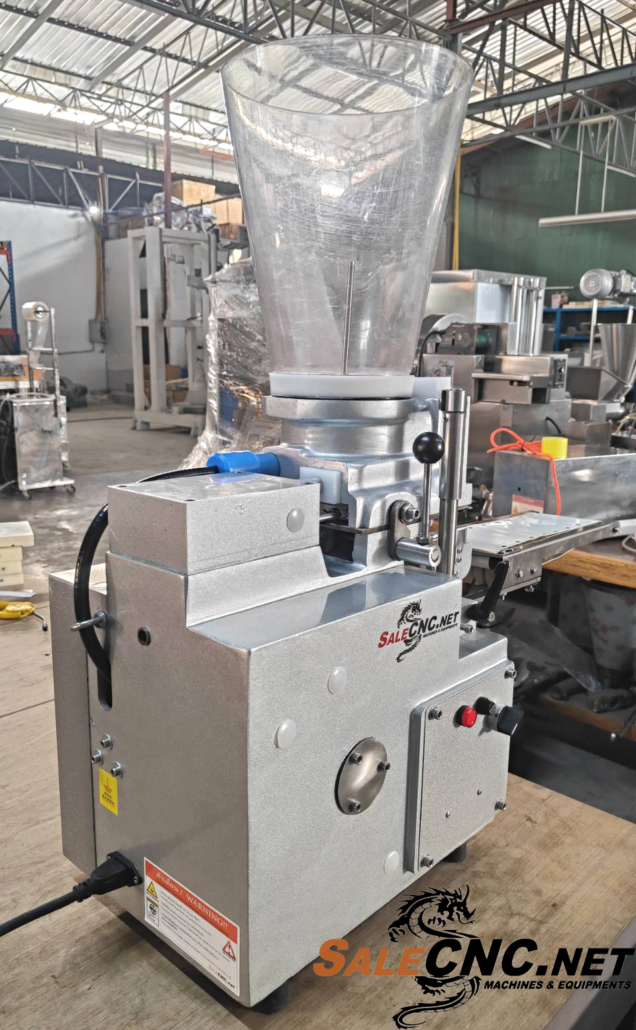
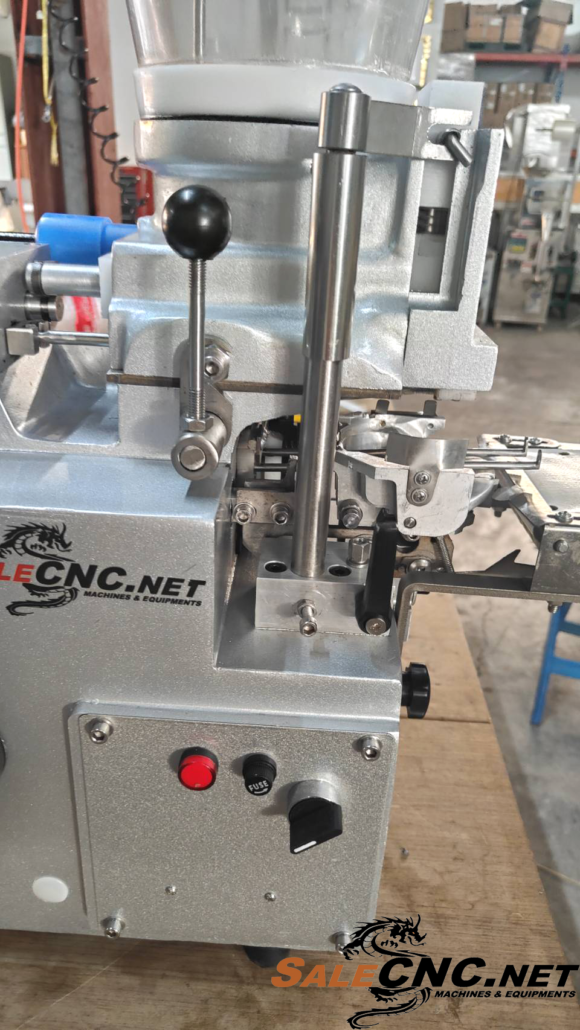

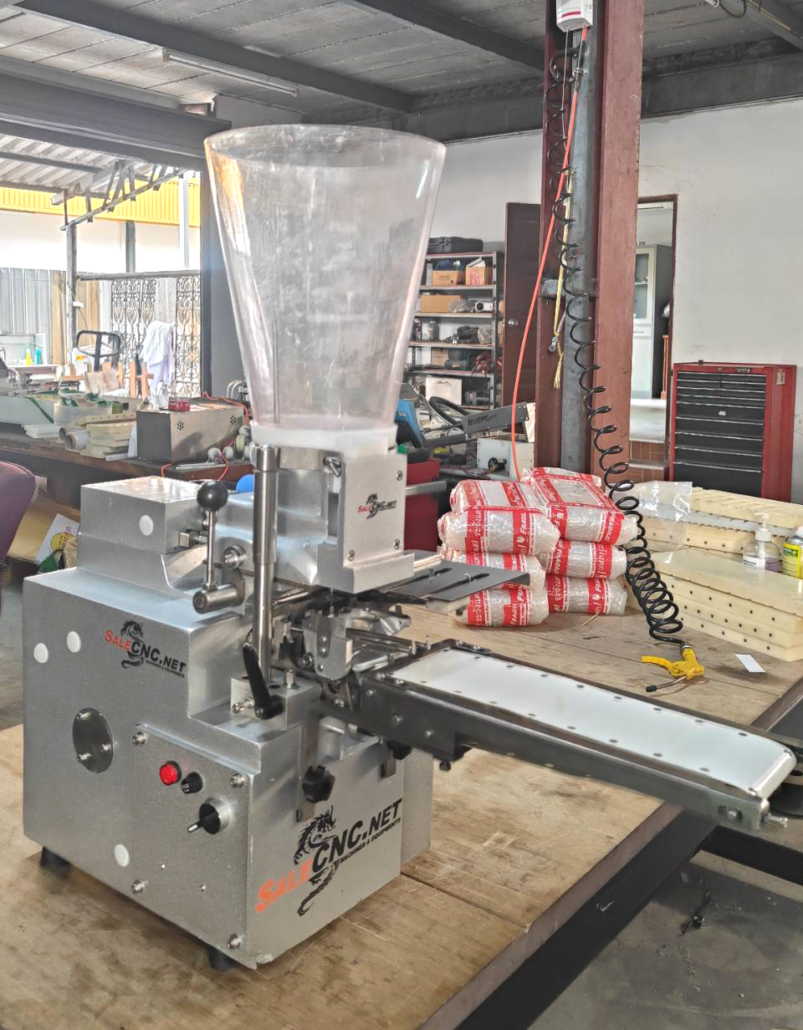
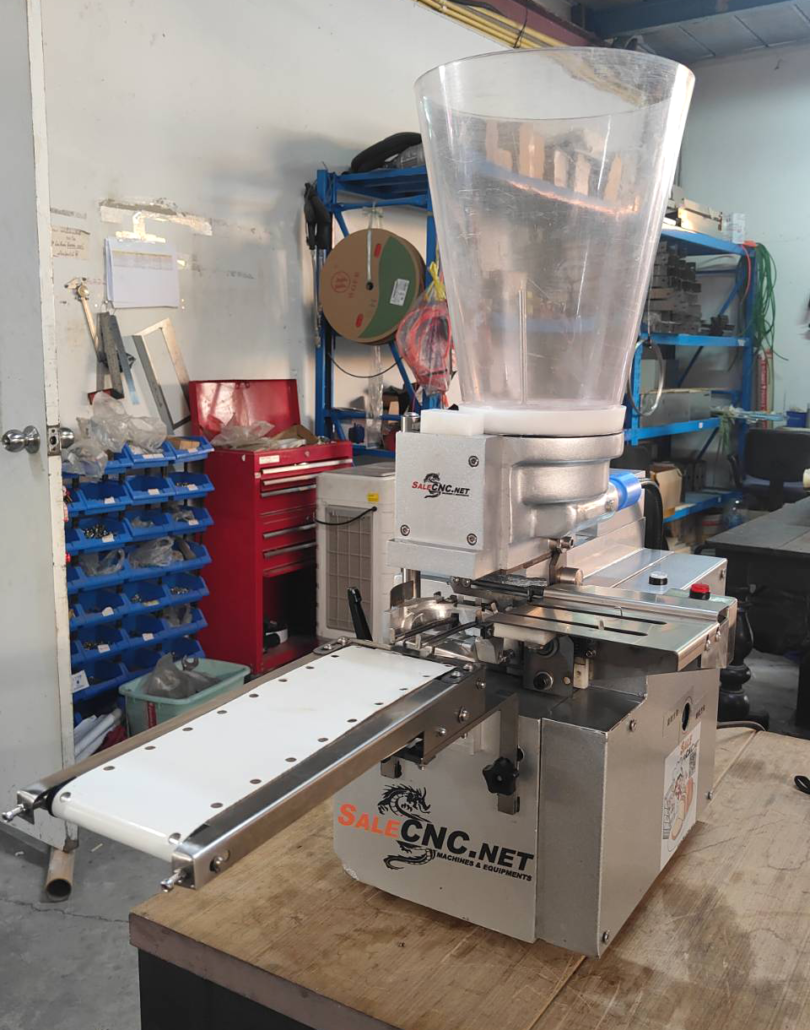
Technical Parameters
✅ Supply voltage : 220 V / 50 HZ
✅ Product Output : 1200 W
✅ Production Rate : 360-500 units/hr
✅ Outline Dimensions : 430x365x560 mm
✅ Weight : 65 kg
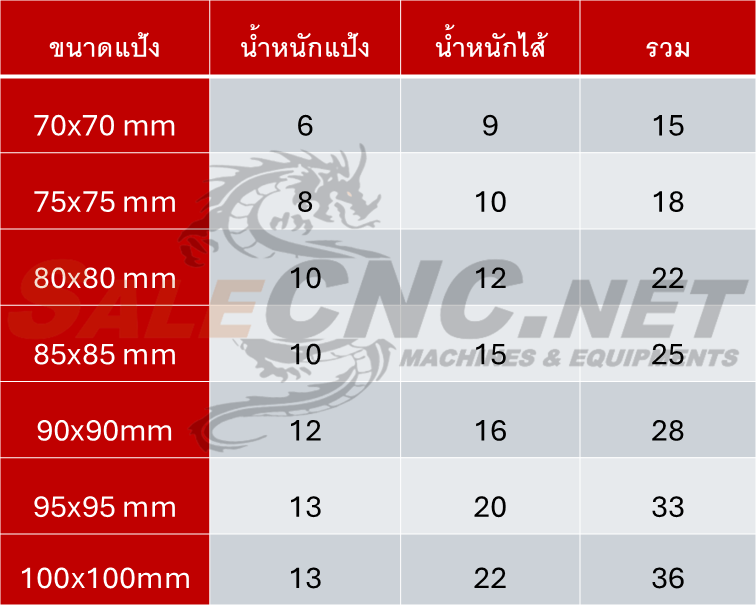
Customizable Mold Block Dimensions
Features of Dumpling Wrapping Machine
1. Compact design minimizes operational footprint, maximizing workspace efficiency.
2. Achieves a wrapping capacity of 360-500 pieces per hour, contingent on operational usage.
3. Intuitive operation with a straightforward process, manageable by a single operator.
4. Allows for precise control over dumpling filling weight and dough thickness.
5. Constructed with food-grade aluminum and 304 stainless steel for enhanced durability and rust resistance.
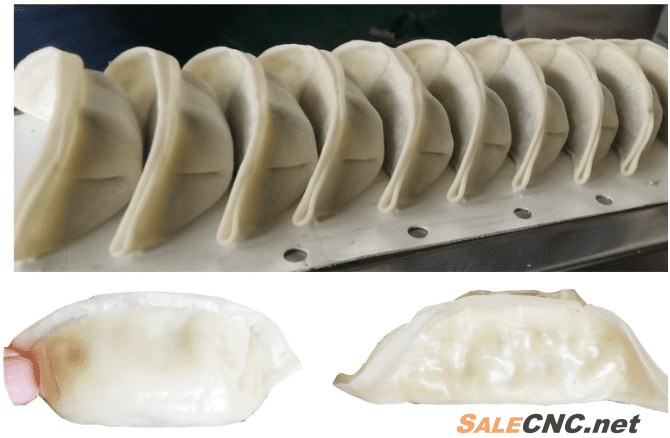
Wraps 360-500 gyoza per hour.
Characteristics of Gyoza Wrapping Machine
1. Automated dumpling filling.
2. Integrated system design.
3. Equipped with a finished product conveyor.
4. Features intuitive dumpling plate control buttons.
5. Centralized overall control panel.
6. Robust stainless steel construction.
Advantages of Using a Dumpling Wrapper
1. **Time Efficiency:** The machine significantly reduces gyoza preparation time, capable of wrapping up to 8,000 pieces per hour in continuous operation, far exceeding manual labor.
2. **Ease of Use:** No prior expertise in dumpling making is required. The machine is fully automated and user-friendly.
3. **Cost-Effectiveness:** Offers high productivity for a modest initial investment, providing a long-term, cost-effective solution compared to labor expenses.
4. **Durability and Maintenance:** Designed for convenient maintenance, extended service life, and easy disassembly for cleaning.
5. **Hygiene and Safety:** Minimizes operator contact with food, thereby reducing the risk of contamination and ensuring sanitary production.
7. **Consistent Quality:** Ensures uniform filling and consistency across all products, maintaining freshness and visual appeal.


Operational Guide for Automatic Dumpling Machine
- System Overview
This automatic dumpling machine employs modern technology to knead dough, resulting in a softer texture comparable to handmade dumplings. The operational process involves placing dumpling wrappers on a board, after which the machine forms and seals the gyoza. The machine features stepless variable frequency speed control, ensuring stable and adjustable dumpling shape and filling rates. The entire production process is automated and continuous. The machine boasts a robust construction, is easy to clean and maintain, and is characterized by its aesthetically pleasing design, compact size, light weight, high yield, and low energy consumption. Components are made from durable and hygienic stainless steel. The output capacity is 10,000 pieces per hour.
- Component Diagram
3. Equipment Components
- Motor
- Conveyor Belt
- Guide Plate
- Various Accessories
- Electrical Control Console
- Forming Unit
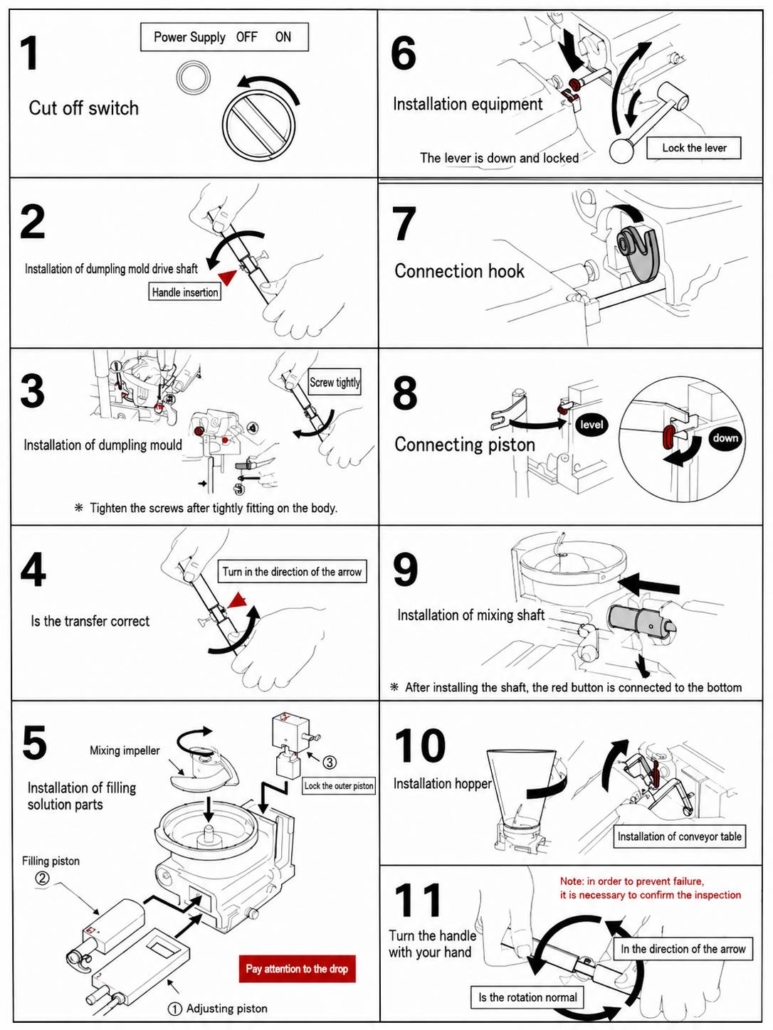
- Operational Procedure and Principles
Dough Rolling: This stage involves rollers, a conveyor belt, and a dusting system. The dough sheet is rolled by the rollers, conveyed along the belt, and then pressed and pleated while filling is simultaneously introduced. Ensure that the two rollers are parallel for uniform dough thickness and alignment. After adjustment, secure the locking nuts. A conveyor belt connects the rollers, guiding the dough from the upper to the lower roller. During the rolling process, a dust-sweeping device removes excess flour and moisture, preventing dough adhesion. Adjust the flour quantity based on dough moisture content to achieve the desired sheet thickness. Recommended dough thickness: 1.5 mm for 20g dumplings, 1.4 mm for 16g dumplings, and 1.3 mm for 12g dumplings. The machine’s inverter control system regulates motor speed via electrical inverters to match the dough feeding speed. The formed dough sheet is guided into the curved section by a guide plate, which can be adjusted to correct any deviation before entering the mold. A kneading and cutting wheel forms the dough into a tube. Simultaneously, the dough edges are trimmed and fed into the edge recovery device. The filling unit, comprising a filling pump, separate components, filling tubes, and acceleration motors, is responsible for dispensing the filling into the dough tube. Filling capacity is controlled by an electric frequency converter motor to match the filling-to-dough ratio. The filling tube is inserted into the forming unit, which includes the pattern, mold, upper block, two scrapers, and brushes. Proper alignment of the pattern and mold is crucial. Dumplings are formed from both sides, shaping their characteristic appearance. The patterns are coated with a non-stick layer for easy release. Dumplings are ejected from the cavity by the upper block. The shears and brushes clean the patterns and trim excess dough. Brushes should be cleaned frequently and kept sanitary. The brush shaft and bearing housing should be removed for cleaning. The forming unit’s operating speed is synchronized with the dough feeding speed, controlled by an electric converter. The reducer motor adjusts the rotational speed of the forming unit. The dough feeding and forming units are driven by the same motor, ensuring synchronous and stable operation. The transmission system utilizes chain and pulley mechanisms to drive the working components. Chain installation must be vertical and secured with a tensioning wheel or adjustable sprocket seat.
- Drives and Power Transmission
All units are powered by multiple reducer motors. The dough feeding system comprises multiple rollers, a multi-lane conveyor belt, and several sprinklers driven by reducer motors. Speed is regulated by inverters. The filling unit is driven by a reducer motor with speed control provided by an inverter. The transmission system employs chain and pulley mechanisms for synchronized component operation.
6. Electrical Diagram and Instructions
- Electrical components are housed within an electrical cabinet.
- The electrical system utilizes switch protection for power supply, relay control for power lines, and fuse protection for control lines and indicator lights. The forming motor (1M) and filling motor (2M) are controlled by an inverter-based stepless speed control system, featuring LED digital displays and protection against overload, overcurrent, and short circuits via circuit breakers. Thermal overload protection is managed by a breaker switch on the incoming motor (3M). A dedicated inverter handles speed control, LED display, and protection for this circuit.
- Proper grounding is mandatory after equipment installation.
- Avoid contact with the inverter circuit and other components for 5 minutes after the unit is powered off.
- Strictly adhere to the user manual. In case of malfunctions, consult the troubleshooting section of the manual.
- Control Panel Diagram
The control box is located at the upper left corner of the machine frame. The control panel includes the following: Power On, Emergency Stop, Start, and an LED digital display.
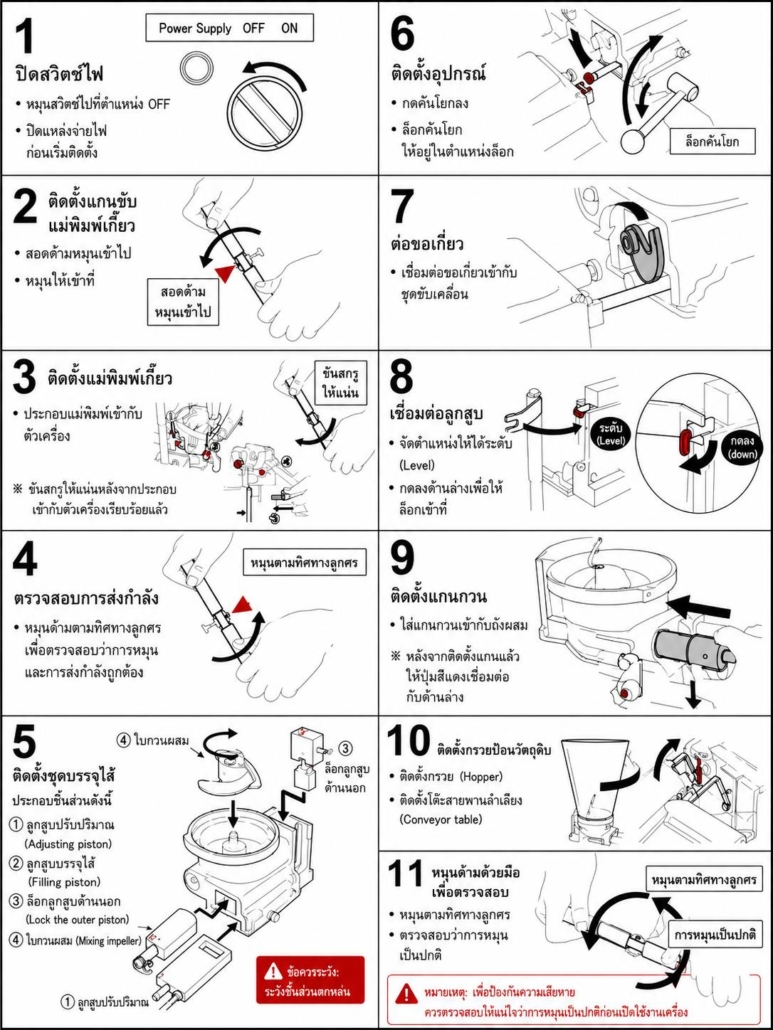
- Equipment Operation
- Read this manual thoroughly before operating.
- Verify correct equipment positioning before normal operation.
- Perform the initial startup in an unloaded state.
- Observe the system for correct roller rotation.
- Activate the forming unit by turning the shape knob and control its speed. Confirm correct mold rotation. Set forming speed on the LED digital display (approximately 5 Hz).
- Turn the “Filling” knob to “On” and adjust the “Filling Speed Control” knob to operate the filling pump. The feed screw should rotate counter-clockwise when viewed from above.
- To stop operation, press the “Stop” button.
- In emergencies, press the “Emergency Stop” button for immediate shutdown.
- Lubrication
Use edible vegetable oil or food-grade machinery grease (GB15179-1992) for lubrication. Open the sealing plate and apply lubricant to gears and chains using a small brush to prevent dripping.
- Safety Precautions
- Do not insert hands into rollers, molds, or pumps during operation to prevent personal injury.
- Avoid introducing foreign objects into the molds or filling mechanisms, as this may lead to equipment damage or accidents.
- Disconnect the power supply and shut down the equipment when operators are not actively using it.
- Ensure all seals are securely fastened to prevent injuries.
- Do not spray water onto the equipment to avoid electrical hazards and short circuits.
061-509-6388 (Chompoo)
098-997-4199 (Fern)
0615096199 (Banz)
0818071445 (Mint)
E-mail : [email protected]
LINE SCAN:
 Add Line: @123wotsb Fern (sales engineer) '
 Add Line: @sales Chompoo (sales engineer)
 salecnc.net