








 Back to Food Processing Machine
Description
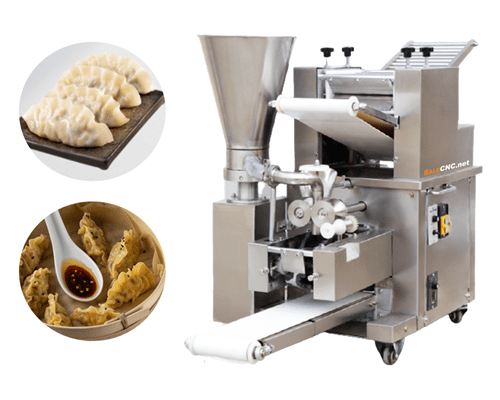
Commercial Dumpling Machine
Commercial Dumpling Machine
This food processing machinery will help you wrap dumplings efficiently and save significant time.
DUMPLING SIZE SPECIFICATIONS: CUSTOMIZATION AVAILABLE
| Dumpling Weight | Dumpling Length | Dumpling Height | Pleat Style |
|---|---|---|---|
| 12 g | 50 mm | 27 mm | Customizable |
| 15 g | 55 mm | 31 mm | Customizable |
| 18 g | 60 mm | 32 mm | Customizable |
| 20 g | 62 mm | 33 mm | Customizable |
| 22 g | 65 mm | 35 mm | Customizable |
| 25 g | 70 mm | 37 mm | Customizable |
| 28 g | 75 mm | 40 mm | Customizable |
| 30 g | 78 mm | 40 mm | Customizable |
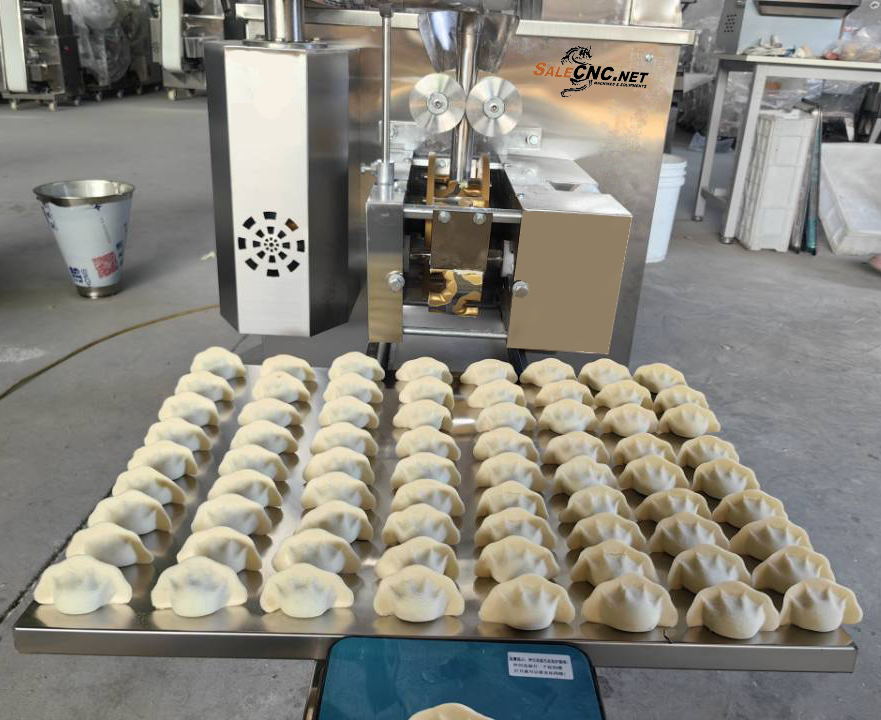
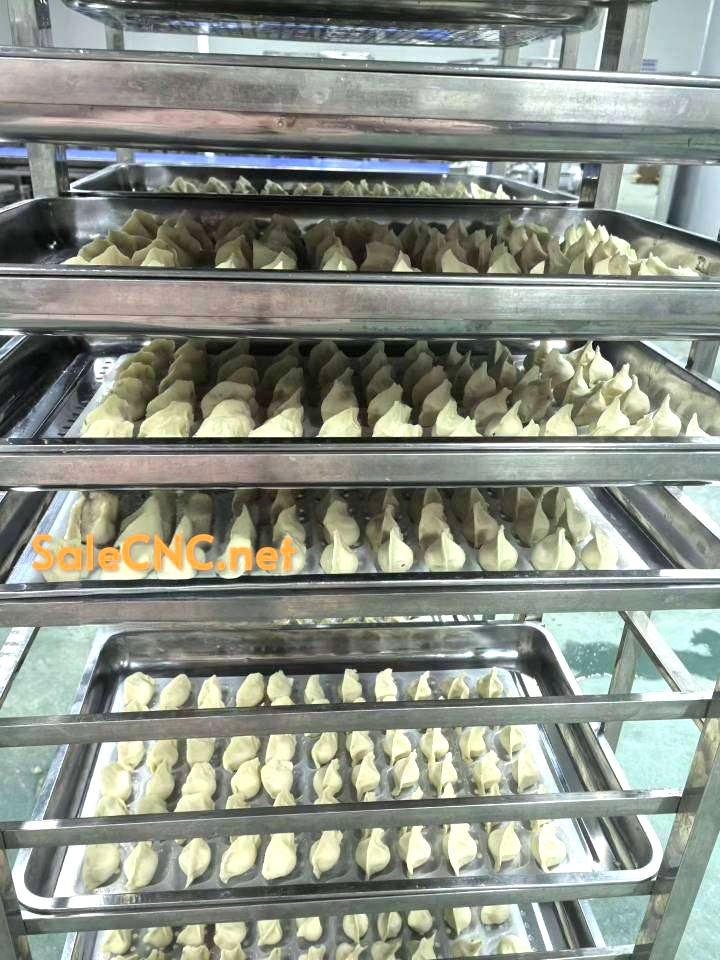
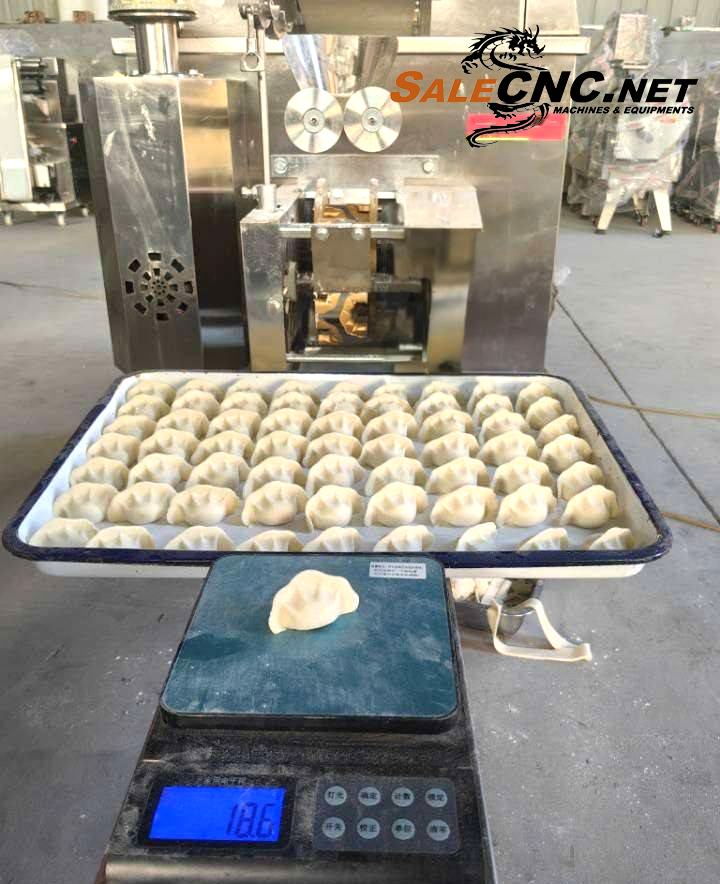

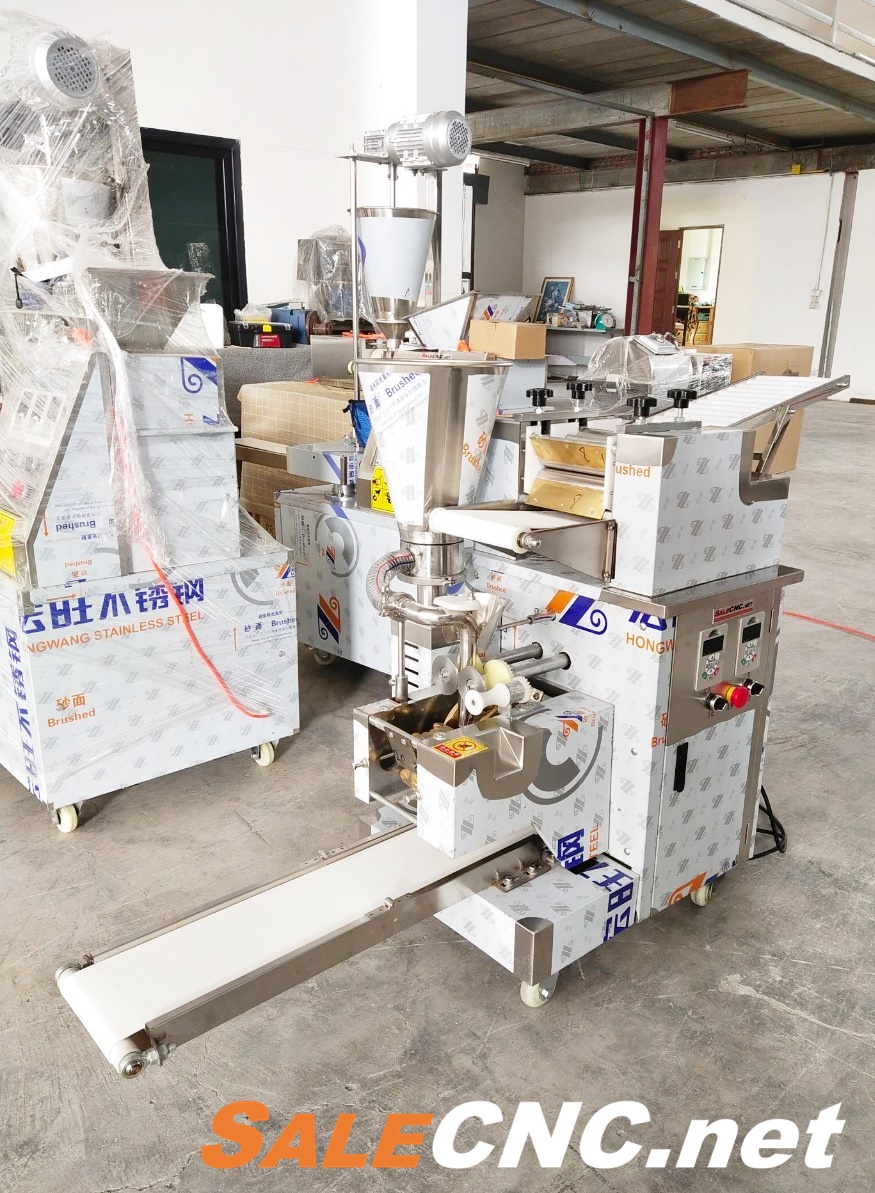
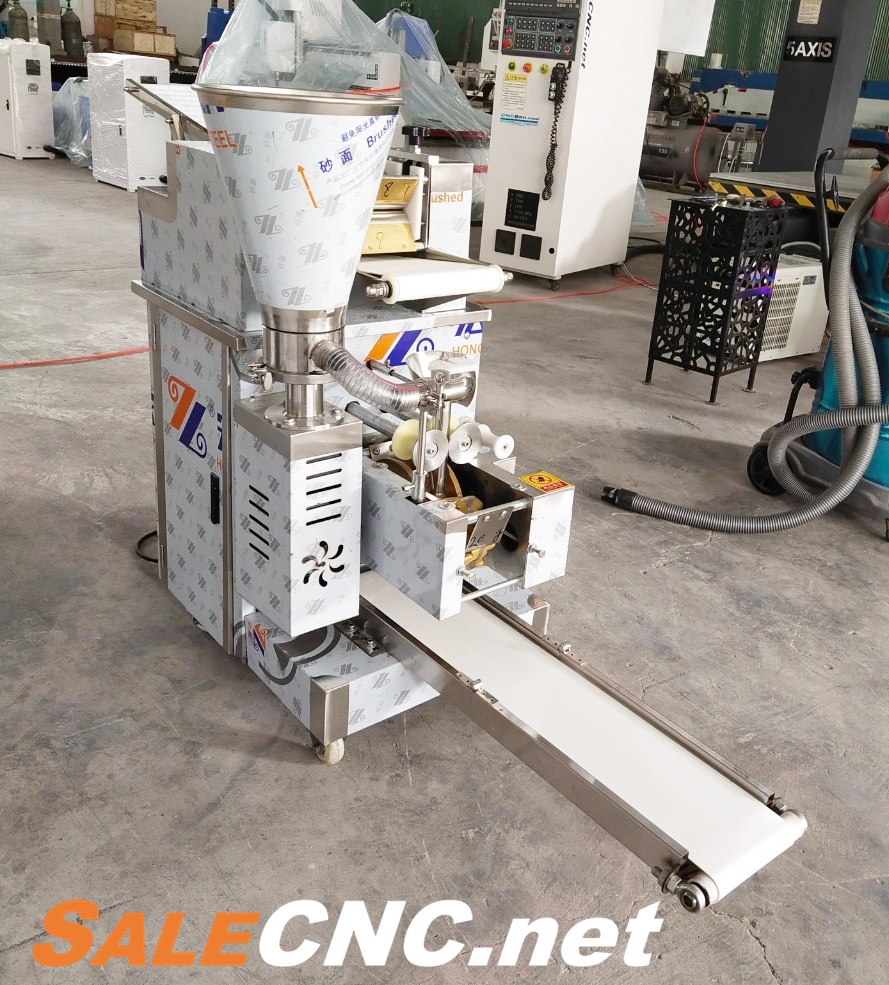
Gyoza Wrapping Machine, Dumpling Forming Machine, Commercial Dumpling Machine
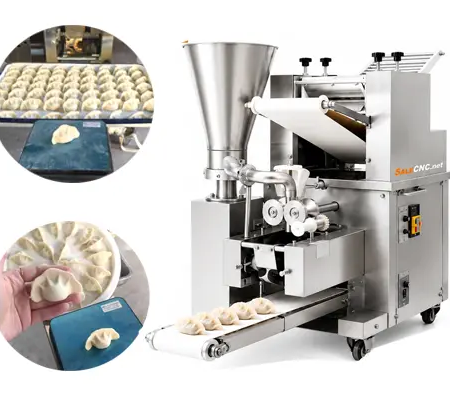
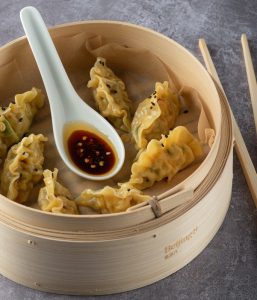
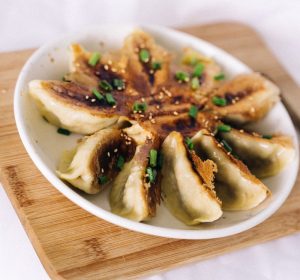
Effortlessly make Gyoza with an automatic forming and wrapping machine.
Automatic Dumpling Wrapping Machine for Production and Forming, with automatic filling and wrapping capabilities.
- Gyoza is a popular appetizer originating from China during the Ming Dynasty (circa 1644). It gained widespread popularity in Japan around 1700, often served with ramen, leading to its adoption and popularity in Japanese cuisine. Thais are familiar with this dish, known as “Gyoza,” through its Japanese influence.
- Gyoza are typically made from a dough of wheat flour, eggs, water, and salt, seasoned with various flavorings. They are filled with a variety of ingredients such as pork, shrimp, chicken, or vegetables. Gyoza can be prepared in multiple ways, including steaming, boiling in broth, or pan-frying for a crispy finish.
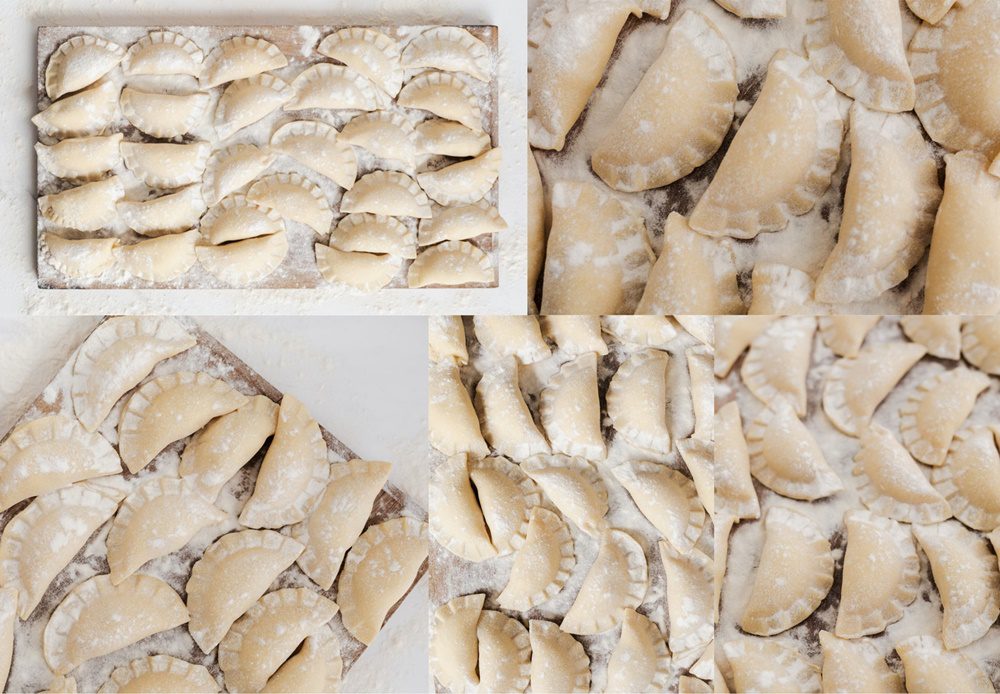
The dumpling business is rapidly expanding. The Dumpling Wrapping Machine serves as an invaluable asset, capable of producing 8,000 pieces per hour.
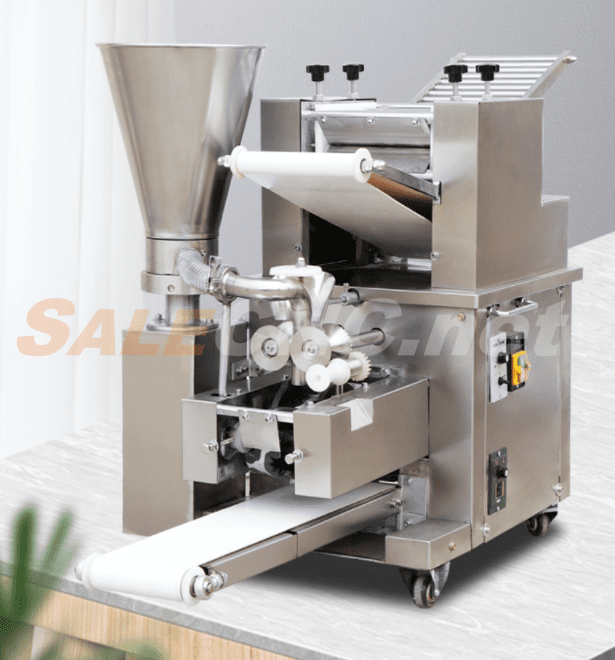
User-friendly and safe for operation, this machine also aids in budget control.
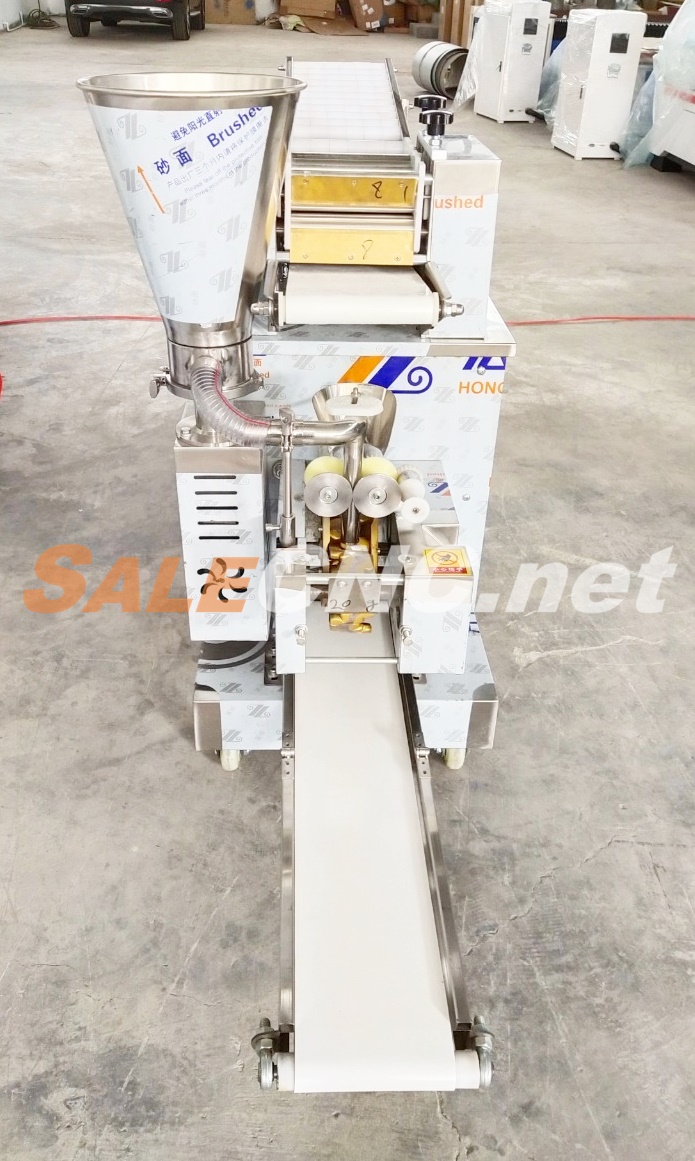
Exit point of the Gyoza from the forming machine.
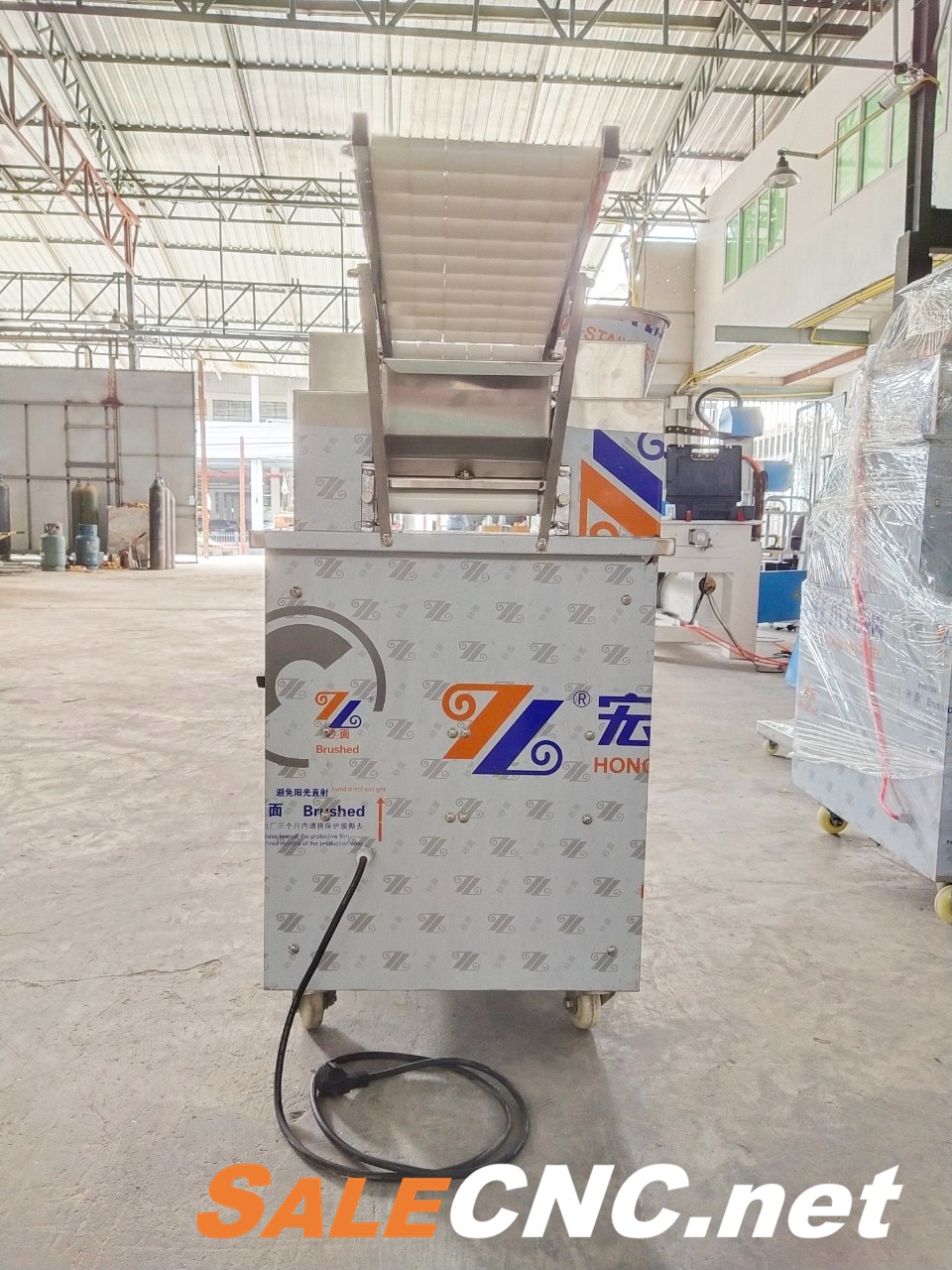
Side view of the Gyoza forming machine.
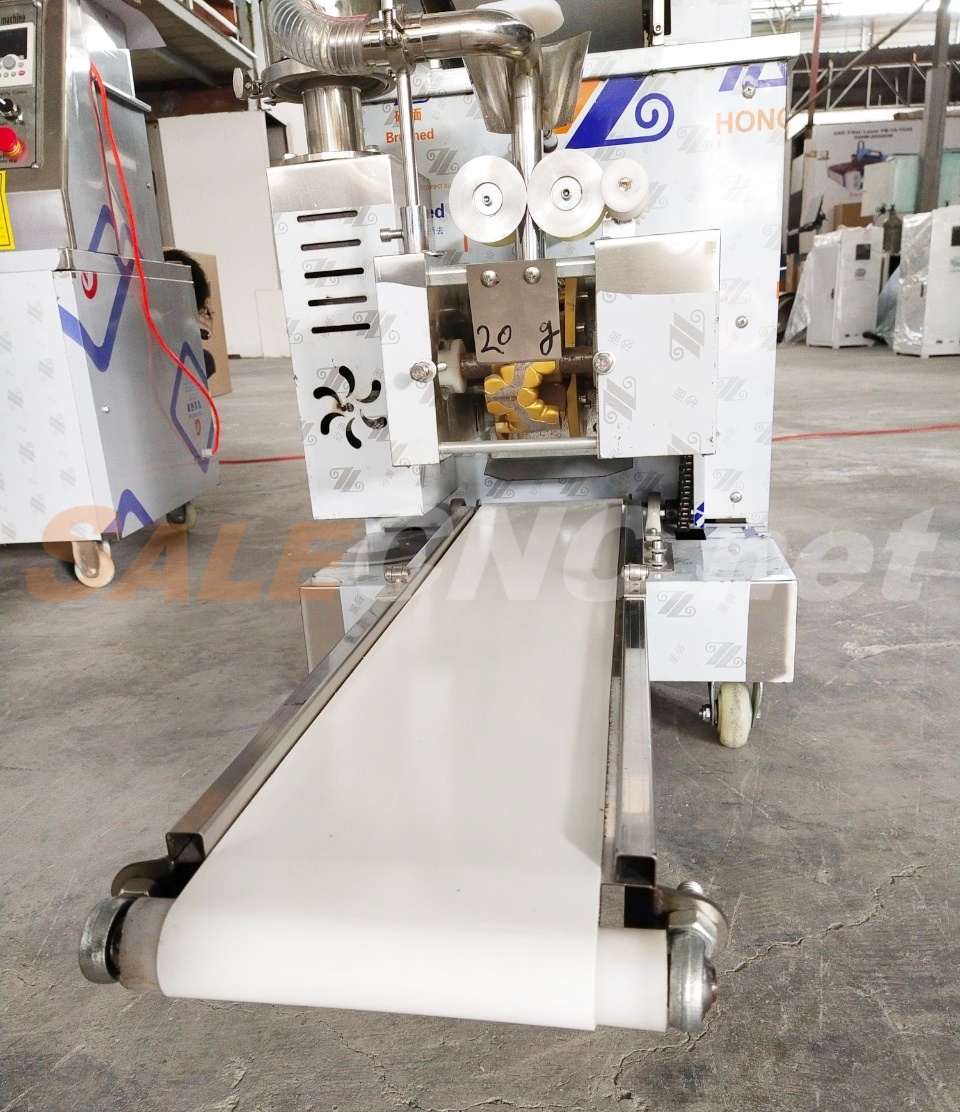
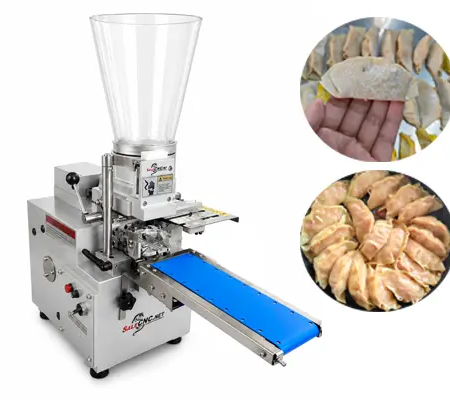
Conveyor belt for finished Gyoza.
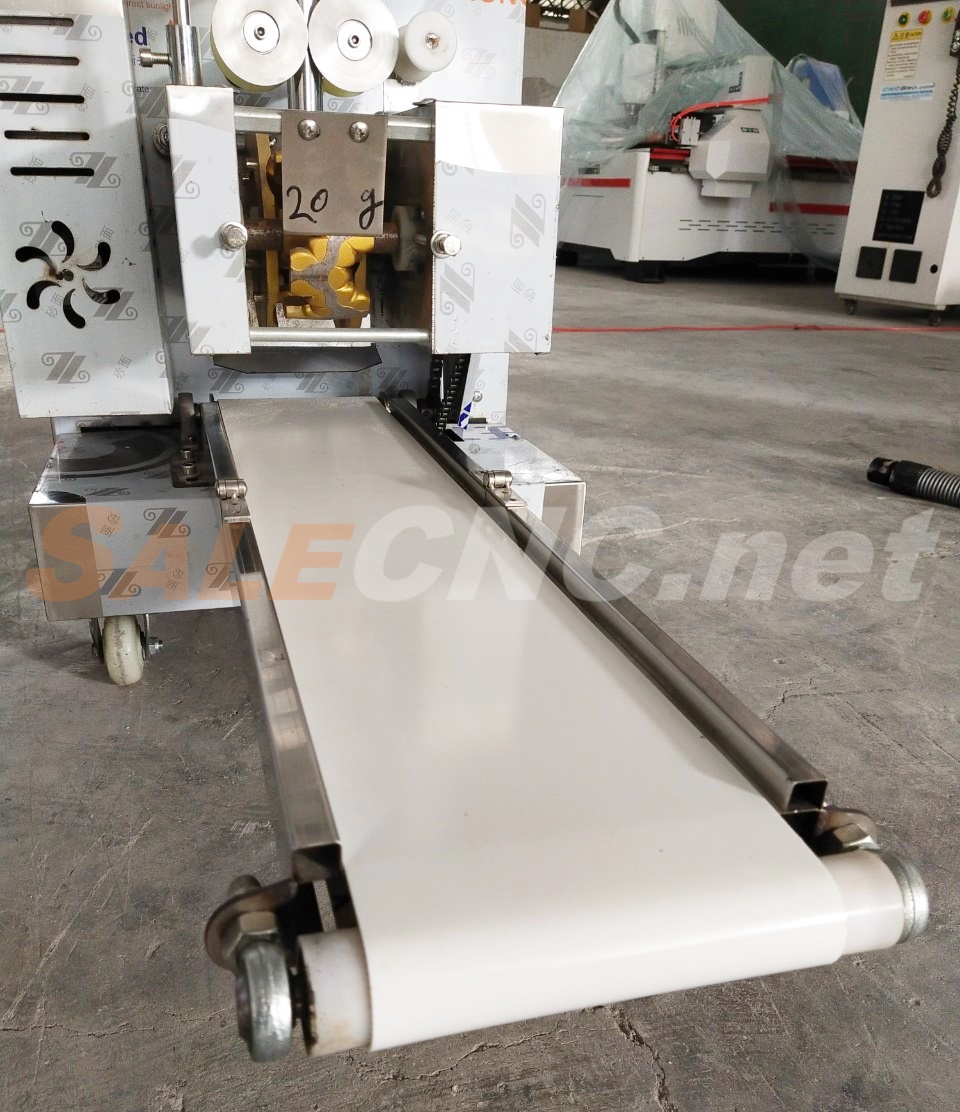
Conveyor belt for finished Gyoza.
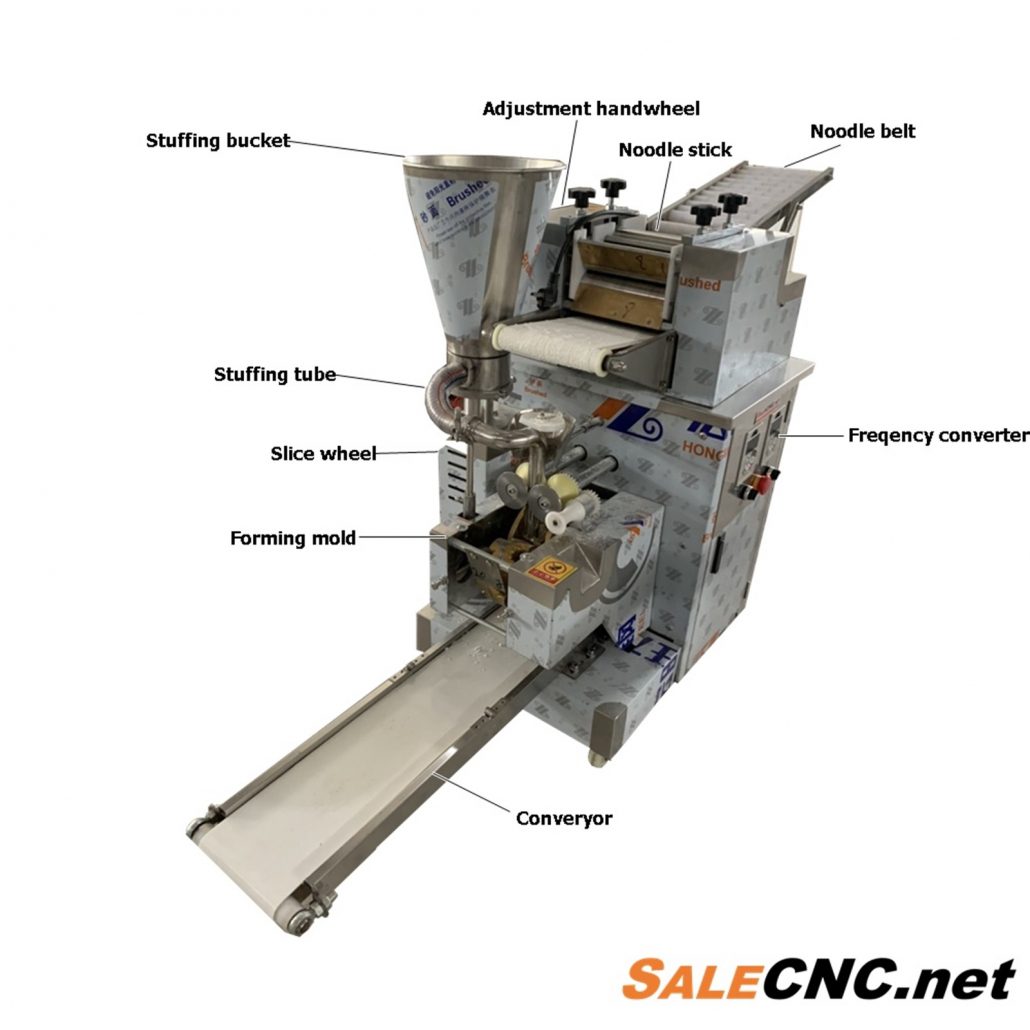
Internal components of the Gyoza forming machine.
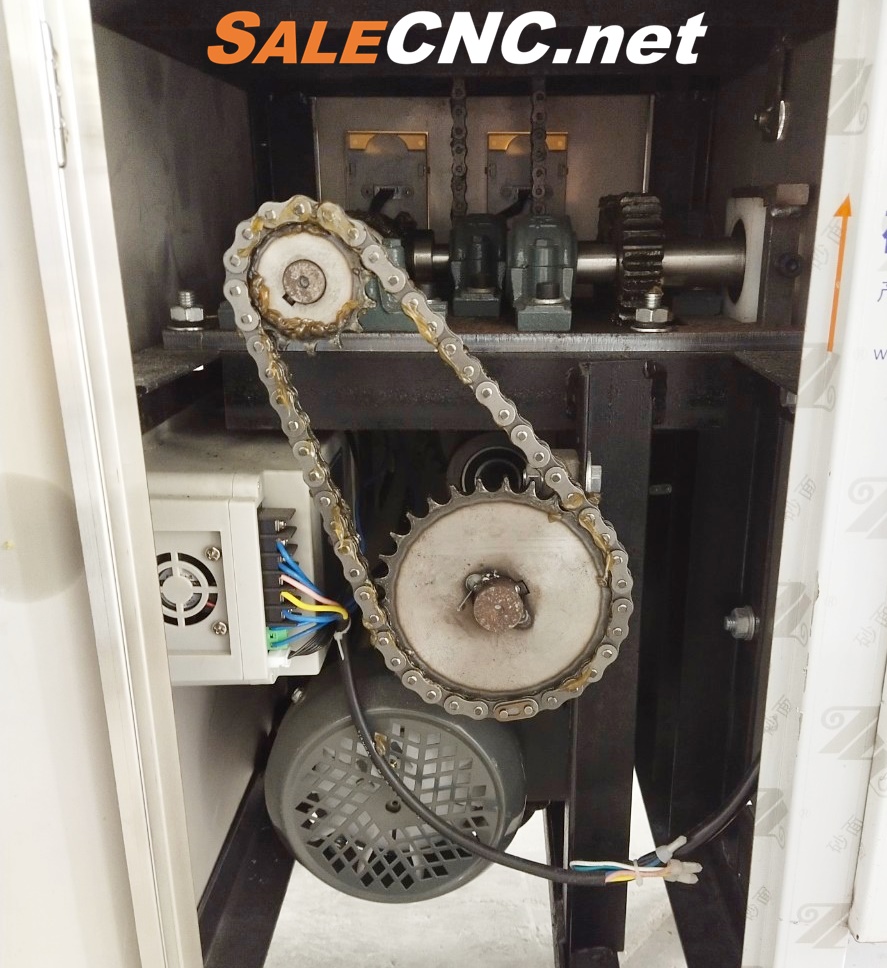
Internal view of the dumpling machine.
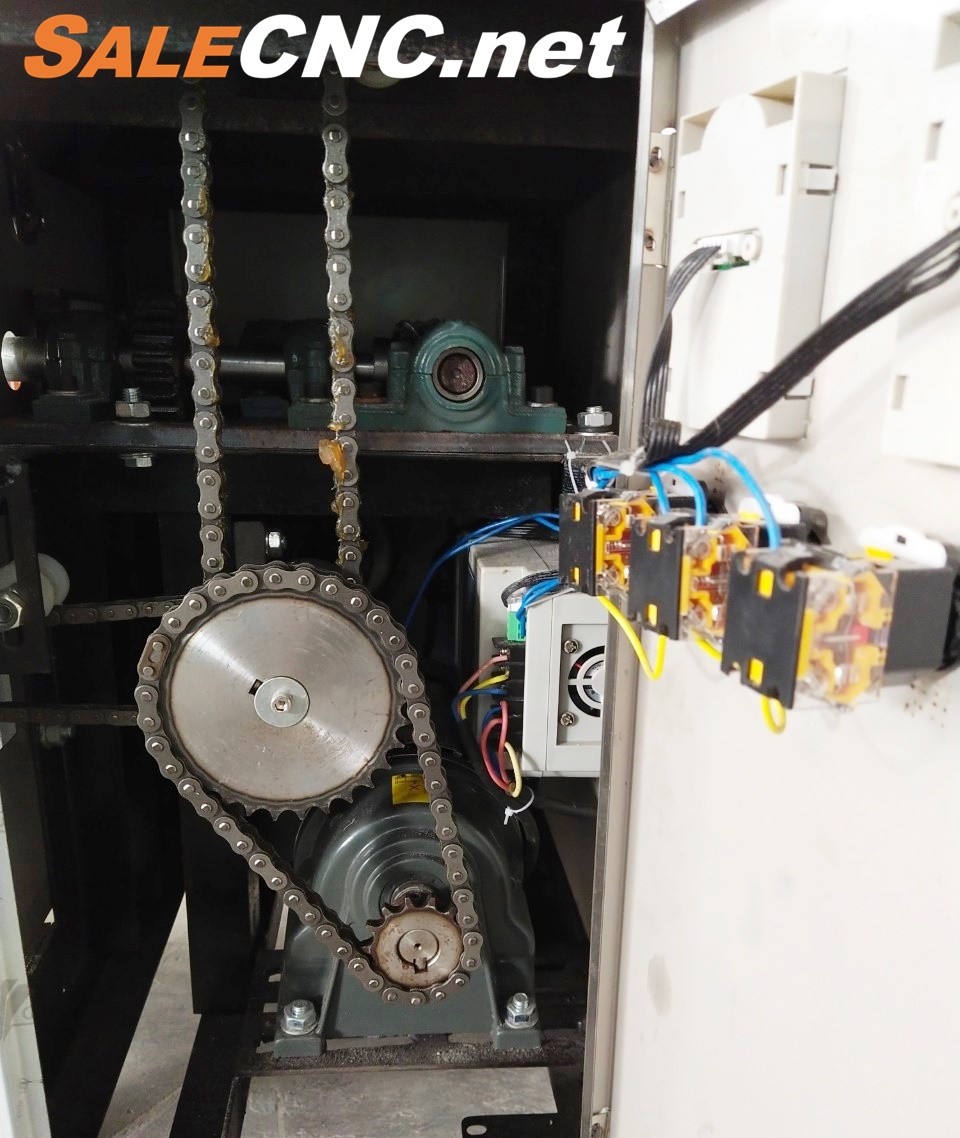
Internal view of the dumpling machine.
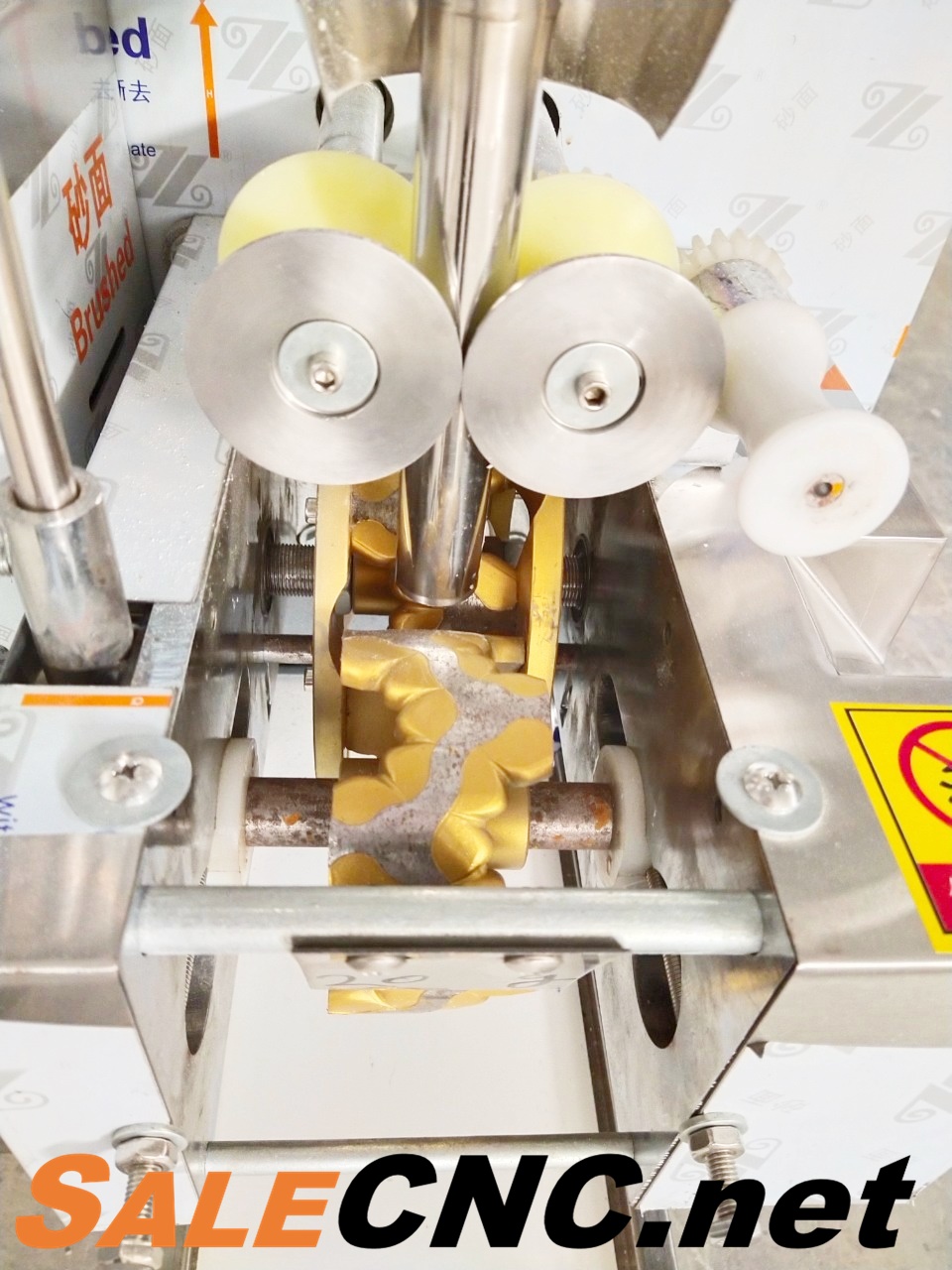
Gyoza forming molds.
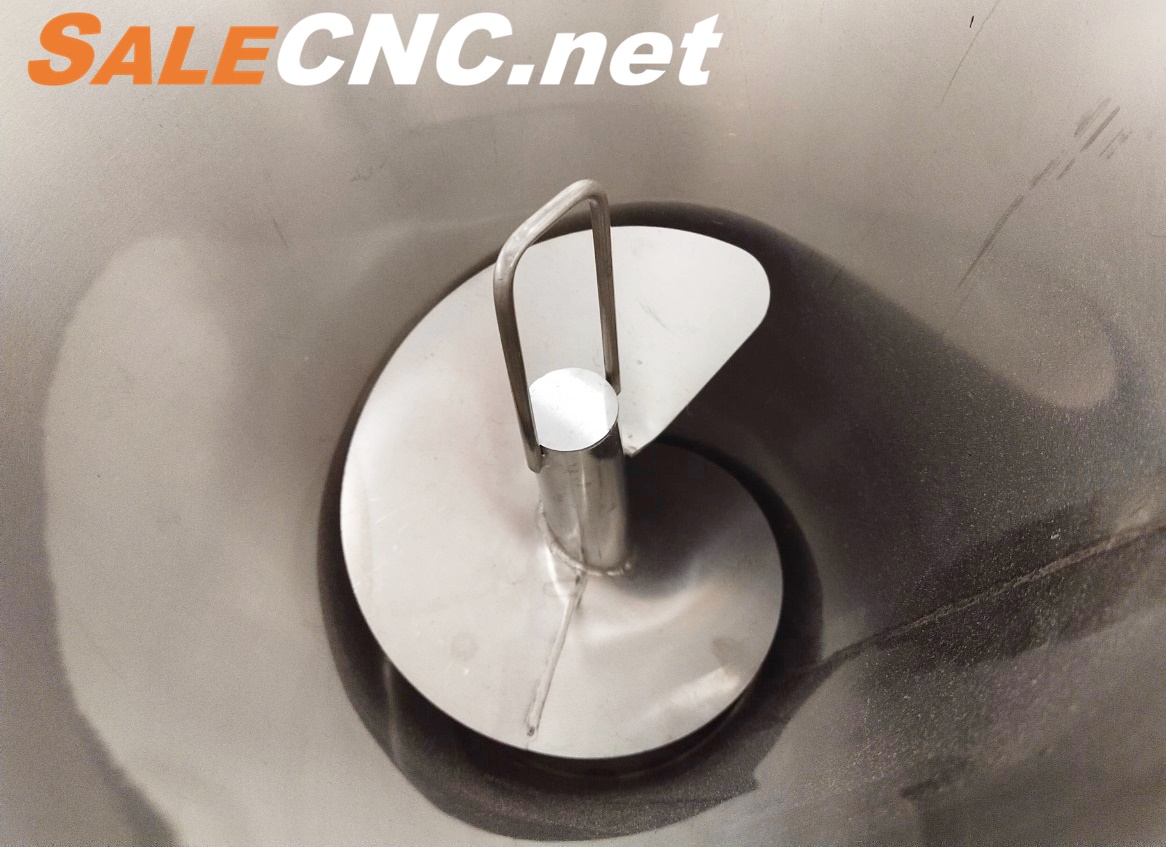
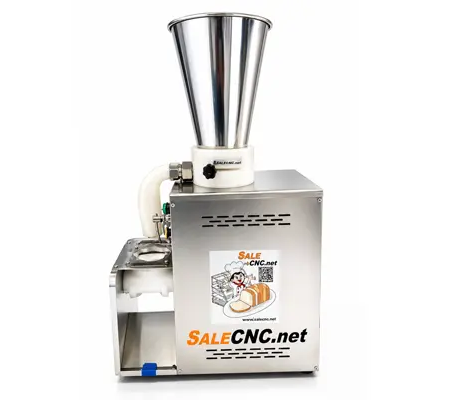
Filling mixing and filling port.
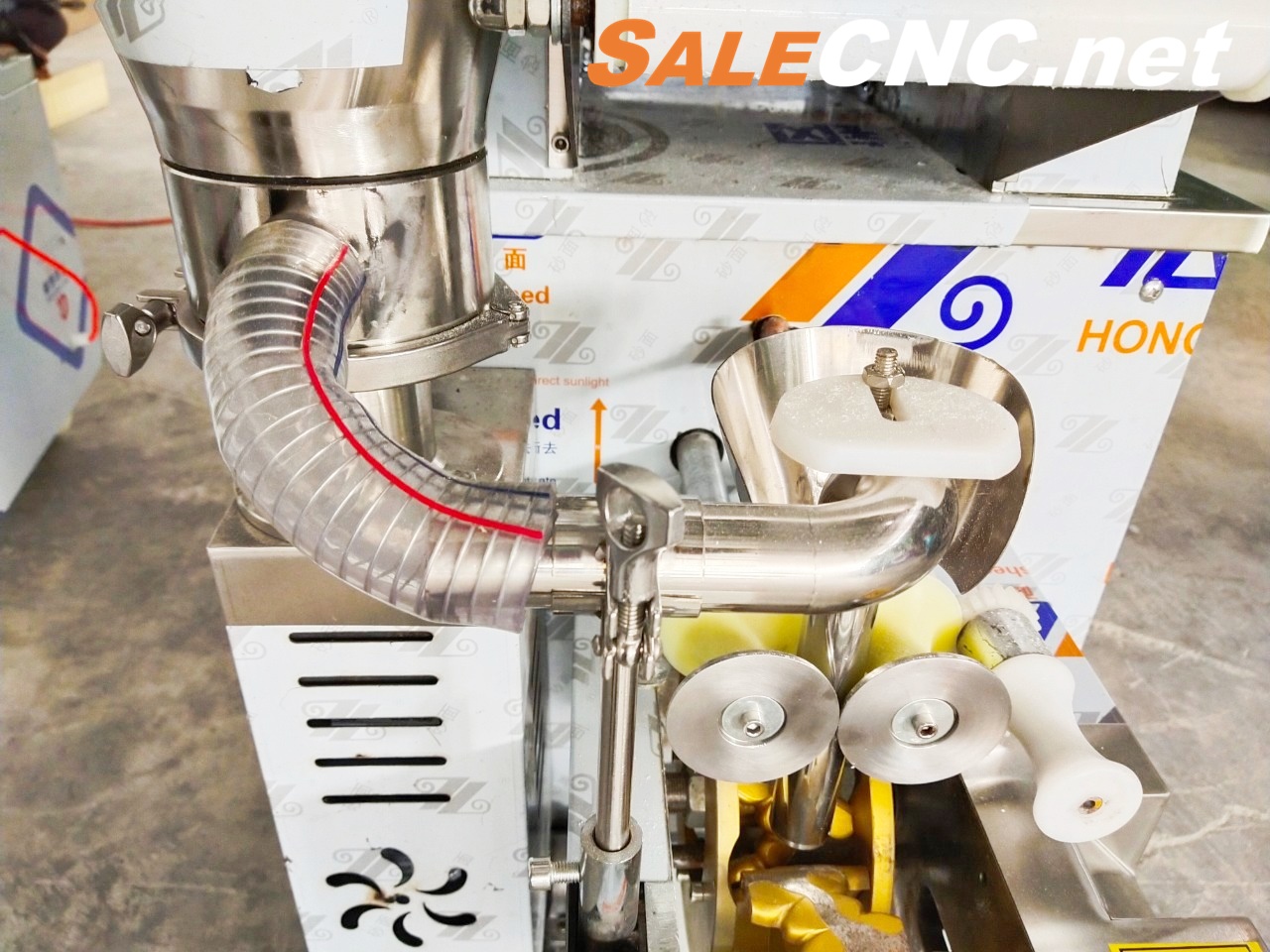
Filling chute to the dough forming section.
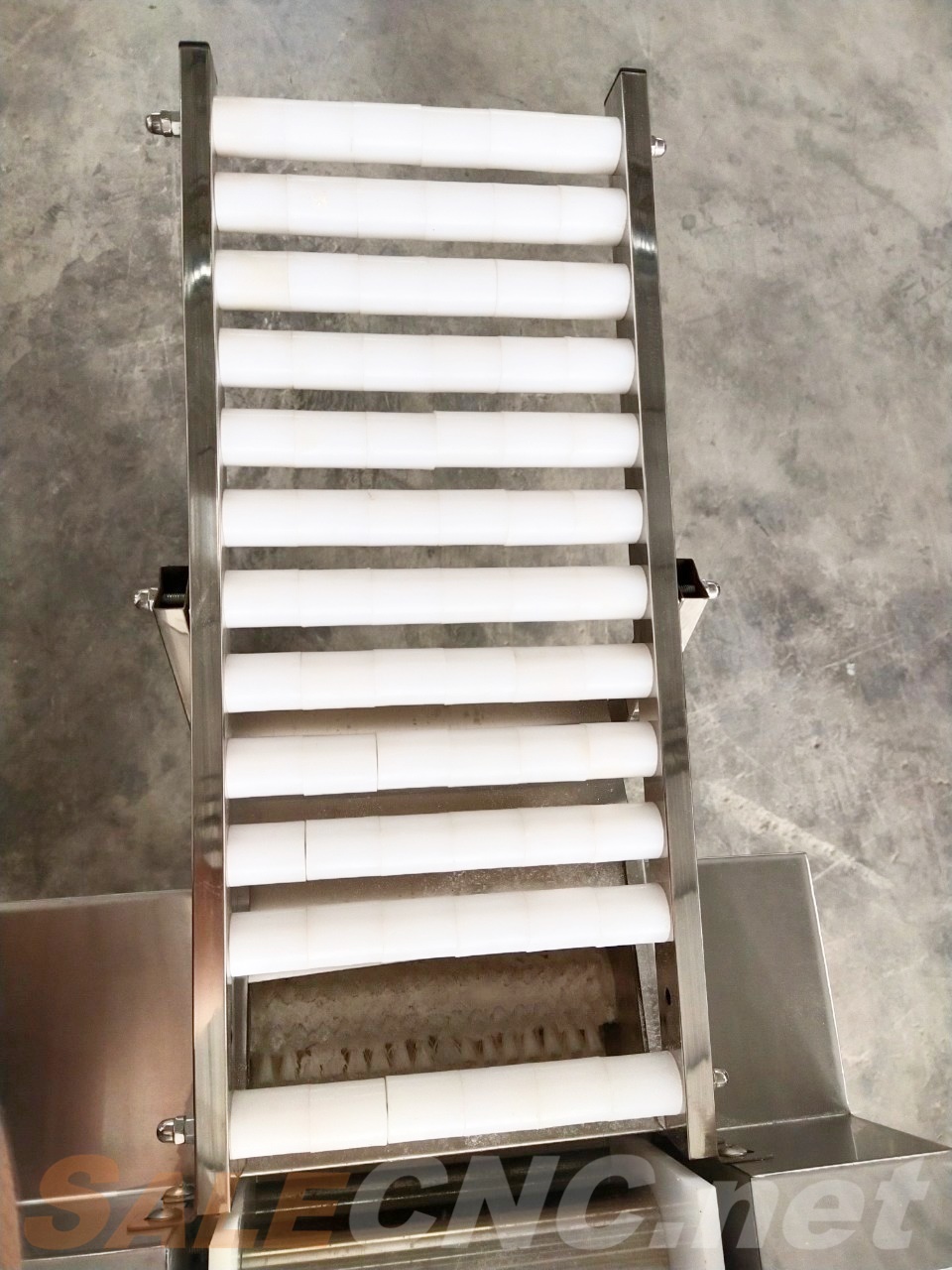
Dough feeding section.
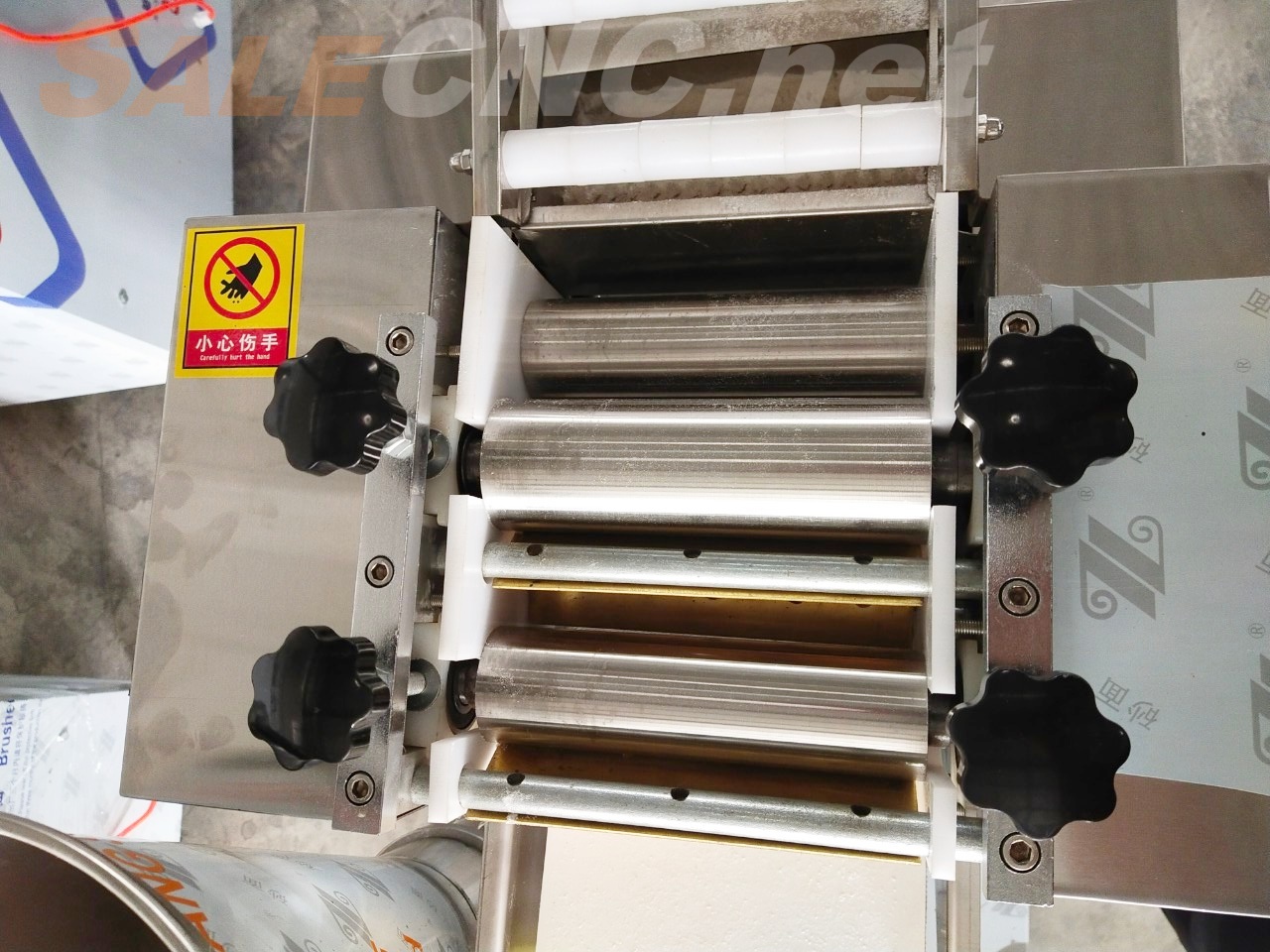
Conveyor for dough entering the forming process.
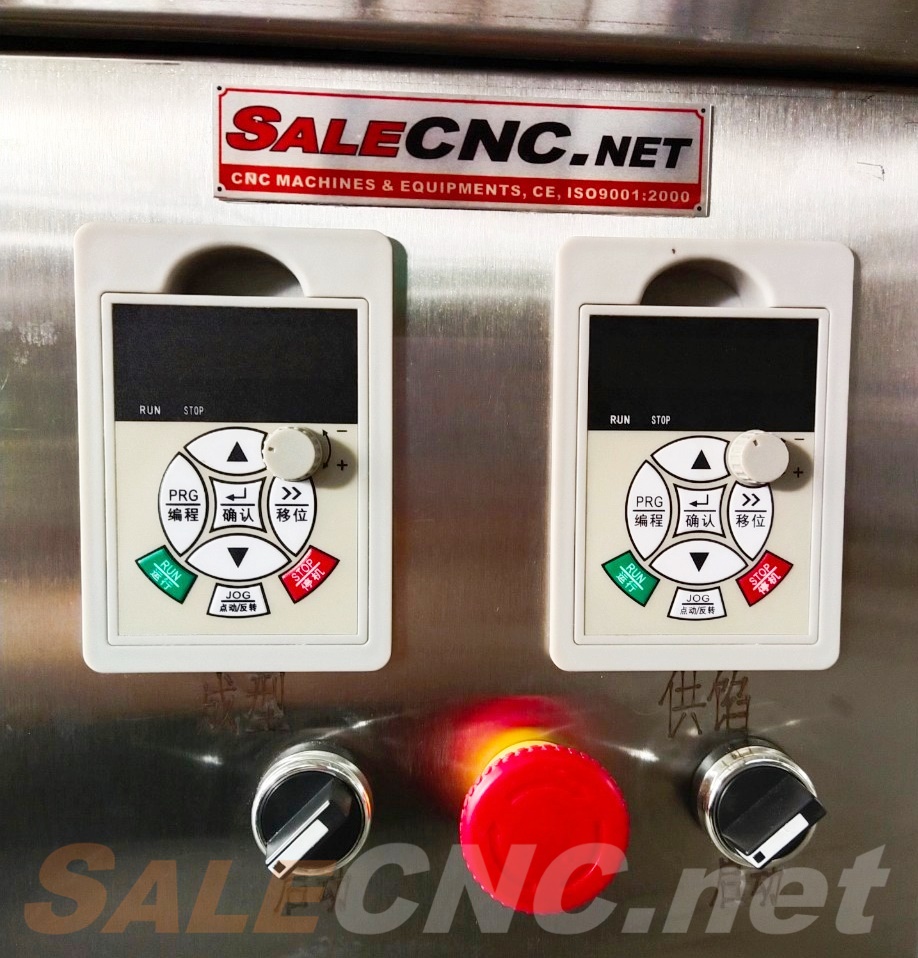
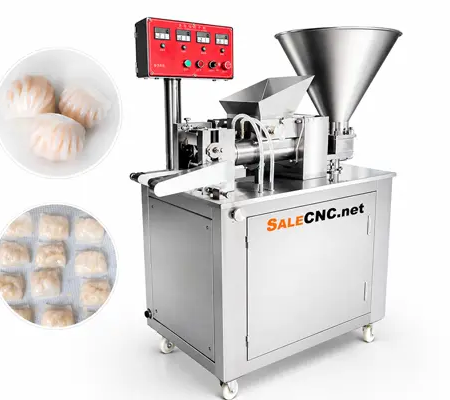
Dumpling forming machine control panel.
Technical Parameter (Dumpling Wrapping Machine Specifications)
#English
✅ Supply voltage : 220 V / 50 HZ
✅ Power Consumption : 1200 W
✅ Production Output : 8,000 units/hr
✅ Outline Dimensions : 1350x600x1000 mm
✅ Weight : 180 kg
Features of Dumpling Wrapping Machine
#English
1. Compact design requires minimal operational space, optimizing your workspace.
2. Capable of producing up to 8,000 dumplings per hour (output varies with settings).
3. Simple to operate, with straightforward procedures; can be managed by a single operator.
4. Allows precise control over the filling weight and dough thickness.
5. Constructed with seasoned aluminum and SUS304 stainless steel (Food Grade) for enhanced durability and corrosion resistance.
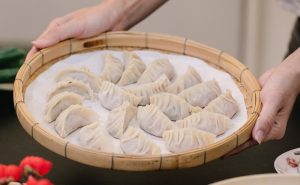
Up to 8,000 Gyoza pieces per hour.
Characteristics of Gyoza Wrapping Machine
#English
1. Dumpling filling hopper.
2. Overall system.
3. Finished product conveyor.
4. Dumpling sheet control button.
5. Master control panel.
6. Stainless steel body.
7. Transport wheels.
Equipped with a conveyor belt for the finished dumplings.
Advantages of using a Dumpling Wrapper
#English
1. **Time Efficiency:** Significantly reduces dumpling production time. The machine can wrap up to 8,000 pieces per hour for continuous operation, far exceeding manual production rates.
2. **Ease of Use:** No prior experience in dumpling making is required. The fully automatic operation ensures simplicity and ease of use.
3. **Cost-Effectiveness:** Offers a high return on investment. A single purchase provides long-term operational capability, proving more economical than continuous labor costs.
4. **Convenient Maintenance:** Designed for easy upkeep with durable components. Parts can be disassembled for thorough cleaning, ensuring a long service life.
5. **Hygiene and Safety:** Minimizes operator contact with food, reducing the risk of contamination and ensuring sanitary production.
7. **Consistent Quality:** Ensures uniform dumpling filling and consistency in taste and appearance. The machine maintains product freshness, appeal, and quality for every piece.

Machine Instructions for Use:
- Equipment Overview
The automatic dumpling forming machine utilizes advanced technology for dumpling production through dough rolling. This process enhances the texture and flavor, offering a quality comparable to handmade dumplings. The operational workflow involves placing dough onto the designated board, after which the machine processes it into rolled wrappers and forms the complete dumplings. The machine features variable frequency stepless speed control, ensuring stable and adjustable dumpling skin thickness and filling ratios. The entire production process is automated, synchronized, and continuous. This machine boasts a rational structure, ease of cleaning and maintenance due to its aesthetic design, compact footprint, lightweight construction, high yield, and low energy consumption. Components are made from hygienic and durable stainless steel, ensuring delicious end products. The nominal output is 10,000 units per hour.
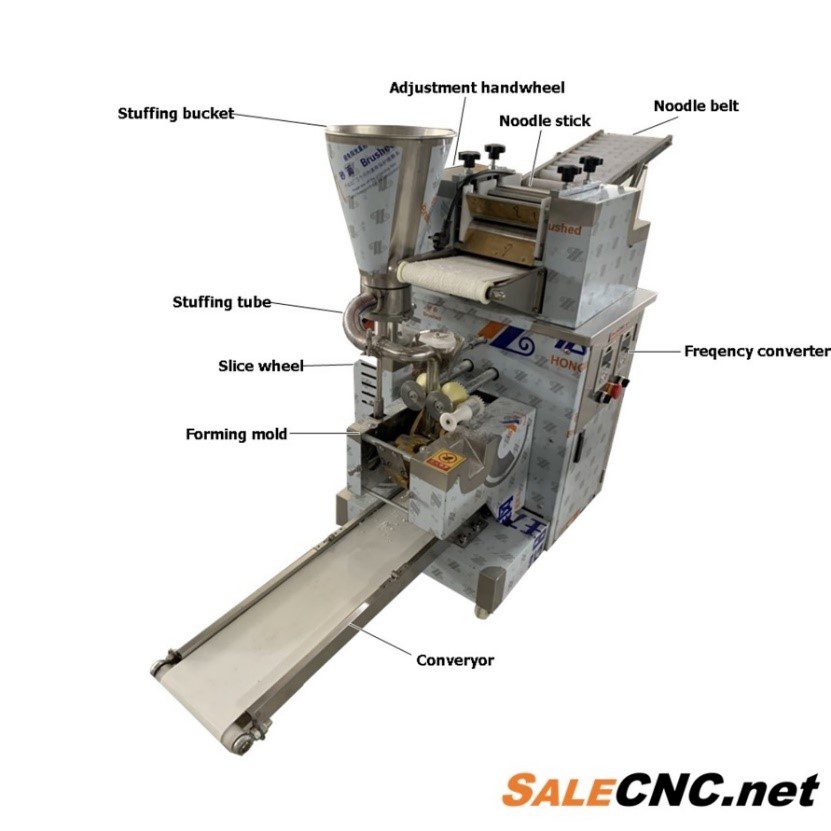
- Component Diagram
- Equipment Structure
- Top Shelf
- First Set of Rollers
- Second Set of Rollers
- Motor
- Conveyor Belt
- Spreading Device
- Guide Panel
- Dough Tube
- Various Components
- Electrical Console
- Forming Device
- Operational Process and Principle
The main framework of the equipment houses all components. The rolling system comprises multiple roller sets, conveyor belts, and powder application units. Dough sheets are fed into the frame plate and formed into the desired thickness by a series of rollers. Adjustment of each roller’s thickness ensures smooth operation and uniform, straight sheet thickness. Ensure parallelism between rollers for consistent thickness. Upon adjustment, lock the nuts. Conveyor belts transmit the rolled sheets between upper and lower rollers. A dusting device applies flour during rolling to prevent sticking. Adjust flour application based on dough moisture content. The final sheet thickness is calibrated. Recommended thicknesses: 20g dumplings – 1.5 mm, 16g dumplings – 1.4 mm, 12g dumplings – 1.3 mm. The inverter-driven feeding system employs variable frequency speed control to adjust motor speed and rolling speed. The formed sheet is guided into an arc via a guide panel, which can be rotated to correct deviations. A pair of counter-rotating kneading and cutting wheels form the sheet into a tube. Edge material is trimmed and collected by a recovery device. The filling unit utilizes a separate pump, filling tube, and decelerating motor for precise filling. Filling capacity is controlled by the pump. Motor speed is managed by the frequency converter for optimal filling ratios. The filling tube enters a forming unit comprising a pattern, die, top blocks, knife, and brushes. Proper adjustment of the pattern and die ensures correct forming. Dumplings are formed from both sides due to their design. The pattern is coated with a non-stick layer for easy release. Top blocks extrude dumplings from the cavity. Scissors and brushes maintain the cleanliness of the pattern during operation. The brush shaft and bearing housing are removed together for cleaning, which is relatively convenient. The forming unit’s operating speed is synchronized with the sheet feeding speed and controlled by an electrical converter. A decelerating motor adjusts rotational speed. The sheet feeding and forming units are driven by the same motor, ensuring continuous and stable operation.
- Drives and Transmission
The entire system is driven by multiple decelerating motors. The feeding system includes multi-track rollers, multi-bar conveyor belts, and multi-set sprinkler units driven by a reduction motor with inverter speed control. The shaping and edging unit is driven by a speed-reducing motor with frequency converter speed control. The filler unit is driven by a speed reducer with inverter speed control. The transmission system uses chain gears and round pulley mechanisms to synchronize the operation of functional parts. Chain installation must be in the vertical plane, tightened with a tensioning wheel or adjustable sprocket seat.
- Electrical Schematics and Instructions
- The electrical system is housed within the machine’s fuselage electrical cabinet.
- This system features an air switch for main power supply protection, relay switches for power lines, and fuse protection for control lines and indicator lamps. The forming motor (1M) and filling motor (2M) are controlled by inverter stepless speed control with LED digital display. Overload, overcurrent, and short circuit protection are provided by an air circuit breaker. Thermal overload protection for the incoming motor (3M) is managed by the breaker switch. One inverter unit offers stepless speed control with LED display, and overload, overcurrent, and short circuit protection via an air circuit breaker.
- Proper grounding must be established after equipment installation.
- Avoid touching inverter circuits, circuit boards, and related components for 5 minutes after shutdown.
- Strictly adhere to the Inverter User Manual for troubleshooting any faults.
- Control Panel Diagram
The control box is located in the upper left corner of the frame (near the edge clamping die). The control panel includes the following functions: Power On, Total Stop, Inch Start, Feed Stop, Feed Speed Control, and LED Digital Display.
- Equipment Operation
- Read this manual thoroughly before operation.
- Verify the equipment is in the correct position and normal operating conditions before starting.
- Perform initial startup without load. The procedure includes: 1) Closing the main switch. 2) Closing the circuit breaker switch. 3) Pressing “Power On.”
- Verify correct rotation of the rollers in the feeding system.
- Turn the “Shape” knob to “Open.” Adjust the “Shaping Speed Control” knob to operate the forming unit. Confirm correct die rotation and pre-set shaping speed on the LED digital display (approximately 5 Hz).
- Turn the “Filling” knob to “Open” and adjust the “Filling Speed Control” knob to operate the filling pump. The winch rotation should be counter-clockwise when viewed from above.
- To stop operation, press the corresponding “Stop” button.
- In case of emergency, immediately press the mushroom head “Emergency Stop” button. All units will power down.
- Ensure correct motor direction of rotation each time power is reconnected.
- Lubrication
Use food-grade vegetable oil or food machinery grease (GB15179-1992). Open the sealing plate and apply lubricant with a small brush to gears, sprockets, and chains. Avoid over-application to prevent contamination of pasta. Finished sealing replaces seals. Refuel oil monthly and grease monthly.
- Safety Precautions
- Do not insert hands into rollers, molds, or filling pumps during operation to prevent personal injury.
- Avoid introducing impurities into rollers, flanges, molds, or filler pumps to prevent equipment damage.
- Turn off power and shut down the equipment when operators leave or are away from their stations.
- Ensure all equipment seals are securely fastened to prevent personal injury or accidents.
- Do not spray the equipment with water to avoid short-circuit accidents.
- Wear Parts
- Rolling bearings
- Chain: Model number 06B.