








 Back to เครื่องทำซาลาเปา & ขนมจีบ / เกี๊ยว
Description
Automatic Salapao Forming Machine
Size S
Automatic Salapao Making Machine - Size S 4

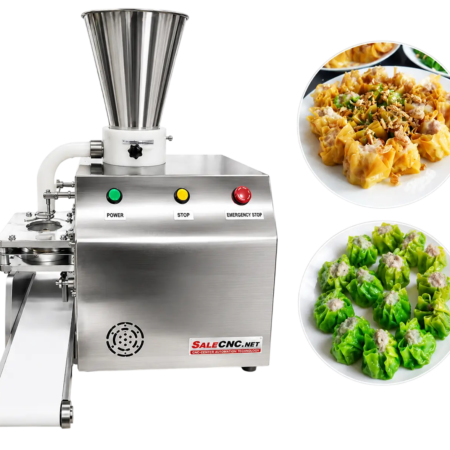
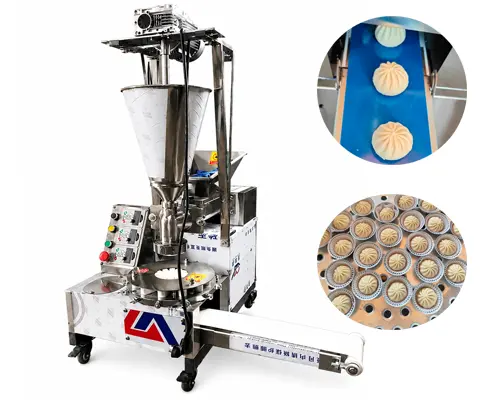
The Automatic Salapao Forming Machine is designed for producing various types of salapao, including round, pleated (12 pleats), and smooth finishes.
This machine is widely utilized in food production factories, canteens, culinary schools, bakeries, and dessert businesses.
The salapao maker efficiently produces large quantities in a short time with high speed, optimizing production costs, labor, and ingredients while ensuring standardized product size.
Technical Parameters
- Production Capacity: 0 – 3,000 pieces per hour (adjustable).
- Dough Extruder Nozzle (Variable Sizes): Capable of producing salapao weighing from 15 to 200 grams per piece.
- Voltage: 220/380 V
- Power Consumption: 2.4 KW
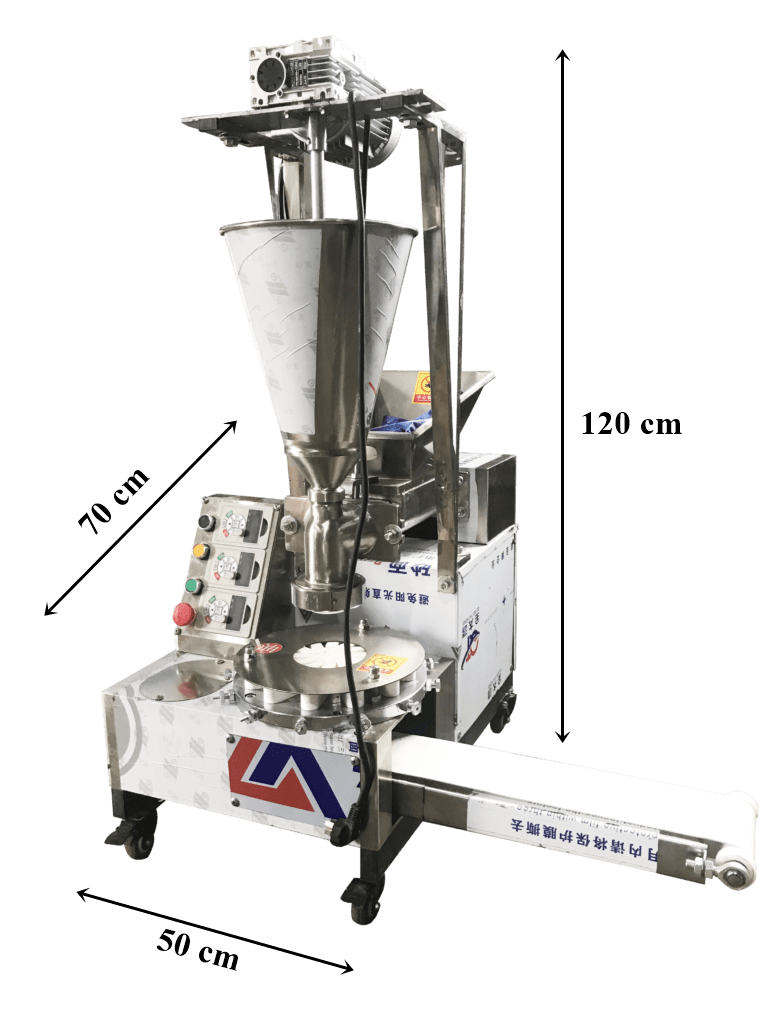
- Machine Dimensions: 120x70x50 cm (excluding conveyor belt length; foldable conveyor).
Automatic Salapao Machine for Producing Various Styles of Chinese Buns
Customizable Salapao Production: Colored, Fantasy, and Filled Buns
Miniature Salapao Production for High-Volume Sales and Profitability
Automated Round Salapao Forming with Sweet Filling Options
- This Automatic Salapao Making Machine (also known as an Automatic Chinese Bun Machine Maker) is constructed from food-grade stainless steel, ensuring hygiene and durability.
- Guarantees no harmful residues in the final product.
- Capable of producing salapao with 12 pleats or a smooth finish.
- Allows for precise control over salapao size and filling quantity.
- Achieves a production rate of approximately one large bun every 3 seconds.
- Reduces production time and costs while ensuring consistent salapao dimensions.
- *Weight Range: 5-150G adjustable.
Performance and Features
- The automatic salapao forming machine utilizes a spiral kneading process followed by vertical extrusion. A screw-driven mechanism forces the dough, while a suction pump injects the filling into the center.
- Dough kneading and forming are precisely controlled. Frequency, salapao size, and filling amounts are adjustable.
- The machine features a compact structural design. Food-grade components and the exterior casing are easily detachable for maintenance and cleaning.
- Constructed from high-quality Stainless Steel 304, this food-grade machine adheres to national food hygiene standards. It offers an aesthetically pleasing and safe user experience.
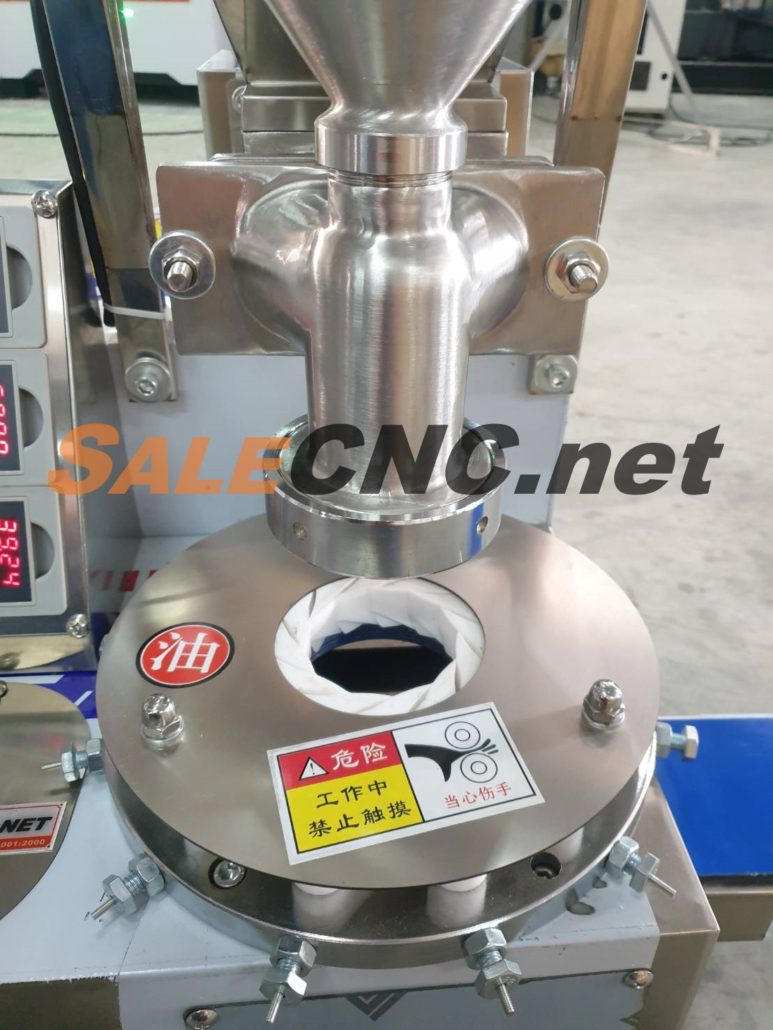
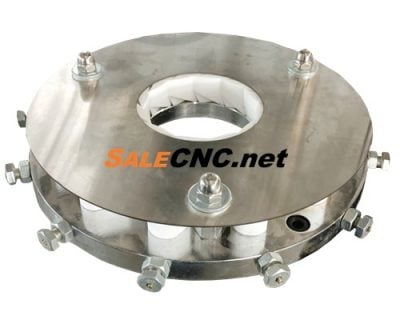
Salapao forming section: Available in pleated or smooth styles.
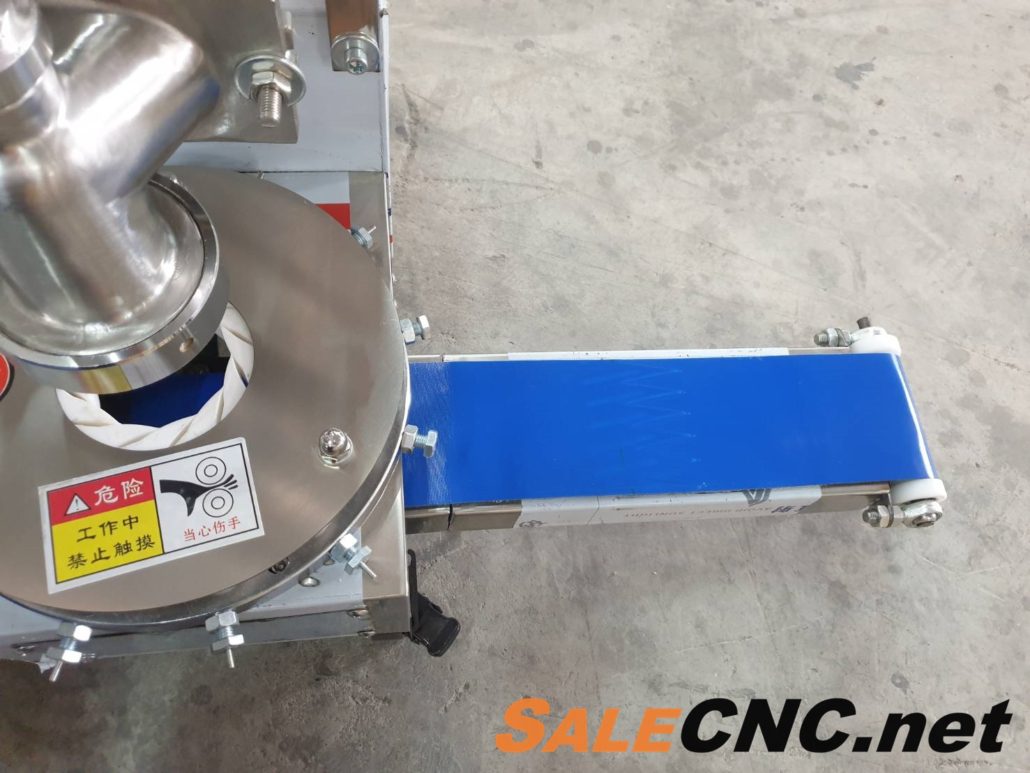
Technical Parameters
- Production Capacity: 0 – 3,000 pieces per hour (adjustable).
- Dough Extruder Nozzle (Variable Sizes): Capable of producing salapao weighing from 15 to 200 grams per piece.
- Voltage: 220/380 V
- Power Consumption: 2.4 KW
- Machine Dimensions: 120x70x50 cm (excluding conveyor belt length; foldable conveyor).
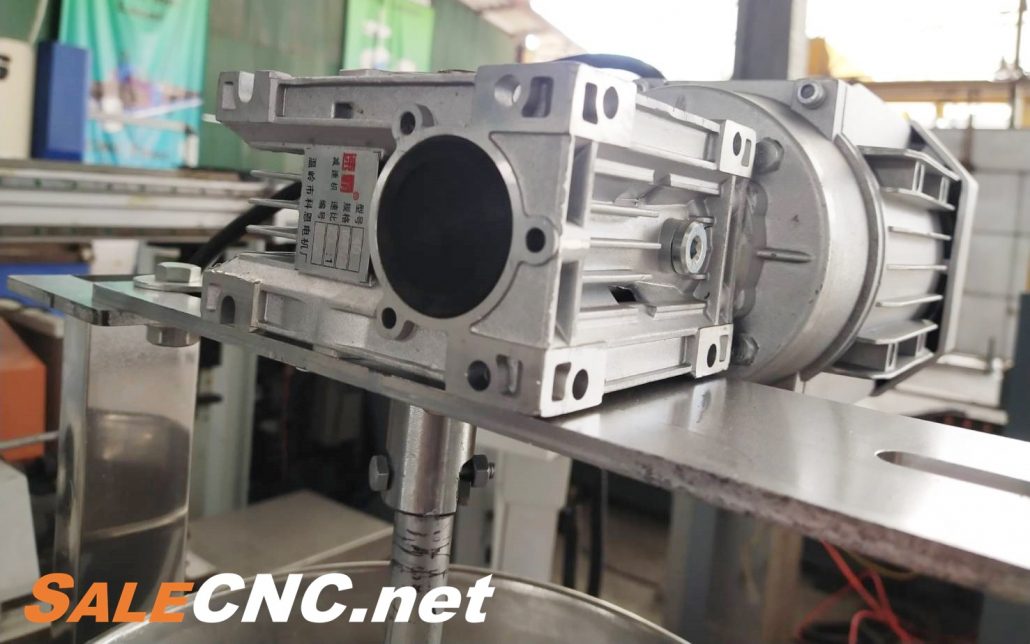
Top motor assists in injecting filling into the center of the dough.
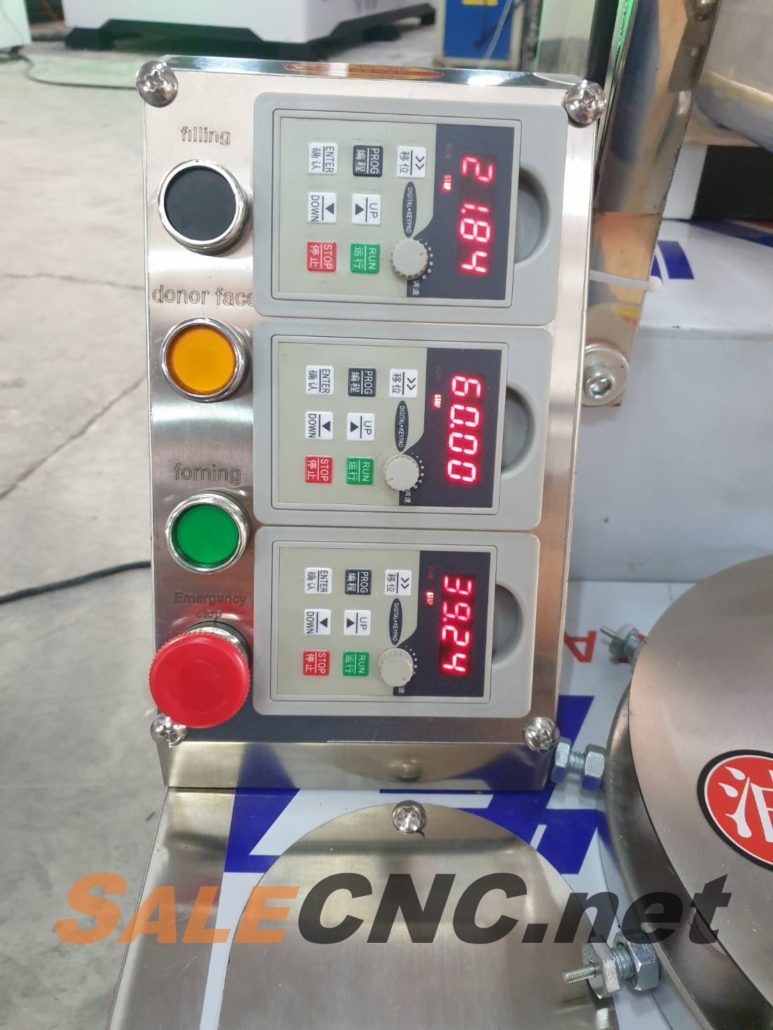
Controller interface for comprehensive machine operation.
Operational Principle
- The process begins with the machine extruding and uniformly kneading the dough. It then forms a vertical shape, which is compressed into a hollow nozzle.
- The filling system precisely cuts and mixes the filling without requiring added viscosity to prevent clogging. The dough is injected into the hollow tube at an appropriate speed, passing through the filling hopper and the outlet nozzle.
- Upon reaching the forming section, the dough is shaped into a cylindrical form within the nozzle and cut into individual salapao, either round or with 12 pleats.
- Once formed, the salapao are automatically deposited onto a conveyor belt.
✅ Produces salapao with 12 pleats.
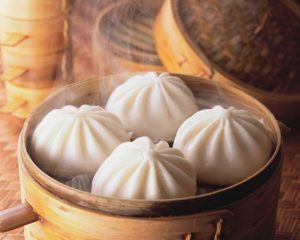

✅ Produces smooth salapao with no pleats.

✅ Salapao formation typically occurs within a temperature range of 35 – 45 degrees Celsius.

Components
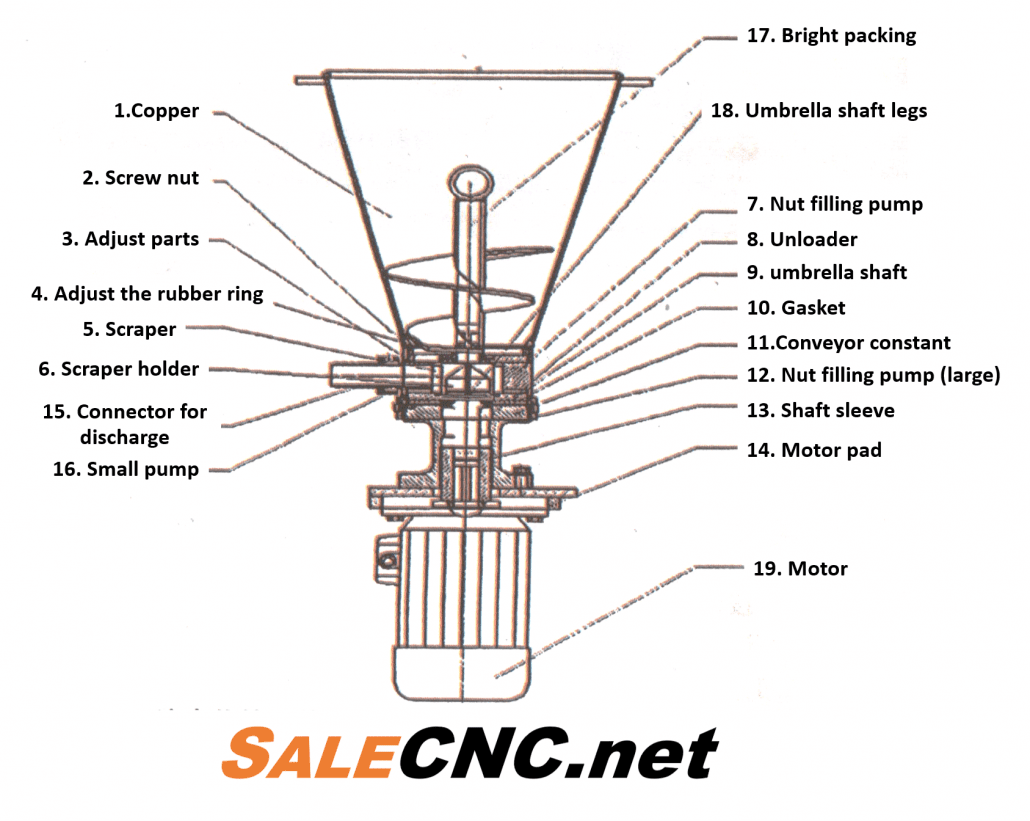
- Filling Hopper
- Screw Nut
- Adjustment Component
- Rubber Ring Adjuster
- Scraper
- Scraper Holder
- Filling Pump Nut
- Unloading Device
- Shank Shaft
- Gasket
- Fixed Conveyor Belt
- Filling Pump Nut (Large)
- Shaft Sleeve
- Motor Mounting Plate
- Release Connector
- Small Pump
- Filling Spout
- Shank Shaft Base
- Motor
Safety Precautions
- Ensure the grounding wire is properly connected before powering on the machine.
- Operate the machine within an ambient temperature range of 5°C to 35°C. An air conditioning unit is recommended for optimal performance.
- Do not operate the machine while wearing sandals or barefoot.
- Securely fasten the sealing plates and forming discs before starting the machine.
- The machine must not operate in reverse direction to prevent damage to internal components.
- During operation, at least one operator must be present. Never reach into the dough kneading screw or filling ports to avoid accidents.
- Do not insert hands or hard objects into the forming block during startup to prevent accidents and damage to the forming block.
Operating Guidelines
- Users must ensure that all accessories are securely and correctly installed when attaching them to the machine. Verify all connections before operation.
- The automatic salapao forming machine requires proper grounding.
- Do not connect the power supply in reverse polarity, as this can damage machine components.
- Do not insert hands into actively operating sections of the machine.
- Avoid placing tools, equipment, or other solid objects on the machine during operation.

Operates on standard household AC 220 V power.
Cleaning and Maintenance
- After each use, disassemble the salapao making machine for thorough cleaning, and then reassemble it.
- The special forming cutter mold should be removed, cleaned, and lightly oiled for the next use to extend its lifespan.
- For components experiencing prolonged use, apply grease to lubricate the cam grooves on the forming plates.
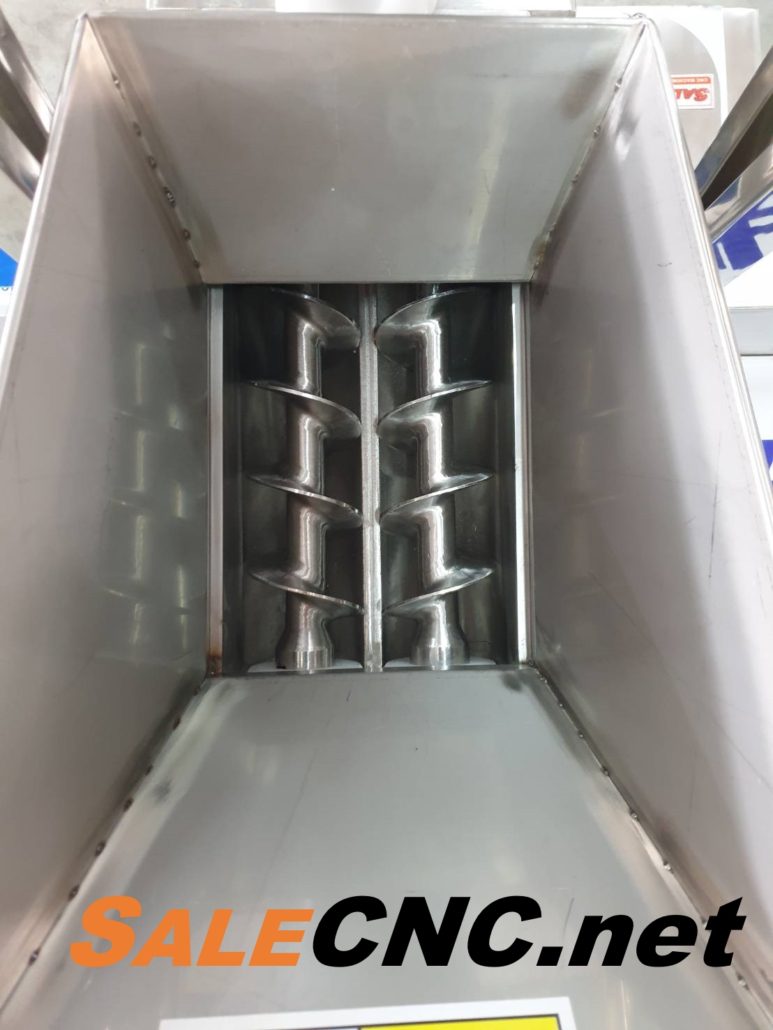
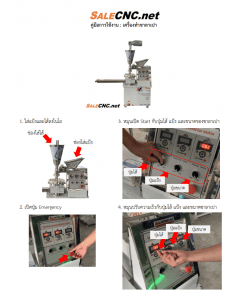
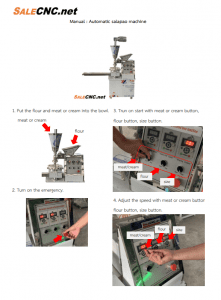
Dough inlet for salapao production.
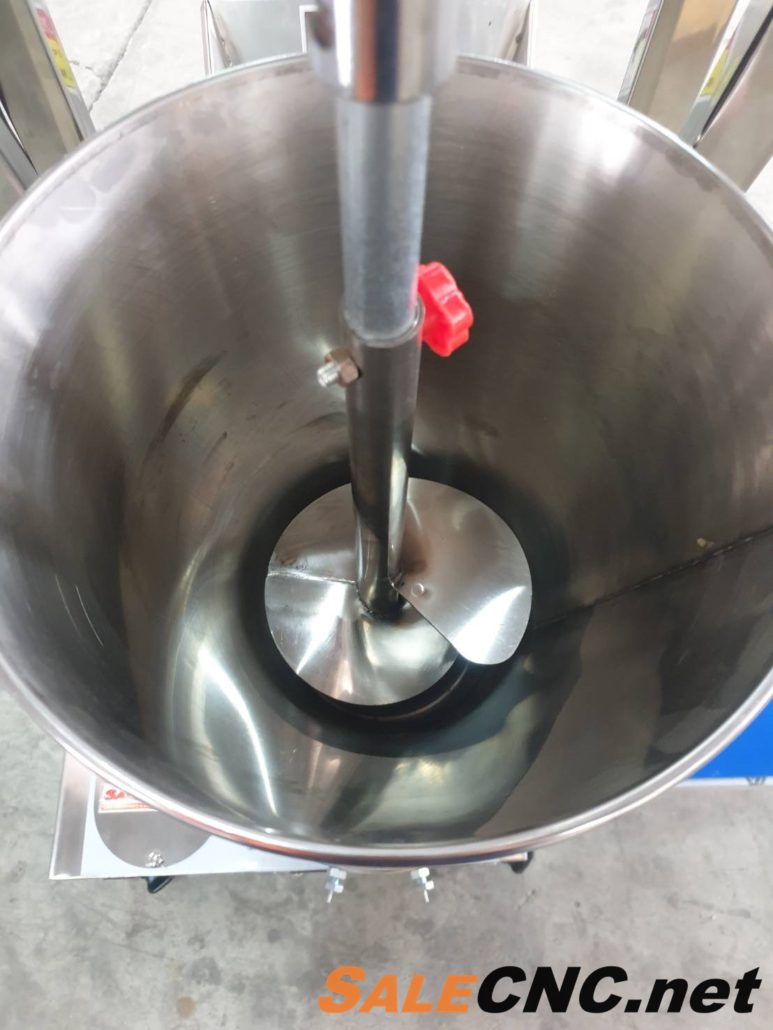
Filling inlet for salapao.
All components are detachable for easy cleaning.
Basic Troubleshooting
| Problem | Cause | Solution |
|---|---|---|
| Thin bottomed salapao with leaking filling | Salapao is too thick and short, leaving insufficient space for filling. | Adjust salapao thickness or height to ensure adequate space for filling. |
| Salapao is too thin and filling leaks out | Premature cutting of the salapao during dough kneading leads to filling leakage. | Tighten the spring and rollers around the forming disc. |
| Hollow salapao or uneven filling distribution | Filling is too stiff and does not flow smoothly into the cylinder. | Adjust the filling recipe for a softer, smoother consistency. Ensure ingredient particles are uniform. |
 Add Line: @123wotsb Fern (sales engineer)
  Add Line: @sales Chompoo (sales engineer)