










 Back to Conveyor
Description
PVC Conveyor Belt System
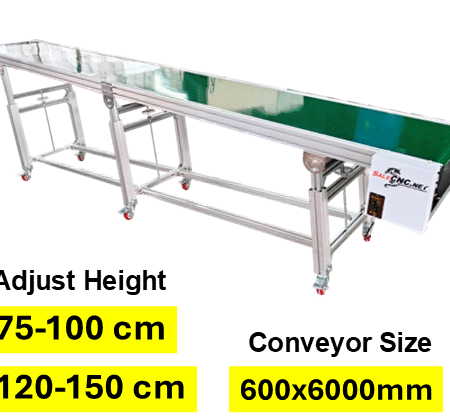
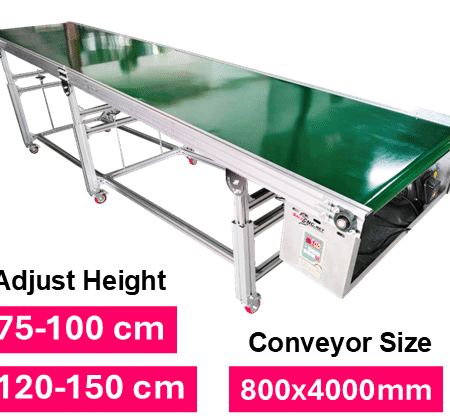
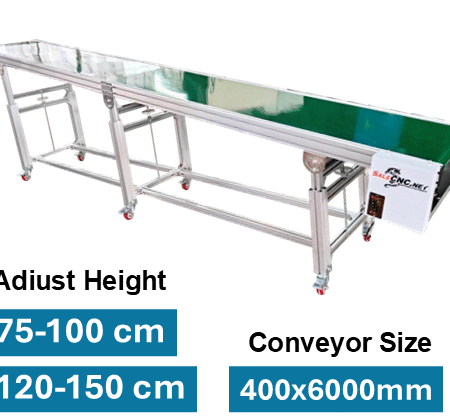
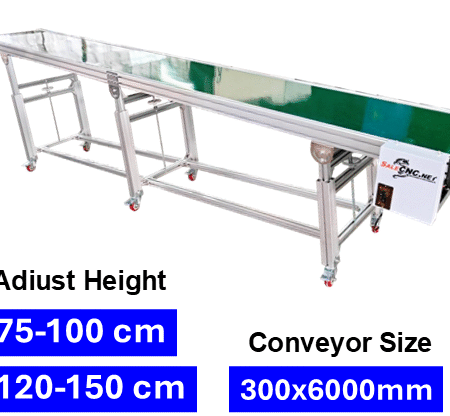
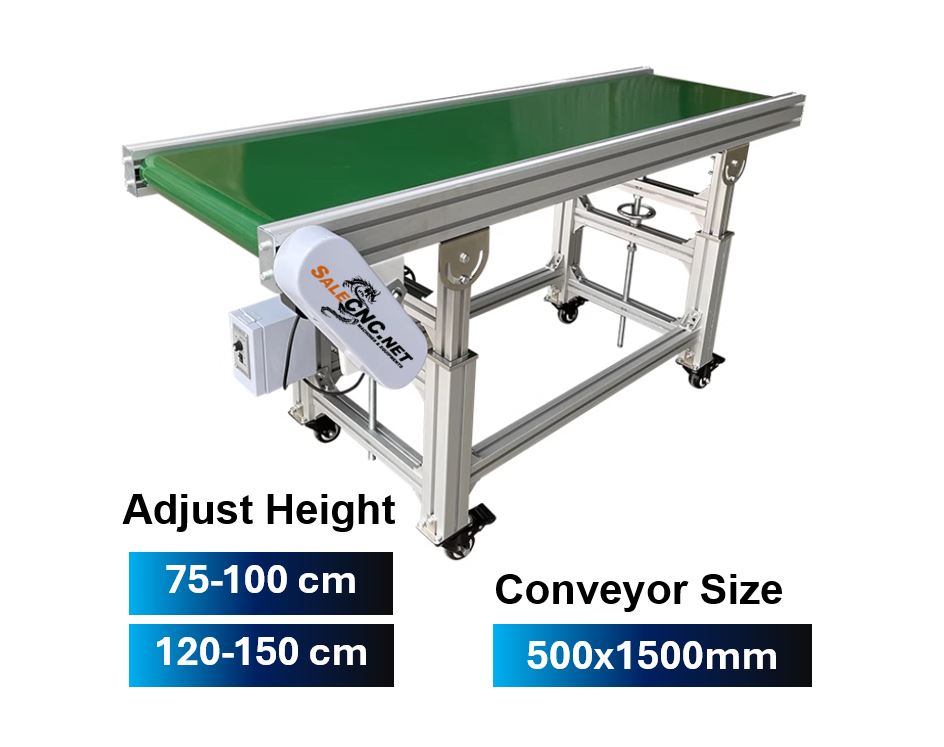
Adjustable Height
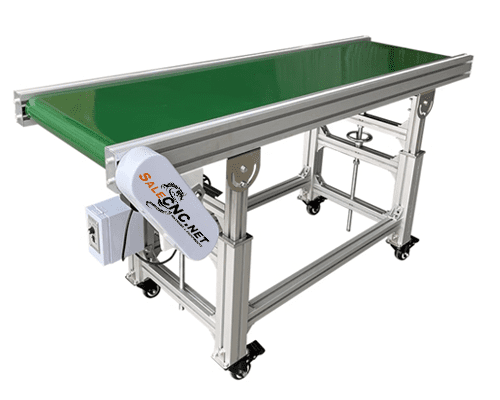
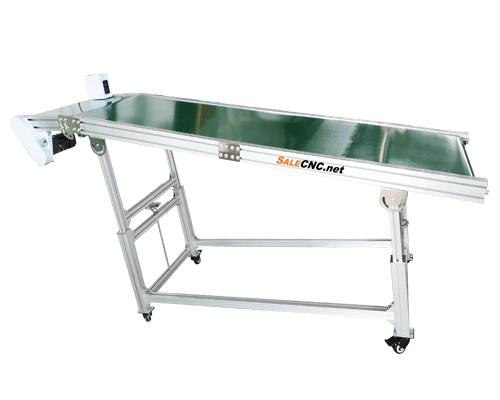
- PVC material conveyor belt for material transfer.
- Equipped with an electric motor for adjustable flow speed control.
- Facilitates easy material handling and transportation; simple installation and operation.
Adjustable Height Options:
- Option 1: 700 to 1000 mm (300 mm travel)
- Option 2: 750 to 1100 mm (350 mm travel)
- Option 3: 800 to 1200 mm (400 mm travel)
Select one height adjustment range.
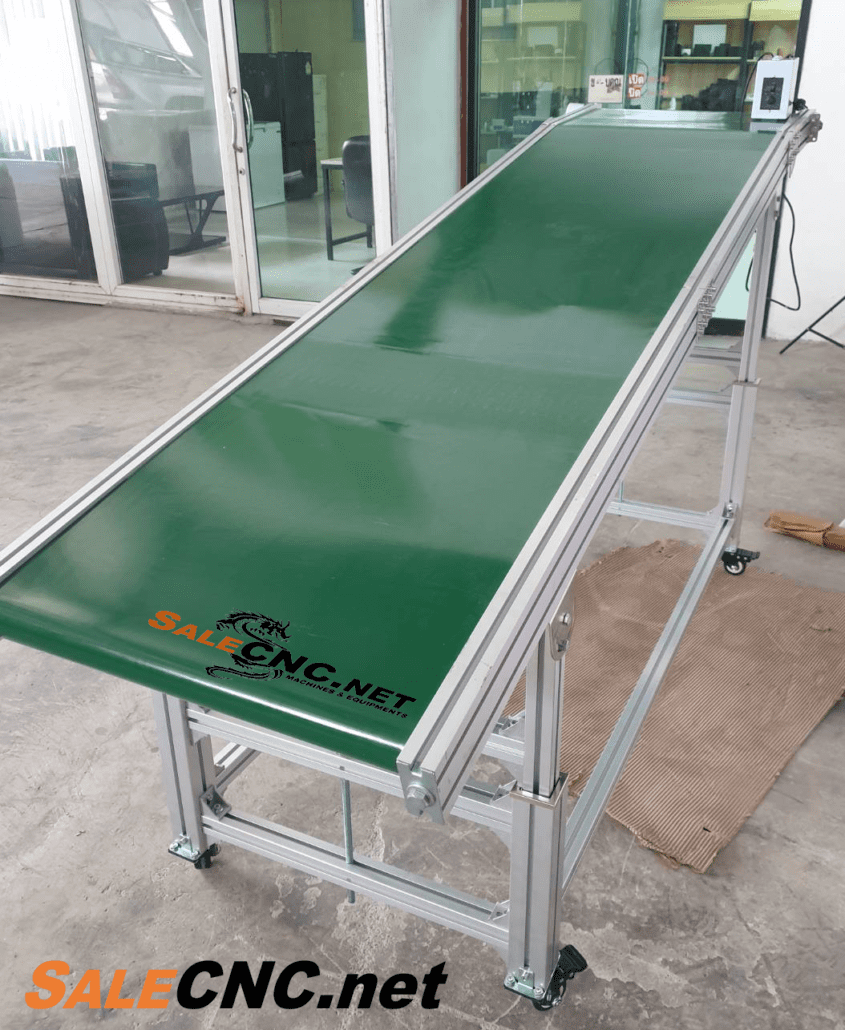
- One end adjustable from 0.75 to 1.00 m, and the other end from 1.20 to 1.50 m.
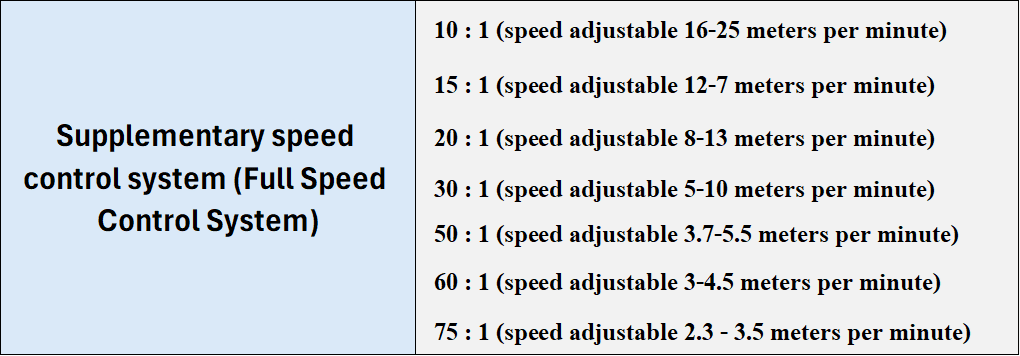
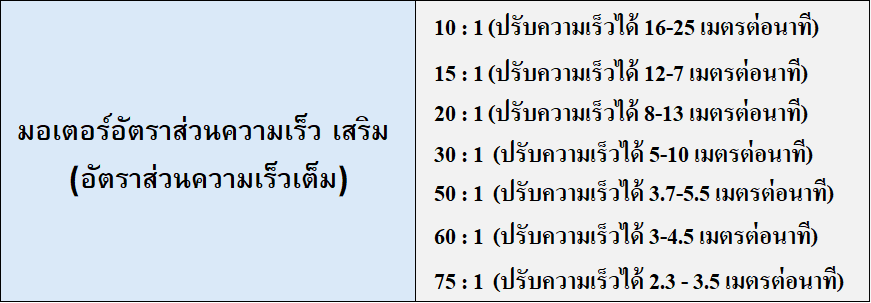
- The standard motor speed reduction ratio is 1:60.
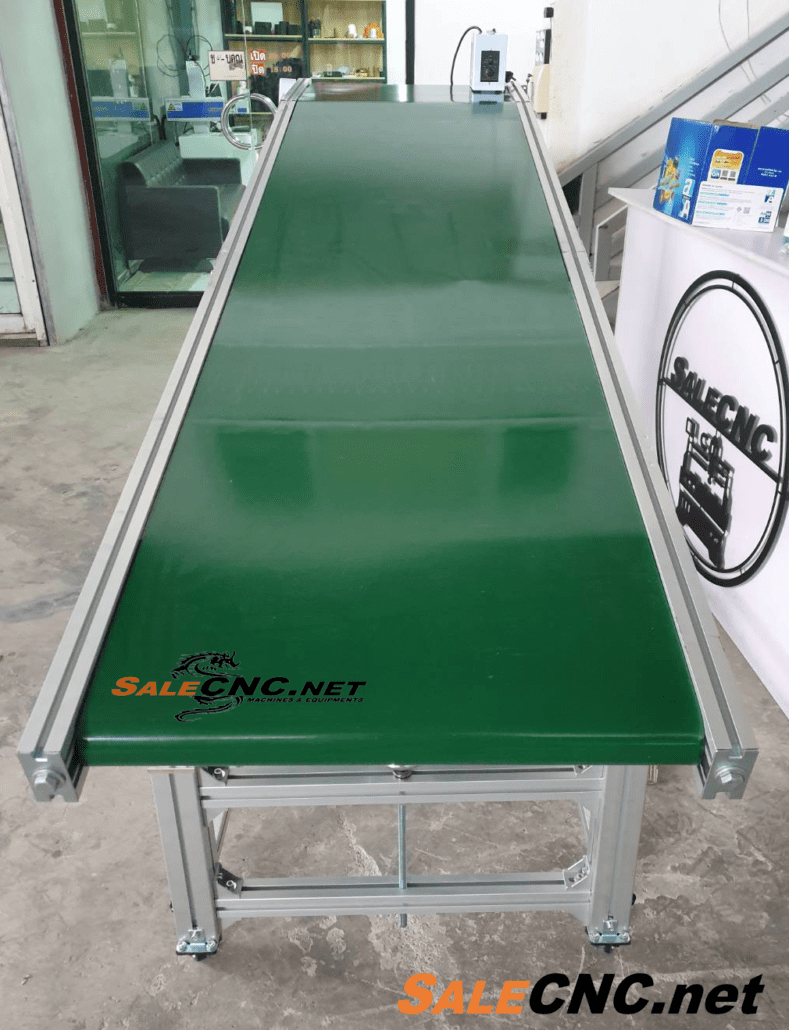
Material Properties: Polyvinylchloride (PVC)
- PVC offers excellent resistance to high temperatures, tensile strength, and puncture/tear resistance.
- PVC exhibits superior wear resistance.
- PVC provides good resistance to oils and odors.
- PVC is durable and resistant to abrasion.
Dimensions (Width x Length)
| Width x Length | |||||
|---|---|---|---|---|---|
| Width | 1500 mm | 2000 mm | 2500 mm | 3000 mm | 3500 mm |
| 300 mm | 300×1500 mm | 300×2000 mm | 300×2500 mm | 300×3000 mm | 300×3500 mm |
| 500 mm | 500×1500 mm | 500×2000 mm | 500×2500 mm | 500×3000 mm | 500×3500 mm |
| 600 mm | 600×1500 mm | 600×2000 mm | 600×2500 mm | 600×3000 mm | 600×3500 mm |
PVC Conveyor Belt Speed Specifications
https://youtu.be/nlWc4jRPjM0?si=vaU_YDSdF8WKN1be
- A conveyor belt is a mechanical device consisting of a continuous loop of material, typically made of rubber, fabric, or metal, used for transporting objects from one location to another. Conveyor belts are commonly utilized in manufacturing, distribution centers, warehouses, airports, and various other industries for the efficient movement of goods, products, and materials.
- The fundamental components of a conveyor belt system include: Belt: The primary load-carrying component, available in materials such as rubber, PVC, nylon, or metal. Drive Mechanism: Powers the belt’s movement via an electric motor, hydraulic system, or other power source. Idlers or Rollers: Support and guide the belt along its length, minimizing friction for smooth operation. Pulleys: Located at belt ends to alter direction or maintain tension. Support Structure: Provides the framework, including frames, legs, and other structural elements.
- Conveyor belt configurations can be tailored to specific application needs, including straight, curved, inclined, or declined paths. Additional features such as side rails, cleats, or guides can be incorporated to manage transported items.
- Key advantages of conveyor belts include efficient transportation, automation of material handling, increased productivity, and reduced manual labor requirements. They are available in a broad spectrum of sizes and configurations to suit diverse industrial requirements.
061-509-6388 (Chompoo)
098-997-4199 (Fern)
0615096199 (Banz)
0818071445 (Mint)
E-mail : [email protected]
LINE SCAN:
 Add Line: @123wotsb Fern (sales engineer) '
 Add Line: @sales Chompoo (sales engineer)